How to Build an Influencer Marketing AI Policy: Oversight, Briefs and Disclosure
A practical AI policy for brands working with creators: where AI is allowed in campaign operations, where humans must decide, how to check AI-written briefs, what creators may and may not generate with AI, platform labelling and disclosure, and a policy template you can adapt.
AI is already in most creator campaigns: drafting briefs, shortlisting creators, summarizing comments, editing video and, sometimes, generating faces, voices or entire posts. Without a policy, each team member and creator decides for themselves what's acceptable. This guide sets out what an influencer marketing AI policy should cover and gives a template. It's general guidance; check the rules in each market where you run campaigns.
Quick answer
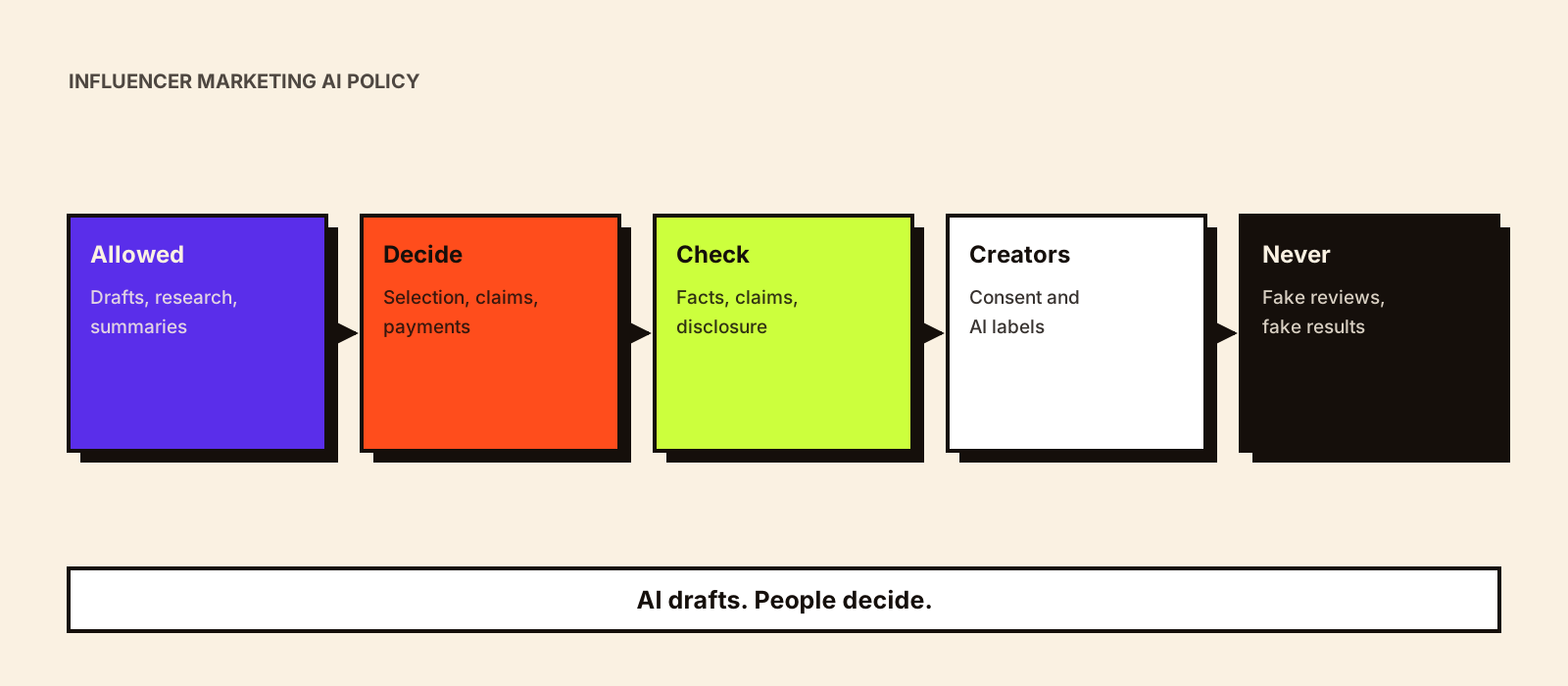
A good AI policy lists where AI may be used (drafting, research, summaries, editing), where a named person must decide (creator selection, claims, contracts, payments, anything published), how AI-written briefs and reports are checked, what creators may generate with AI and how it must be labelled, and what's never allowed (fake testimonials, synthetic real people without consent, AI-generated results presented as real). Platforms require labels for realistic AI content, and advertising rules still apply: a business is responsible for its AI-generated ads.
Where AI helps and where humans decide
| Task | AI can help with | A person must |
|---|---|---|
| Creator discovery | Searching, clustering, first shortlist | Check audiences, content history and fit; make the final choice |
| Briefs | First drafts, structure, translations | Check facts, claims, disclosure and tone |
| Outreach | Drafting messages | Personalize and send; no automated mass messaging that misleads |
| Content review | Flagging missing disclosure, banned words | Approve or reject |
| Reporting | Summarizing data and comments | Check numbers against sources; write conclusions |
| Contracts and payments | Drafting checklists | Decide terms; approve payments |
Where AI tools fit in campaign management is covered in AI influencer campaign management.
Checking AI-written briefs
- Facts: prices, availability, ingredients and specifications match current sources
- Claims: every claim is one you can prove; no invented benefits, statistics or awards
- Rules: disclosure wording and any sector rules for the market are included
- Creators: the brief fits the creator's audience and format, not a generic persona
- Language: local terms, spelling and cultural references are right for the market
- Sameness: the brief leaves room for the creator's own angle
Brief structure and a template are in influencer campaign briefs.
AI in creator content
| Use | Policy position (suggested) |
|---|---|
| Editing, colour, captions, noise removal | Allowed; no disclosure needed beyond normal rules |
| AI backgrounds, effects or scenes | Allowed if they don't misrepresent the product; label realistic AI as the platform requires |
| AI voice or likeness of the creator | Only with the creator's written consent and labelling |
| Synthetic people presented as real customers | Not allowed |
| AI-altered product results (skin, fit, performance) | Not allowed |
| Fully virtual influencers | Allowed only with clear disclosure that the persona isn't a real person |
Platforms have their own rules: TikTok requires labels for realistic AI-generated content, YouTube asks creators to disclose realistic altered or synthetic content, and Meta applies AI labels and requires disclosure for photorealistic AI video and realistic audio. See TikTok's integrity and authenticity guidelines, YouTube's GenAI disclosure help and Meta's announcement.
Provenance: recording how content was made
Labels tell the audience about AI; provenance records tell you. Content Credentials, the open standard from the C2PA, attach a signed record of how a file was created and edited, and the C2PA's FAQ notes that this metadata can be stripped, though recovery methods exist. TikTok became the first major social platform to support the standard in May 2024, using it to label AI-generated content. Platform support still varies, so don't rely on credentials surviving upload. Keep your own record instead:
- Ask creators to declare AI tools used on each deliverable (none, editing only, generated elements, synthetic voice or likeness)
- Keep original files, or Content Credentials where the creator's tools add them, alongside the approved version
- Record who approved the asset and against which claims list
- Before reusing content in ads, check the declaration still matches the edit you're running
- Treat AI-generated claims like any other claim: if a script or caption was drafted with AI, someone must check every product statement against evidence before approval
Market rules to check
- India: 2026 amendments to the IT Rules bring realistic synthetic content into platforms' labelling duties; see our AI UGC guide
- UAE: AI depictions of national symbols or public figures need prior approval from the National Media Authority, and the UAE Media Council's FAQ says virtual advertisers need a permit and must disclose that they are virtual
- Australia: consumer law applies to AI content like any other advertising, and the TGA says advertisers are responsible for AI-generated therapeutic goods ads, including fake testimonials and deepfakes
- Everywhere: sponsorship disclosure is still required; an AI label doesn't replace an 'Ad' label
Sources: our AI UGC guide on India's 2026 rules, Gulf Today on the UAE approval rule, our UAE advertiser permit guide and the TGA's social media guidance. Gulf-specific rules are in AI-generated influencer content in the GCC, and creator-side disclosure in AI disclosure for creators.
Human expertise vs AI-generated content
Creators are hired for their judgement, experience and relationship with an audience. AI can help them produce content, but it can't use a product, form an honest opinion or stand behind a recommendation. A useful test: if the content claims experience (a review, a routine, a result), a real person must have had that experience. Fully AI-generated content can work for explainers or creative concepts, but it isn't a substitute for a creator's genuine view. The trade-offs are discussed in AI influencers vs human creators.
Policy template
1. Purpose and scope: teams, agencies and creators covered
2. Approved tools: list; no confidential or personal data in tools not approved for it
3. Allowed uses: drafting, research, summaries, editing
4. Human decisions: creator selection, claims, contracts, payments, publishing (named owners)
5. Checks: facts, claims, disclosure and market rules on any AI-assisted brief, report or post
6. Creator AI use: allowed edits; consent for likeness or voice; platform labels
7. Never allowed: fake testimonials, synthetic real people without consent, AI-altered results
8. Disclosure: 'Ad' label plus platform AI labels where required
9. Records: AI-use declaration, original files and approvals for each asset
10. Review: every six months, or when platform or market rules change
Common mistakes
- Sending AI-drafted briefs without checking claims
- Pasting creator contracts or customer data into unapproved tools
- Letting AI shortlists replace audience checks
- Using AI to 'improve' product results in creator content
- Assuming an AI label replaces sponsorship disclosure
Conclusion
An AI policy doesn't need to be long. It needs to say where AI helps, where people decide, what must be checked and what's never allowed, and it needs to be shared with agencies and creators. Review it as platform and market rules change. This is general guidance, not legal advice.