AI-Generated Influencer Content and Virtual Influencers in the GCC: Disclosure and Governance
How brands in the UAE, Saudi Arabia and the wider GCC should govern AI in creator campaigns: four categories from AI-assisted editing to virtual influencers and deepfakes, the UAE's prior-approval rule for AI depictions of public figures, Saudi Arabia's deepfake guidelines, platform labels, when virtual influencers fit, and a governance checklist.
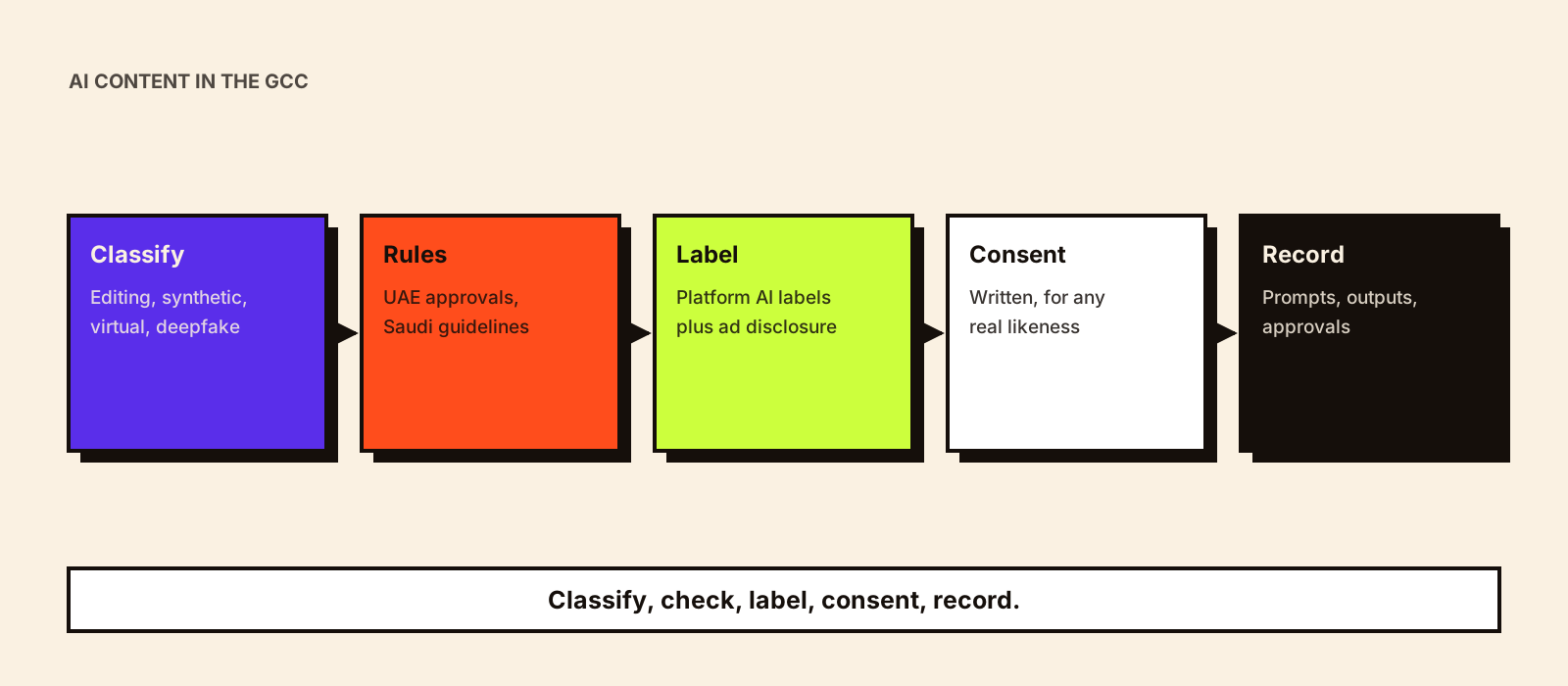
AI now appears in creator campaigns in several forms: creators editing footage with AI tools, brands generating synthetic models or voices, fully virtual influencer characters, and deepfakes that put words in real people's mouths. Each carries a different level of risk, and the Gulf has rules of its own. This guide is for brand, legal and agency teams deciding where AI fits in GCC creator campaigns and how to govern it. It covers virtual influencers too, because the same rules and trust questions apply.
Quick answer
Treat AI in GCC creator content by category. AI-assisted editing of a real creator's footage is usually low risk. Realistic synthetic people, voices or scenes must be labelled on TikTok, YouTube and Meta platforms. In the UAE, the National Media Authority says AI images or videos featuring national symbols or public figures need prior approval, and Saudi Arabia's SDAIA deepfake guidelines call for explicit consent and visible watermarks. Never use anyone's likeness without written consent, disclose virtual influencers as virtual, and keep records of what was generated and approved.
Four categories to distinguish
| Category | Example | Risk | Typical requirement |
|---|---|---|---|
| AI-assisted editing | Captions, color correction, noise removal, script ideas | Low | Usually no AI label; normal ad disclosure |
| Synthetic elements in real content | AI background, generated product shots, cloned voiceover | Medium | Label if realistic; consent for any voice or likeness |
| Virtual influencer | A fully computer-generated persona with its own account | Medium | Clear that the persona is virtual; ad disclosure for sponsored posts |
| Deepfake of a real person | A real person shown saying or doing something they didn't | High | Avoid; needs explicit consent and, in the UAE, prior approval for public figures |
Rules in the UAE and Saudi Arabia
Reviewed 9 October 2026. Not legal advice. In the UAE, Gulf Today reported in September 2026 that the National Media Authority affirmed that using AI or other technical means to generate images or videos featuring national symbols or public figures requires prior official approval under media content standards. Promotional content created with AI is still advertising, so the advertiser permit and disclosure rules apply as for any creator post.
In Saudi Arabia, the Saudi Data and Artificial Intelligence Authority (SDAIA) issued deepfake guidelines, reported by Arab News in May 2026, that call for explicit consent before using anyone's likeness, auditable consent records, visible watermarks on synthetic content, and no use for fraud, impersonation or defamation. Arab News doesn't describe the guidelines' formal legal status, so treat them as the expected standard and check with counsel. Other GCC states have their own content and cybercrime rules; check each market before running synthetic content there.
Platform labels
| Platform | What must be labelled |
|---|---|
| TikTok | AI-generated or significantly edited content showing realistic scenes or people; creators use the AI-generated content label |
| YouTube | Realistic altered or synthetic content, such as a real person saying something they didn't or a realistic scene that didn't happen; minor edits and beauty filters don't need disclosure |
| Facebook and Instagram | Photorealistic video or realistic audio that was digitally created or altered; Meta also applies 'AI info' labels |
Sources: TikTok's integrity and authenticity guidelines, YouTube's GenAI disclosure help page and Meta's February 2026 policy update. Platform labels are separate from paid-partnership disclosure; sponsored AI content needs both.
When virtual influencers fit
| Fits | Doesn't fit |
|---|---|
| Fashion, gaming, tech and entertainment brands building a character over time | Product claims that depend on real use: skincare results, food taste, fitness |
| Brands that need full control of tone and availability | Categories where trust in a real person is the point, such as health or finance |
| Creative storytelling and experimental campaigns | Testimonials and reviews, which imply real experience |
- Tell audiences clearly that the persona is virtual, in the bio and where it matters in content
- Don't model a virtual influencer on a real person without consent
- Keep the persona consistent with local content standards; it represents the brand directly
- Budget for ongoing creative and community management, not just character design
- Expect slower trust-building in markets where audiences value personal recommendation
A broader comparison, written for an Indian context, is in AI influencers vs human creators, and AI in UGC-style content in AI and UGC marketing.
A governance checklist
- Classify every planned AI use into one of the four categories before production
- Written consent for any real person's face, voice or likeness, stored with the campaign records
- No AI depictions of national symbols or public figures in the UAE without prior approval
- Label realistic synthetic content on each platform, plus the paid-partnership disclosure
- Contract clauses: creators tell you when they use generative AI beyond minor edits
- No synthetic testimonials, reviews or before-and-after results
- Arabic and English captions reviewed for the same disclosure
- Keep prompts, outputs and approvals for at least as long as campaign records
These checks belong in your campaign risk register; see influencer campaign risk management.
Common mistakes
- Treating every AI use the same, from captioning to deepfakes
- Generating a celebrity or official lookalike for a UAE campaign
- Synthetic 'customer' testimonials
- Virtual influencers posted without saying they're virtual
- Labelling AI on one platform and forgetting another
Conclusion
AI can make creator campaigns faster and more creative, but trust is the asset at stake. In the GCC, classify each use, follow the UAE's prior-approval rule and Saudi Arabia's consent and watermark expectations, label realistic synthetic content on every platform, and keep virtual influencers clearly virtual. Write it down once as a governance policy, and every campaign gets easier.