Influencer Marketing Automation: What Brands Can Automate Without Losing Control
A task-by-task map of what can be automated in an influencer programme, what should stay human, a maturity model for getting there and the controls that stop automation from damaging creator relationships.
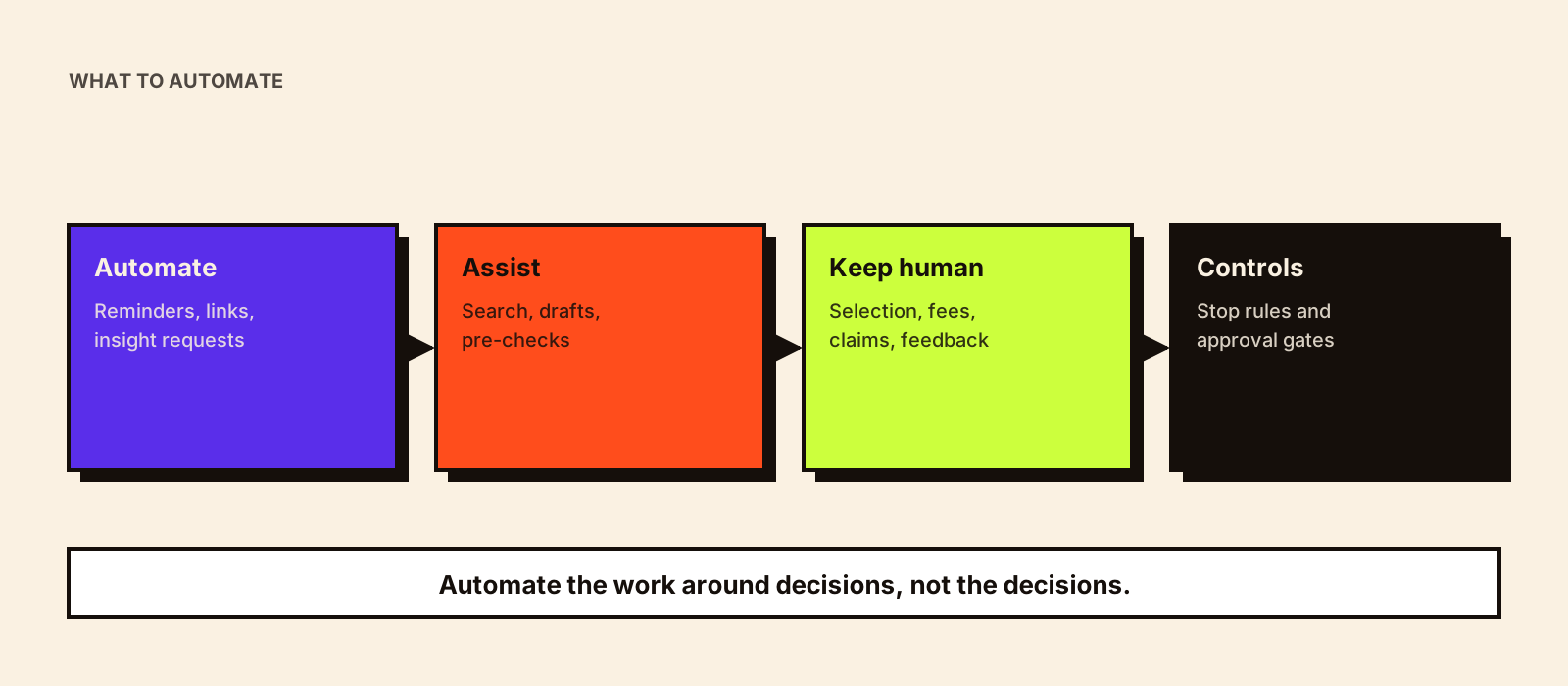
Automation is attractive in influencer marketing because so much of the work is repetitive: logging creators, sending reminders, chasing drafts, collecting insights, paying invoices. It's risky for the same reason the channel works at all. Creators respond to people, not systems, and a programme that feels automated to them gets worse content and fewer renewals. The useful question isn't 'can influencer marketing be automated?' but 'which parts, and with what controls?'
Quick answer
Yes, parts of influencer marketing can be automated: data entry, status tracking, reminders, approval routing, link and code generation, insight collection, payment scheduling and report assembly. Selection, negotiation, creative feedback, claims approval and relationship decisions should stay human-led. Automate the work around decisions, not the decisions themselves, and add checkpoints wherever an automated action reaches a creator, spends money or publishes content.
The automation map
The table below sorts common programme tasks into three groups: automate (rules can handle it reliably), assist (software or AI prepares, a person decides) and keep human.
| Task | Automate | Assist | Keep human |
|---|---|---|---|
| Logging new creator prospects | ✔ from forms, searches, imports | ||
| Creator search and long-listing | ✔ filters and AI search | ||
| Final creator selection | ✔ | ||
| First outreach message | ✔ personalised draft | ✔ send and tone | |
| Follow-up reminders | ✔ with stop rules | ||
| Rate negotiation | ✔ rate history, benchmarks | ✔ | |
| Contract generation | ✔ from template and deal fields | ✔ non-standard terms | |
| Brief distribution | ✔ once approved | ✔ per-creator versions | |
| Draft deadline tracking | ✔ | ||
| Content review | ✔ pre-checks | ✔ approval | |
| Tracking links and discount codes | ✔ | ||
| Go-live and disclosure check | ✔ go-live alert | ✔ disclosure check | |
| Insight collection | ✔ requests and reminders | ✔ screenshot extraction | |
| Invoice and payment | ✔ scheduling after approval | ✔ approval | |
| Reporting | ✔ data assembly | ✔ narrative draft | ✔ interpretation |
| Renewal and relationship decisions | ✔ performance history | ✔ |
Why some tasks must stay human
- Creator selection decides whether the campaign can work at all, and it depends on taste and context that data doesn't capture.
- Negotiation shapes the relationship. A creator who feels squeezed by an automated counter-offer is less likely to go beyond the minimum.
- Creative feedback needs judgment about what to insist on and what to leave to the creator.
- Claims approval carries legal and reputational risk; the brand is responsible for what's said.
- Renewal decisions weigh performance, reliability, audience response and goodwill together.
These map to the approval roles in influencer marketing governance, and to the in-house or agency split in influencer marketing team structure.
Campaign technology maturity model
Most brands move through four stages. Skipping stages, for example buying an automation platform before creator data is consistent, usually ends with an expensive tool used as a contact list.
| Stage | What it looks like | Typical scale | Next step |
|---|---|---|---|
| 1. Manual | Spreadsheets, personal inboxes, screenshots in chat groups | 1–2 campaigns at a time, under ~15 creators | Standardise creator records and campaign fields |
| 2. Structured | One shared tracker with fixed fields and statuses; templates for briefs and contracts | Several campaigns a quarter | Add reminders and approval routing |
| 3. Automated | Rules for reminders, status changes, link creation, insight requests, payments | Regular campaigns, multiple team members | Connect tracker to analytics and finance |
| 4. Integrated | CRM, campaign management, tracking and reporting connected; AI assisting search, checks and summaries | Always-on programmes, many creators | Review automations quarterly; keep checkpoints |
The scale figures are rough guides, not thresholds. A brand running two complex launches a year may need stage 3 discipline; a brand running many small seeding campaigns may be fine at stage 2.
Controls that keep automation from backfiring
- Stop rules: every automated follow-up sequence stops the moment a creator replies on any channel, and caps at two follow-ups.
- Human-first contact: the first message to a creator, and anything about money, is sent or approved by a person.
- Approval gates: no content goes live, and no payment goes out, without a recorded approval.
- Exception queue: automations that fail (missing data, bounced email, unexpected reply) go to a named person, not into silence.
- Quarterly review: check which automations fired, which caused complaints and which nobody needs any more.
- Data hygiene: automations act on your records, so stale contact details or wrong statuses produce wrong actions at scale.
Where to start
Pick the automation that removes the most chasing with the least risk. For most teams that order is:
- Deadline reminders for drafts and go-live dates, internal first, then to creators.
- Insight collection requests 7 days after posting, with a reminder.
- Tracking link and code creation per creator from the campaign record.
- Approval routing: draft submitted → reviewer notified → decision recorded.
- Payment scheduling once content is approved and insights are received.
Influencer campaign automation shows how to build these workflows step by step, and influencer outreach automation covers sequences for the outreach stage specifically. Payment terms and timing are in influencer marketing payments.
Automation and the Indian creator ecosystem
A few practical realities shape automation in India. Much creator communication runs on WhatsApp and Instagram DMs rather than email, so email-only automation misses conversations. Many mid-tier and larger creators work through managers or talent agencies, which means one contact may represent several creators. Payments often involve GST invoices and TDS, so automated payment workflows need finance to agree the rules. And regional campaigns frequently include nano creators who are new to formal briefs and contracts, who need more human explanation, not less.
Example: automating a 30-creator seeding campaign
Illustrative example, not a client case: a D2C snack brand sends product to 30 micro creators across Hindi, Marathi and Gujarati, asking for an optional honest post. Before automation, one coordinator spent most of the campaign chasing addresses, delivery confirmations and post links. A light automation setup changes the shape of the work:
| Step | Before | After |
|---|---|---|
| Address collection | Individual DMs and follow-ups | One form link; responses fill the tracker |
| Dispatch and delivery | Courier updates checked manually | Tracking number logged; delivery status updates the record |
| Check-in after delivery | Remembered when someone had time | Personal message sent by the coordinator, prompted by a task 5 days after delivery |
| Post detection | Scrolling each profile | Creators submit the link via form; brand-tag mentions monitored |
| Disclosure check | Often skipped | Task created for each submitted link |
| Results | Screenshots in a chat group | Insights requested via form at +7 days |
Notice what stayed human: choosing the 30 creators, the check-in message and the disclosure check. For seeding programme design, see influencer product seeding programme.
How to tell if automation is working
| Measure | Good sign | Warning sign |
|---|---|---|
| Hours spent chasing per campaign | Falling | Unchanged; automations being worked around |
| Deadlines missed | Fewer, caught earlier | Same, but now with more notifications |
| Creator replies and tone | Unchanged or better | Complaints about repeated or irrelevant messages |
| Data completeness | Insights and links logged for every creator | Gaps where automations failed silently |
| Exceptions queue | Small, cleared weekly | Growing, unowned |
Common mistakes
- Automating outreach volume and calling it a strategy.
- Sending automated reminders to creators who've already replied elsewhere.
- Building automations on inconsistent data, so they fire at the wrong time or for the wrong person.
- No owner for failed automations.
- Measuring automation by tasks completed instead of creator response, content quality and campaign results.
Conclusion
Automate the predictable, repetitive work around a creator programme and keep people on selection, negotiation, creative feedback, claims and relationships. Get your data and statuses consistent first, add automations one at a time with stop rules and approval gates, and review them every quarter. The goal is a team that spends its time on creators and content rather than on chasing. For how automation fits alongside the rest of your tools, see the influencer marketing technology stack.