Influencer Product Seeding: How Brands Can Build a Scalable Gifting Program
How brands run product seeding, gifting and sampling as a repeatable program across platforms: when each model fits, choosing creators and quantities, the seeding package, logistics and address handling across India, follow-up without pressure, disclosure, measuring content rate and turning seeded creators into paid partners.
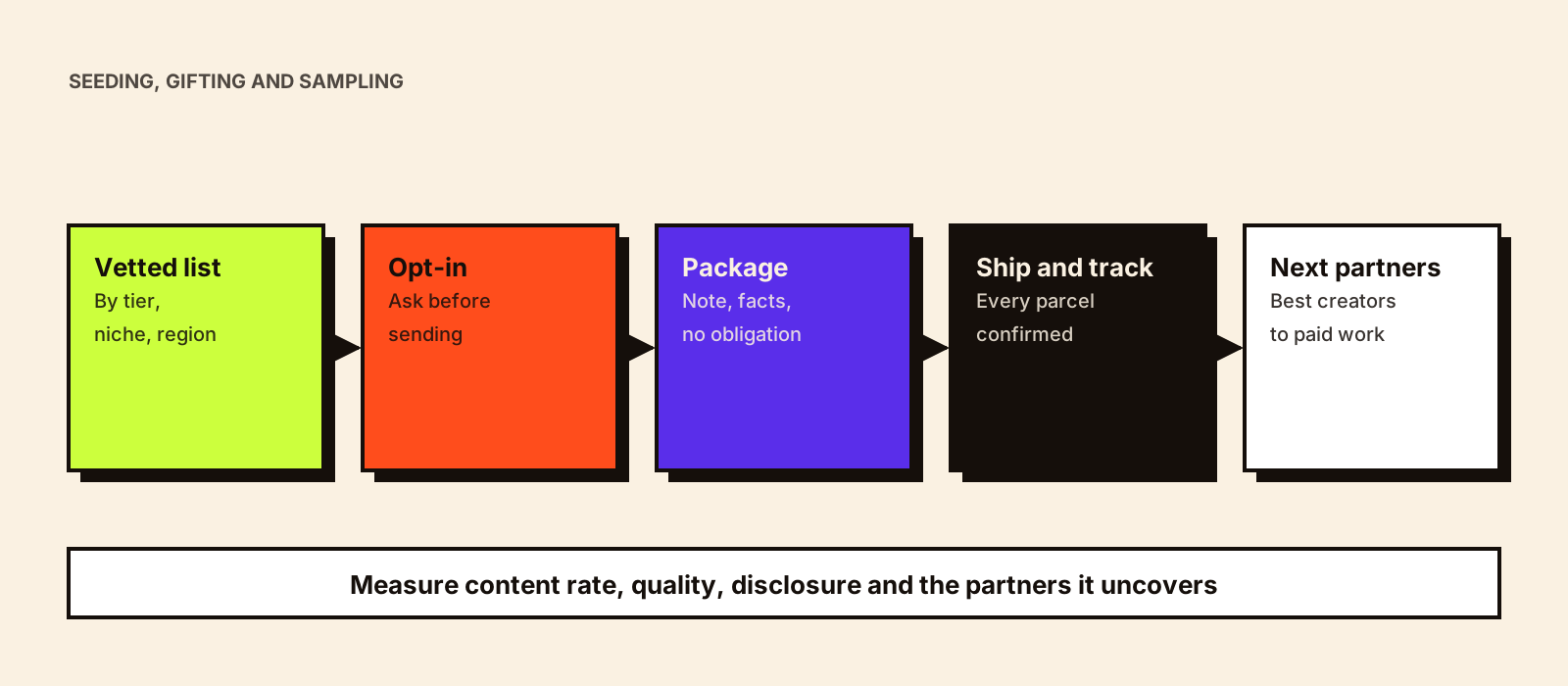
Sending products to creators is easy. Sending them to the right creators, at the right time, with no strings that make the content feel forced, and then learning something from the results, is a program. Brands that treat seeding as a program get a steady stream of honest content and a pipeline of creators who already like the product. Brands that treat it as a mailing list get boxes that go unopened.
This guide covers seeding across platforms. The Instagram-specific mechanics are in Instagram product seeding, and the creator's view of receiving products is in creator product seeding.
Quick answer
A product seeding program sends products to carefully chosen creators with no obligation to post, so the content that appears is genuine. Gifting is the relationship-led version for a smaller group; sampling is the volume version for products people need to try. Run it as a program: a defined creator list by tier and niche, a considered package, reliable logistics and address handling, a light follow-up, disclosure guidance for anyone who posts, and measurement of content rate, content quality and which creators to invite into paid work.
Seeding, gifting and sampling compared
| Seeding | Gifting | Sampling | |
|---|---|---|---|
| Purpose | Earned content and discovery of good-fit creators | Relationship building with a smaller group | Trial at scale, often with content as a by-product |
| Scale | Dozens to hundreds of creators | A curated group | Hundreds or more, often micro and nano |
| Obligation to post | None | None | Usually none; sometimes a light ask |
| Best for | Launches, new ranges, testing creator fit | Premium, luxury, long-term partner pipelines | FMCG, food, personal care, trial-led products |
| Main cost | Product and logistics | Product, packaging and personal touch | Product, logistics and coordination |
If you need guaranteed posts on a date, that's a paid collaboration, not seeding. The trade-offs are compared in influencer gifting vs paid collaborations.
When seeding makes sense
- The product is good enough that honest reactions help it; seeding amplifies weak products' problems.
- The product is visual, tactile or experiential: food, beauty, gadgets, home, apparel.
- You want to find out which creators genuinely like the product before paying anyone.
- You can afford for some boxes to produce nothing.
- You're launching something and want organic chatter around paid posts.
Building the seeding list
| Segment | Why include them | Share of list (illustrative) |
|---|---|---|
| Creators already mentioning the brand or category | Highest chance of genuine posts | Priority |
| Niche specialists | Credible reviews to an interested audience | Core |
| Regional creators in priority markets | Local reach and language | Depends on markets |
| Potential long-term partners | Test fit before a paid offer | Small, curated |
| Creators in adjacent categories | New audiences | Small, as a test |
Vet seeding creators like any other: audience fit, authenticity and brand safety. A gifted post from the wrong creator still associates them with your brand. The checks are in how to vet influencers and influencer audience quality and fit.
The package and the note
- Ask before sending; many creators prefer to opt in, and it saves wasted product.
- Include how to use the product, the key facts and any claims you can substantiate.
- A short personal note beats a glossy brochure.
- Say clearly that there's no obligation to post, and what to do if they do (disclosure, tagging).
- Consider sizes, shades or variants; asking first avoids sending the wrong one.
- Keep packaging sensible; excessive plastic reads badly on camera.
Logistics across India
- Collect addresses through a simple form with consent to use them only for shipping; creators' addresses are personal data.
- Allow for longer delivery times to smaller towns and the North-East, and for perishables in summer.
- Track every parcel and confirm delivery; lost parcels are a common silent failure.
- Plan returns or no-returns clearly for high-value items.
- Keep a register of what went to whom, for disclosure checks and future outreach.
Large seeding programs across many cities are covered in how to run a pan-India influencer marketing campaign.
Follow-up and disclosure
Send one friendly check-in after delivery to confirm arrival and answer questions. Don't chase for posts; pressure turns a gift into an unpaid job. Anyone who does post should disclose: under ASCI's guidelines a free product is a material connection, so a gifted post needs a clear label such as "Free gift". Remind creators kindly in the note, and don't repost undisclosed content. Rights to reuse gifted content in ads must be agreed separately; see influencer usage rights.
Measuring a seeding program
| Metric | What it tells you |
|---|---|
| Content rate | Share of creators who posted anything |
| Content quality | Whether posts are usable, on-message and disclosed |
| Reach and engagement of seeded posts | Earned visibility |
| Cost per piece of content | Product plus logistics divided by pieces produced |
| Sentiment and product feedback | What creators liked or disliked |
| Creators moved to paid work | The program's pipeline value |
Seeding usually shows its value through the creators it identifies. Those who post genuinely and whose audiences respond are your best candidates for paid collaborations and ambassador programs; see how to build a brand ambassador program.
An illustrative program
Illustrative example, not a case study. A snack brand launching a millet range invites 120 food and family creators across six cities to opt in; 90 accept. Parcels ship two weeks before launch with a recipe card and a no-obligation note. Over a month the team logs which creators posted, how they disclosed, and what audiences asked. Fifteen creators whose content performed and fitted the brand are offered paid recipe series for the festive season.
Common mistakes
- Sending without asking, then chasing for posts.
- Seeding creators without vetting them.
- No tracking, so no one knows who received what.
- Reposting gifted content without disclosure or rights.
- Judging seeding only on reach instead of the partners it uncovers.
Conclusion
Seeding, gifting and sampling work when they're run as a program: a vetted list, an opt-in, a thoughtful package, reliable logistics, gentle follow-up, clear disclosure and measurement that looks at content and at the creators worth paying next. Done well, it's the cheapest way to find partners who already like your product.