AI Influencer Marketing: How Brands Can Use AI to Plan Better Creator Campaigns
Where AI genuinely helps a creator campaign (research, discovery, briefs, review, reporting), where it doesn't, and a simple framework for deciding which calls stay with your team.
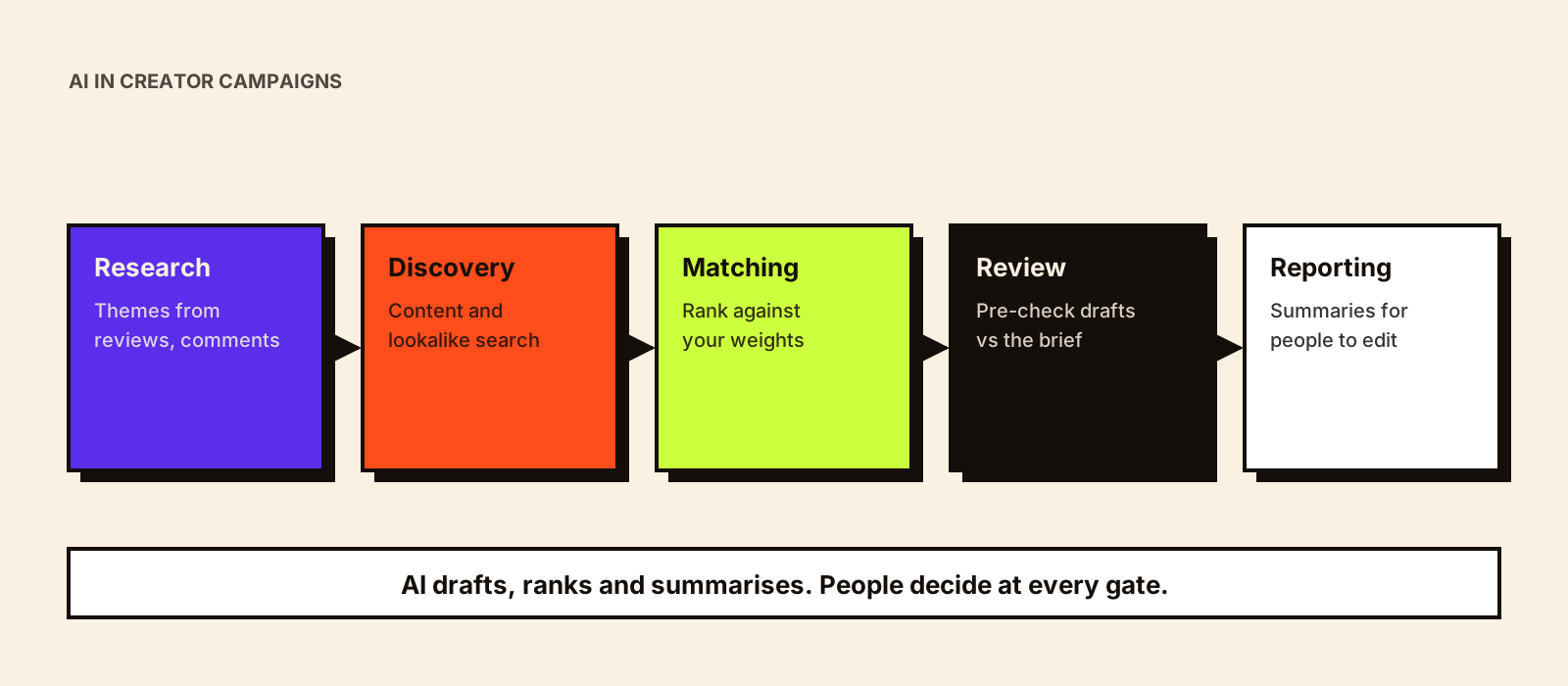
Search for 'AI influencer marketing' and you get two different conversations. One is about virtual influencers: computer-generated characters with their own followings. The other is about using AI inside ordinary creator campaigns to research faster, find creators, write better briefs and make sense of the results. This guide is about the second. It is the one most Indian brands can act on this quarter, and it is where the practical gains are.
Quick answer
AI influencer marketing means using machine learning and language models to support the work of planning and running creator campaigns. In practice, AI is useful for summarising audience and category research, searching creator content by topic rather than bio keywords, ranking creators against a brief, drafting briefs and outreach, checking drafts against a brief, summarising comments, flagging unusual engagement and turning campaign data into a first-draft report. It is not reliable at judging brand fit, creative quality, cultural nuance or whether a creator's audience actually trusts them. Use AI to make the team faster and more consistent, and keep the decisions with people.
If you came here looking for virtual or AI-generated influencers, see AI influencers vs human creators, which covers when a virtual character makes sense and the disclosure rules that apply to it.
Where AI fits in a creator campaign
The easiest way to see the opportunity is stage by stage. Each stage has a slow, repetitive part that AI can speed up and a judgment call that it can't make for you.
| Campaign stage | What AI can help with | What still needs a person |
|---|---|---|
| Research and planning | Summarising category conversations, competitor creator activity and customer reviews into themes | Choosing the objective, the audience and the one KPI that defines success |
| Creator discovery | Searching captions, transcripts and visuals for topics; finding lookalikes of creators who performed | Deciding whether a creator's content actually suits the brand |
| Matching and shortlisting | Ranking candidates against weighted criteria and explaining the ranking | Setting the weights; reviewing the top of the list by watching content |
| Vetting | Flagging follower spikes, repetitive comments and engagement anomalies | Interpreting the flag: fraud, a viral post or a giveaway? |
| Briefing | Drafting a brief from a template, adapting it per creator, translating key messages | Final messaging, claims, do's and don'ts, creative freedom |
| Outreach and negotiation | Personalised first drafts, follow-up scheduling, summarising replies | Fee decisions, terms, relationship tone |
| Content review | Checking a draft against the brief's mandatory points and disclosure requirements | Approving the content and its claims |
| Reporting | Pulling numbers together, summarising comment sentiment, drafting the narrative | Explaining why results happened and what to change |
Six practical AI use cases worth starting with
1. Research synthesis before the brief
Paste in product reviews, customer support themes, search queries and a sample of category comments, and ask a language model to group them into the questions and objections customers have. The output is a starting list of content angles for creators. A D2C skincare brand, for example, might find that 'Is it safe for oily skin in humid weather?' comes up far more often than the ingredient story the brand wanted to lead with. That is a brief-changing insight, and it took an hour rather than a week.
2. Content-based creator search
Bios are unreliable: plenty of creators who make excellent home-cooking content describe themselves as 'lifestyle'. Tools that index what creators actually say and show (captions, spoken transcripts, on-screen text, objects in frames) can find relevant creators that keyword search misses. Instagram's own creator marketplace added keyword search and AI recommendations for brands in 2025, and third-party discovery tools offer similar search. How this works, and its limits, is covered in AI for influencer discovery.
3. Ranking a long list against your brief
Once you have 150 candidates, AI can score them on the criteria you set (audience location, language, topic consistency, typical views, past category work) and explain each score. That turns a day of scrolling into an hour of reviewing the top 30. The weighting is still yours. AI influencer matching explains how to set it up and audit it.
4. Brief and outreach drafts
A model can turn a master brief into versions adapted for a Tamil food creator, a Hindi tech reviewer and an English fashion creator, keeping the mandatory points intact. It can also draft a first outreach message that references a specific recent video. Both drafts need a human edit: generic AI phrasing is easy for creators to spot, and it costs replies.
5. Draft review against the brief
Before a person watches a draft, a model can check the transcript and caption against a checklist: Is the disclosure label present and at the start? Are the three mandatory product points covered? Is there a claim that wasn't approved? This catches obvious misses early so the human review can focus on whether the content is good.
6. Reporting and comment analysis
AI is useful for reading hundreds of comments across creators and grouping them into purchase intent, questions, objections and off-topic noise. It can also draft the narrative section of a campaign report from the numbers you provide. Treat both as drafts. Sentiment models still struggle with sarcasm, Hinglish and regional languages, so spot-check the classification yourself.
What AI can't do in influencer marketing
- Judge taste. Whether a creator's style suits a premium brand, or whether a joke will land with your audience, is a creative call.
- Read trust. A creator with modest views can have a deeply loyal audience that buys what they recommend; that shows up in the substance of comments and DMs, not in metrics.
- Understand context it hasn't seen: a creator's recent controversy, an exclusivity with a competitor, a regional sensitivity around a festival.
- Verify data it doesn't have. Most audience demographics in third-party tools are estimates unless the creator has connected their account. AI ranking built on estimates inherits their errors.
- Negotiate fairly. It can suggest a range; it can't weigh a creator's past goodwill, workload or the value of a long-term relationship.
- Take responsibility. If a post makes an unapproved health claim, the brand is accountable, not the tool.
The AI + human decision framework
A simple way to decide how much to trust AI on a given task is to ask two questions: how costly is a mistake, and how easy is it to spot and fix? The answers put each task in one of four boxes.
| Mistake is cheap | Mistake is costly | |
|---|---|---|
| Easy to spot and fix | Let AI do it, spot-check occasionally (research summaries, follow-up reminders, tagging content) | AI drafts, a person approves every time (briefs, outreach messages, report narratives) |
| Hard to spot | AI assists, a person samples regularly (comment classification, lookalike suggestions) | Human-led, AI only as an input (creator selection, claims approval, fees, contracts, fraud decisions) |
Most teams find that the bottom-right box is where the money and the brand risk sit, which is exactly where AI should stay advisory. Influencer marketing automation applies the same thinking to rule-based automation.
What AI needs from you to be useful
AI output is only as good as the inputs. Before buying a tool or building a workflow, check whether you have these:
- A clear brief: objective, audience, markets, languages, mandatory messages and banned claims, written down.
- Past campaign data in one format: creator, fee, deliverables, views, engagement, clicks and conversions per post. Without it, 'predict performance' features have nothing to learn from.
- Dated audience data from creators themselves for anyone you're seriously considering.
- A tracking setup (UTM links, codes, landing pages) so results can be attributed per creator.
- Rules about what data you may put into which tool, especially creator personal data and unreleased product information.
The tracking side is covered in influencer marketing KPIs, and how to choose an AI tool once you know what you need is in AI-powered influencer marketing tools.
Using AI for Indian campaigns
India adds specific wrinkles. Many creators speak Hinglish or switch between English and a regional language within a video, which trips up transcription and topic models trained mostly on English. Discovery and audience-estimation coverage is usually strongest for large, English-language accounts and weaker for Marathi, Bengali, Odia or Kannada nano and micro creators in tier 2 and tier 3 cities, which is often where a regional campaign's best creators are.
- Test any AI search with creators you already know in your target languages before trusting it to find new ones.
- Have a native speaker check AI-translated briefs; product terms and humour don't translate literally.
- Treat state- and city-level audience estimates with caution; ask creators for their own insights screenshots.
- Expect sentiment analysis on vernacular and code-mixed comments to need manual review.
Regional influencer marketing in India covers language and market planning in detail.
Disclosure, AI content and compliance
Using AI behind the scenes (to research, rank or draft) doesn't change disclosure rules: a paid post still needs a clear, upfront label under ASCI's influencer guidelines. If content itself is AI-generated or a virtual character is used, ASCI's guidelines also require telling consumers they aren't interacting with a real person. Platforms label some AI-generated media too. Influencer marketing compliance covers the full pre-publish checklist.
A 30-day way to start
WEEK 1: Pick two tasks from the 'easy to spot' row of the decision framework (e.g. research synthesis and brief adaptation). Write down how long they take today.

WEEK 2: Run them with AI on one live campaign. A person edits every output. Note what was kept, changed or thrown away.

WEEK 3: Add one ranking task: score your current long list against the brief with AI, then compare its top 20 with your team's top 20. Discuss every disagreement.

WEEK 4: Review: time saved, quality of output, errors caught. Keep what worked, drop what didn't, and decide whether a dedicated tool is justified or a general model plus templates is enough.
Common mistakes
- Buying a tool before deciding which task it should improve.
- Treating an AI 'fit score' or 'authenticity score' as a decision rather than a prompt to look closer.
- Sending AI-written outreach unedited, so every creator gets the same flattering, vague message.
- Feeding confidential launch details or creator personal data into tools without checking their data terms.
- Measuring AI by output volume (more shortlists, more messages) instead of campaign results and time saved.
- Ignoring regional-language performance because the demo used English examples.
Conclusion
AI makes the slow parts of influencer marketing faster: research, search, ranking, drafting, checking and summarising. It doesn't replace the calls that decide whether a campaign works, which creators fit, what they say and what the results mean. Start with low-risk tasks, measure the time saved, keep people on the decisions, and expand from there. For how these tools fit alongside CRM, tracking and reporting, see the influencer marketing technology stack.