Influencer Campaign Kickoff: How Brands Should Start a Creator Campaign
What should happen at a creator campaign kickoff before anyone starts filming: objectives, responsibilities, deliverables, timeline, communication, questions, the approval process and escalation, with an agenda and kickoff checklist.
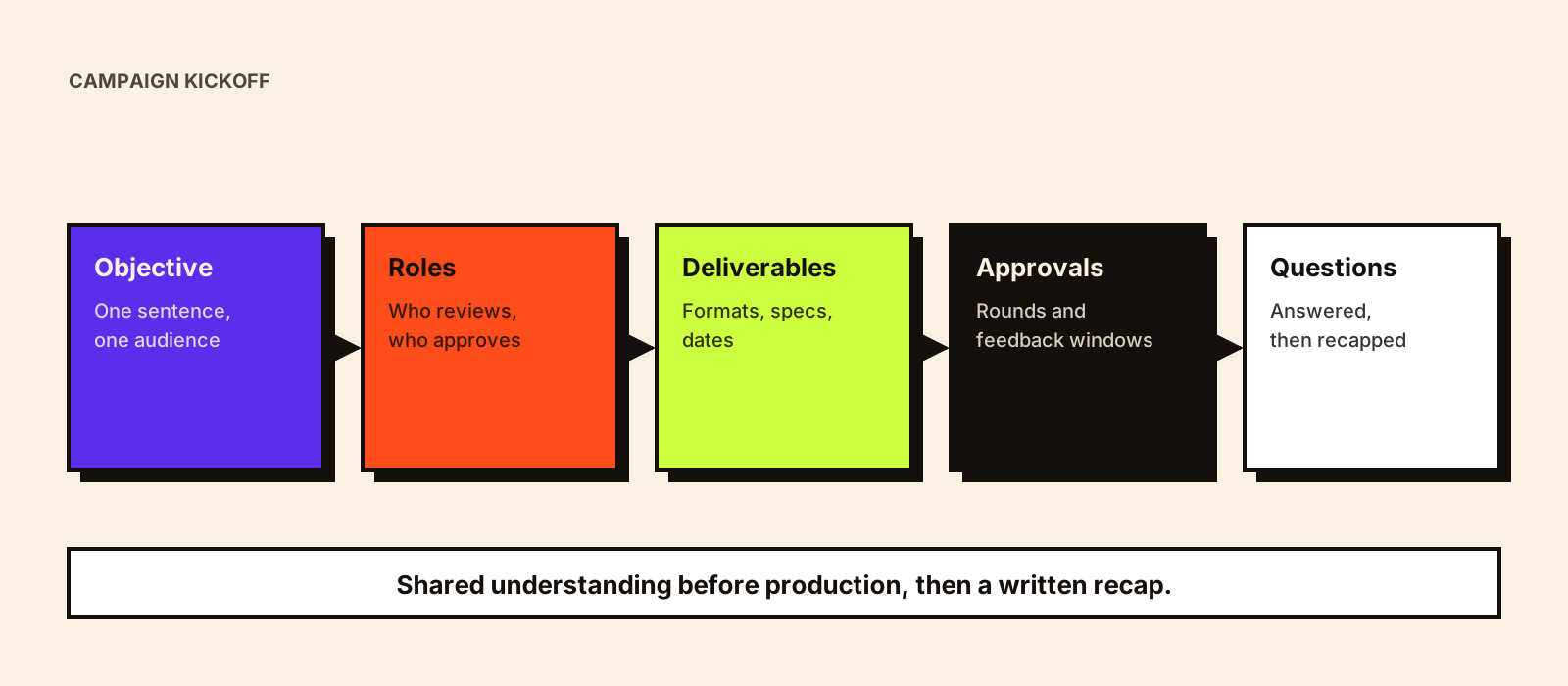
A brief tells a creator what you'd like. A kickoff makes sure you both understand it the same way. Ten or twenty minutes before production starts, on a call or a structured message thread, can save a full round of revisions and the frustration that comes with it.
Quick answer
An influencer campaign kickoff is a short conversation, after the agreement and brief and before production, where brand and creator confirm the campaign objective, who does what, the exact deliverables, the timeline, how they'll communicate, how drafts will be reviewed and approved, and who to contact if something goes wrong. It ends with the creator's questions answered and a written recap of what was agreed.
Why a kickoff matters
- Briefs are read differently by different people; a conversation catches misreadings early.
- Creators can raise practical issues (filming locations, product timing, platform constraints) before they become delays.
- Both sides know exactly how feedback and approvals will work.
- It's often the first real conversation, and it sets the tone of the relationship.
What to cover
| Topic | What to confirm | Common miss |
|---|---|---|
| Objective | What the campaign is for, in one sentence, and the audience | Creator focuses on the wrong goal (reach vs sales) |
| Responsibilities | Who on the brand side briefs, reviews, approves and pays; who on the creator side (creator, manager, editor) | Feedback from several people with different views |
| Deliverables | Exact formats, lengths, platforms, number, links, captions, Stories | 'One Reel' means different things to each side |
| Timeline | Product arrival, draft due, feedback window, revision deadline, go-live, insights due | Go-live date known; draft date not |
| Creative freedom | What's theirs to decide; what's fixed (claims, disclosure, mandatory points) | Brand assumes a script; creator assumes freedom |
| Communication | Channel, response times, working hours | Messages across email, DM and WhatsApp |
| Approval process | How drafts are submitted, who reviews, how many rounds, what counts as a revision | Unlimited rounds by default |
| Escalation | Who to contact if there's a problem (delay, product issue, comment backlash) | No backup contact |
| Questions | Anything unclear in the brief, product or terms | Creator doesn't ask; guesses |
A kickoff agenda
1. Introductions: brand contact, reviewer, creator, manager (2 min)
2. The campaign in one sentence and why we chose you (2 min)
3. Walk through deliverables and timeline (4 min)
4. Creative freedom: what's yours, what's fixed (4 min)
5. Drafts, feedback and approvals: how, who, how many rounds (3 min)
6. Communication and escalation (2 min)
7. Creator questions and ideas (3 min)
AFTER: written recap within 24 hours
Hi [name], thanks for the kickoff. Recap:
• Objective: [ ]
• Deliverables: [ ]
• Dates: product by [ ], draft by [ ], feedback within [x] working days, live on [ ]
• Fixed points: [claims, disclosure, mandatory mentions]
• Your call: [concept, script, music, editing]
• Reviewer: [name]; escalation: [name, contact]
• Questions to follow up: [ ]
Reply here if anything doesn't match your understanding.
Group or one-to-one?
| Situation | Format |
|---|---|
| One or two hero creators | One-to-one call |
| Many creators, same brief | Short group session plus written FAQ; one-to-one for anyone new to brand work |
| Creators across languages | Separate sessions by language where possible |
| Seeding or simple gifted posts | A clear written kickoff message may be enough |
| Creators with managers | Include the manager; let the creator lead creative discussion |
Kickoff checklist
□ Agreement signed and brief shared
□ Product delivered (or delivery date confirmed)
□ Objective and audience understood
□ Deliverables and specs confirmed
□ All dates confirmed, including feedback windows
□ Creative freedom and fixed points clear
□ Reviewer and approval rounds agreed
□ Communication channel and response times agreed
□ Escalation contact shared
□ Disclosure and claims requirements confirmed
□ Creator's questions answered
□ Written recap sent
Kickoff tips for Indian campaigns
- Schedule around creators' shooting days and festival commitments rather than only your office hours.
- Hold sessions in Hindi or the creator's language where it helps them ask questions freely.
- Confirm delivery for smaller towns before promising product dates.
- If a manager handles several creators, agree one consolidated update rhythm with them.
Agree the approval and escalation path explicitly
The two parts of a kickoff most often skipped are the ones that cause the most trouble later. Spell them out:
| Question | Example answer |
|---|---|
| Where are drafts submitted? | Shared folder link or reply to the brief email |
| Who reviews? | One named reviewer, who consolidates others' comments |
| How fast? | Feedback within two working days |
| How many rounds? | Two; a third only if the brief changes |
| What needs legal or medical review? | Health claims; allow an extra working day |
| Who confirms final approval? | The reviewer, in writing, naming the approved version |
| What if something goes wrong after posting? | Contact [escalation name] on [channel]; don't delete without talking to us |
Influencer feedback covers how reviewers should give feedback, and influencer marketing governance covers who approves what inside the brand.
Hypothetical example
Hypothetical: a consumer electronics brand books five YouTube creators for a phone launch. At kickoff, two creators mention that the embargo time conflicts with their usual upload schedule, and one asks whether they can show a competitor phone for comparison. The brand adjusts the embargo by a few hours, explains its comparison policy and adds both answers to a shared FAQ for all five creators. Without the kickoff, those questions would have surfaced at draft stage, days before launch.
For the steps before kickoff, see influencer onboarding; for keeping communication clear afterwards, see influencer communication.
Common mistakes
- Skipping the kickoff because 'it's all in the brief'.
- Using the kickoff to add new requirements not in the agreement.
- Having five brand people on the call and no clear reviewer.
- No written recap.
- Not asking what the creator thinks would work for their audience.
After kickoff, influencer content approval covers how drafts are submitted and reviewed, and influencer campaign tracker covers keeping every creator's status visible.
Conclusion
A good kickoff is short and specific: objective, roles, deliverables, dates, creative freedom, approvals, communication, escalation and questions, followed by a written recap. It turns a brief into a shared understanding. For keeping communication clear after kickoff, see influencer communication strategy.