How Do You Maintain Brand Consistency Across Influencer Content?
How to keep many creators on-brand without making their content look like ads: decide what's fixed, flexible and free, give creators a one-page brand kit, check concepts before filming, review against one standard and adapt across languages.
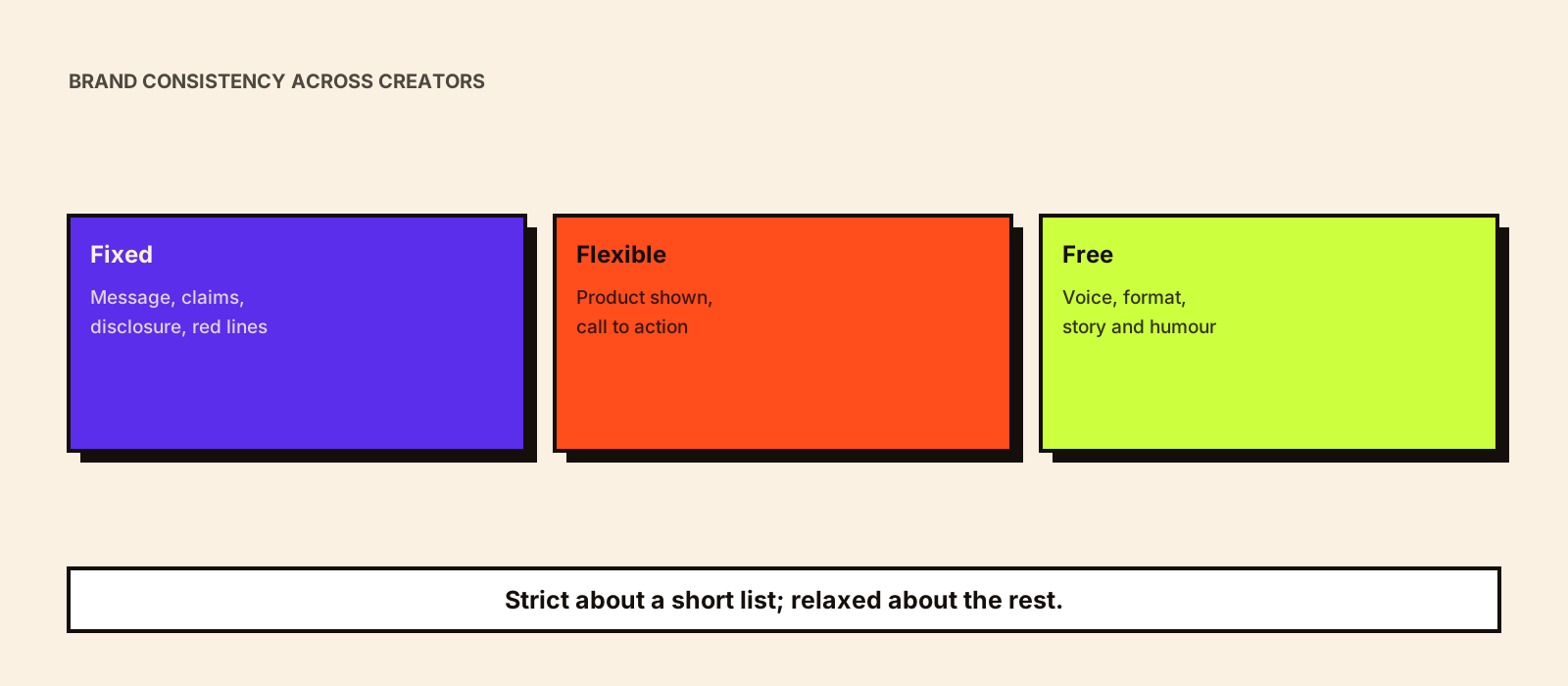
Ten creators, ten styles, one brand. Push too hard for consistency and every video sounds like the same ad read by different people, which audiences scroll past. Push too little and one creator calls the product by the wrong name, another makes a claim legal never approved, and a third shows it next to a competitor. The answer is to be strict about a small number of things and genuinely relaxed about the rest.
Quick answer
Maintain brand consistency across influencer content by separating what must be identical (the key message, product facts, approved claims, disclosure, values and red lines), what should be recognisable (how the product is shown, the call to action, the offer) and what should be left to the creator (voice, format, setting, humour, story). Put the fixed and flexible items in a one-page creator brand kit, agree concepts before filming, review every draft against the same checklist with one consolidated voice, and adapt rather than translate when you work across languages and markets.
Fixed, flexible and free
| Layer | What belongs here | Why |
|---|---|---|
| Fixed (must be identical) | Product name and pronunciation, key message, approved claims and their exact wording, price and offer terms, disclosure, legal requirements, red lines (topics or comparisons to avoid) | Errors here create legal, compliance or credibility problems |
| Flexible (should be recognisable) | How the product appears on screen, the call to action, the link or code, campaign hashtag, one or two brand phrases | Repetition across creators builds recall |
| Free (left to the creator) | Tone, humour, format, setting, story, editing style, how they introduce the product | This is what makes creator content work; scripting it removes the reason you hired them |
Most consistency problems come from putting too much in the fixed layer, not too little. If a brief tries to control the creator's opening line, the music and the shot list, expect stiff content and more revision rounds.
The one-page creator brand kit
WHO WE ARE: two sentences a creator's audience would understand
THE ONE THING TO GET ACROSS: the key message, in plain words
PRODUCT FACTS: name (and how to say it), what it does, who it's for, price
APPROVED CLAIMS: exact wording, and claims we can't make
HOW TO SHOW THE PRODUCT: packaging visible, shade or colour accuracy, how it's used correctly
WORDS WE USE / AVOID: e.g. 'serum' not 'cream'; avoid 'cure', 'guaranteed'
TONE GUARDRAILS: what's fine (humour, honesty about limits) and what isn't
RED LINES: competitors, sensitive topics, unsafe use, minors
DISCLOSURE: exact label and placement for each platform and market
CALL TO ACTION: link or code, and what we want people to do
GOOD EXAMPLES: two or three creator posts (ours or others') that hit the balance
Send the kit with the campaign brief rather than instead of it: the brief covers this campaign's objective and deliverables, the kit covers the brand rules that apply to every campaign. Influencer campaign brief covers the brief itself.
Check concepts before filming
The cheapest place to fix an off-brand idea is before the camera is on. Ask each creator for a short concept (the hook, the story, where the product appears and what they'll say about it) and approve it within a day or two. This catches wrong claims, risky settings and misunderstandings while they're a sentence, not a reshoot. Keep concept approval light: it's to check direction, not to rewrite the creator's idea.
Review against one standard
- Use the same review checklist for every creator: fixed items first (claims, disclosure, product facts), then flexible items, and leave the free layer alone unless something is genuinely wrong.
- Have one person consolidate feedback so creators don't receive contradictory comments from marketing, legal and the founder.
- Separate must-fix comments from suggestions, and say which is which.
- Keep a short log of recurring issues and add them to the brand kit for next time.
The approval workflow is covered in creator content approval process, the checklist in influencer content quality check, and how to phrase feedback in influencer feedback.
Consistency across languages and markets
| Issue | What to do |
|---|---|
| Translating the key message | Adapt it (transcreation) with a native speaker, so it sounds natural in Hindi, Tamil, Arabic or any other language rather than translated |
| Claims | Keep an approved-claims list per market; a claim allowed in one market may need different substantiation or wording in another |
| Disclosure | Use each market's expected label and placement, such as ASCI's guidance in India or the ASA's 'Ad' recommendation in the UK |
| Cultural fit | Check settings, gestures, clothing, music and humour with someone from the market, especially in the Gulf during Ramadan |
| Review | Native reviewers for each language, including different Arabic dialects |
Running creators in several languages is covered in regional and vernacular influencer marketing and the international influencer campaign playbook.
How to tell whether it's working
- Message pickup: do comments repeat the key message or ask questions it answers?
- Fixed-layer errors: how many drafts failed on claims, product facts or disclosure? This should fall campaign by campaign.
- Revision rounds per creator: rising rounds usually mean the kit or brief is unclear, or the fixed layer has grown too big.
- Performance against the creator's usual content: on-brand posts that perform far below a creator's norm suggest over-control.
- Brand recall, where it matters enough to measure, through a brand lift survey.
Recall measurement is covered in influencer brand lift surveys.
Common mistakes
- Scripting creators to get consistency, then wondering why the content reads as ads.
- No approved-claims list, so each creator invents their own.
- Feedback from several people with different standards.
- Checking brand consistency only after filming.
- Translating a message word for word into another language.
- A different brand kit, or none, for every campaign.
Conclusion
Brand consistency across creators comes from being strict about a short list (message, facts, claims, disclosure, red lines), giving creators a clear one-page kit, catching problems at concept stage and reviewing against one standard. Leave the voice to the creator; that's what audiences trust.