Influencer Marketing Annual Plan: How Brands Can Build a 12-Month Creator Strategy
How brands build a 12-month influencer marketing plan: annual objectives, the Indian marketing calendar, splitting budget between always-on activity and peaks, planning across products and regions, the quarterly structure, creator roster planning, measurement and review points, with a copy-ready annual plan template.
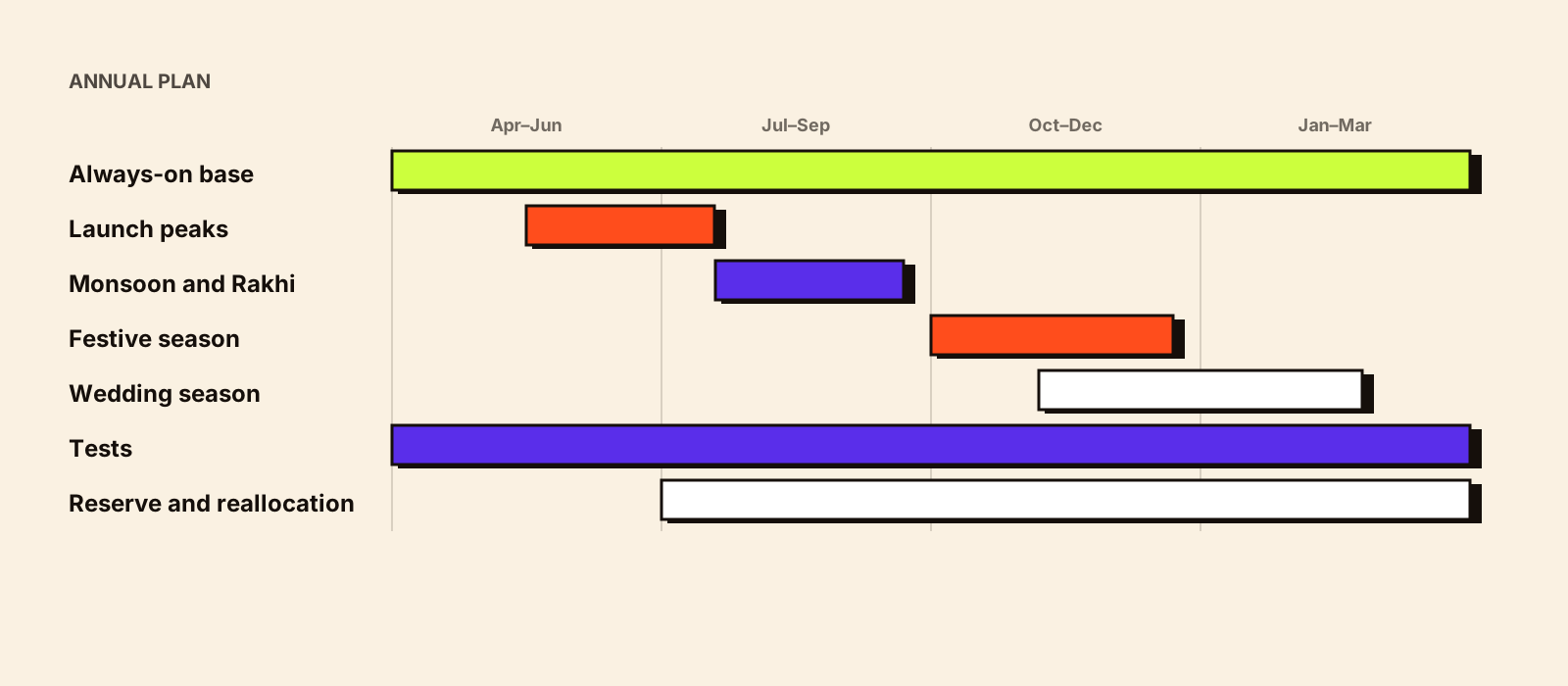
Most brands plan creator work one campaign at a time, which is why creators get booked late for Diwali, launches collide with sale events, and budgets run out in October. An annual plan doesn't fix every date a year ahead. It sets the objectives, the budget shape, the big moments and the review points, so each campaign fits into something bigger.
Quick answer
An influencer marketing annual plan sets yearly objectives tied to business goals, maps the Indian calendar (festivals, sale events, launches, seasons), splits budget between an always-on base and planned peaks, allocates effort across products and regions, plans the creator roster, and schedules quarterly reviews to move budget toward what works. Keep specific campaigns flexible, but lock the moments where creators book up early.
Step 1: Annual objectives
| Business goal | Creator objective | Annual measure |
|---|---|---|
| Grow in new markets | Reach and trust in target regions | Sales and search growth in those markets |
| Launch products | Launch visibility and trial | Launch sales vs plan |
| Lower acquisition cost | Creator content for paid media | Blended CAC |
| Improve retention | Onboarding and community content | Repeat purchase rate |
| Build brand preference | Consistent presence with trusted creators | Brand search and recall surveys |
Step 2: Map the calendar
| Quarter (Indian financial year) | Common moments (vary by brand and region) |
|---|---|
| April to June | Summer, exam results, admissions, wedding season in many regions, Akshaya Tritiya |
| July to September | Monsoon, Independence Day, Raksha Bandhan, Onam, Ganesh Chaturthi, early festive sale build-up |
| October to December | Navratri, Durga Puja, Dussehra, Diwali, festive sale events, wedding season, year-end |
| January to March | New Year, Pongal and Makar Sankranti, Republic Day sales, Holi, financial year-end |
Festival dates follow lunar calendars and move each year, and their importance differs by region, so confirm dates and priorities for your markets every year. Creators book up weeks ahead of the biggest moments. Festival campaign planning is covered in seasonal influencer marketing in India, and sale events in influencer marketing for e-commerce.
Step 3: Shape the budget
| Budget layer | Purpose |
|---|---|
| Always-on base | Monthly creator presence, content for ads and owned channels |
| Planned peaks | Launches, festivals, sale events |
| Test budget | New creators, formats, regions |
| Reserve | Unplanned opportunities and reallocation after quarterly reviews |
How to divide each layer across creator tiers is covered in how to allocate your influencer marketing budget, and forecasting returns in influencer marketing ROI forecasting.
Step 4: Plan across products
- Rank products by business priority for the year: launches, hero products, margin drivers, new categories.
- Match creators to products: some creators suit several products, others only one; avoid pushing unrelated products through the same creator in a short span.
- Space product pushes so the same audience isn't hit with several asks at once.
- Use brand-level creator partnerships for consistent presence, and product-level campaigns for launches.
- Report by product as well as by campaign, so budget follows what sells.
Step 5: Plan across regions
Decide which markets get creator investment this year, in what order, and in which languages. Expand in clusters rather than everywhere at once. How to run campaigns across several markets is covered in how to run a pan-India influencer marketing campaign, and moving beyond metros in influencer marketing in tier 2 and tier 3 cities.
Step 6: Plan the roster
Decide how many core creators you'll keep through the year, which moments need extra creators, and which regions need their own. Lock core creators early with longer agreements; book peak-period creators well before the season. Long-term structures are covered in long-term influencer partnership programs.
Annual plan template
YEAR: [ ]   OWNER: [ ]

ANNUAL OBJECTIVES
1. [ ] — measure: [ ]
2. [ ] — measure: [ ]

BUDGET
Total: ₹[ ]   Always-on: [ ]%   Peaks: [ ]%   Tests: [ ]%   Reserve: [ ]%

CALENDAR
Q1 (Apr–Jun): moments [ ] · products [ ] · regions [ ]
Q2 (Jul–Sep): moments [ ] · products [ ] · regions [ ]
Q3 (Oct–Dec): moments [ ] · products [ ] · regions [ ]
Q4 (Jan–Mar): moments [ ] · products [ ] · regions [ ]

ROSTER
Core creators: [n]   Peak creators by season: [ ]   Regional creators: [ ]

MEASUREMENT
Monthly report: [ ]   Quarterly review dates: [ ]   Year-end review: [ ]

RISKS AND DEPENDENCIES
Launch dates, stock, approvals, agency capacity: [ ]
Quarterly reviews
- Results against annual objectives, not just campaign KPIs.
- Which creators, formats, products and regions beat or missed plan.
- Budget moves: what gets more, less, or stops.
- Roster changes: renew, add, rest.
- Adjustments to the next quarter's calendar.
Common mistakes
- Spending most of the budget before the biggest season.
- Booking festive creators too late.
- Several product teams booking the same creators in the same month.
- No reserve for reallocation after results come in.
- A plan written in April and never reviewed.
Conclusion
An annual influencer plan sets objectives, the calendar, the budget shape, product and regional priorities and the roster, then uses quarterly reviews to move money toward what works. It turns a string of campaigns into a year-long program.