How to Build an Always-On Influencer Marketing Program for Your Brand
How brands scale from one-off influencer campaigns to an always-on creator program: the six stages from first campaign to optimized program, when you're ready, the creator roster, monthly content calendar, budget model, testing, measurement and reporting rhythm, creator retention and content reuse.
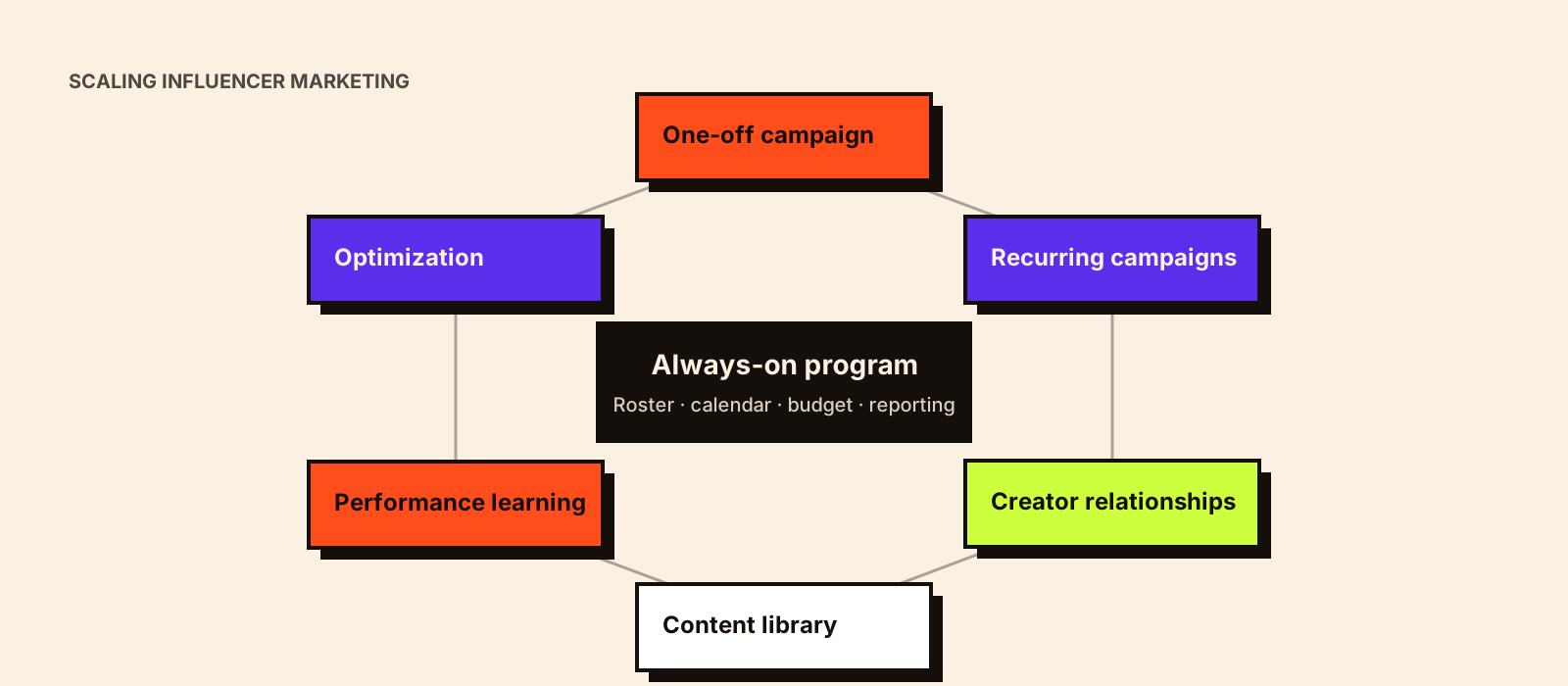
Many brands run influencer marketing like a series of fireworks: a burst for a launch, silence, another burst for a sale. Each campaign starts from zero, with new creators, new briefs and new negotiations. An always-on program replaces that with a steady system: creators who already know the brand, content every month, and each month's results improving the next.
Quick answer
To build an always-on influencer program, move through six stages: a one-off campaign that proves fit, recurring campaigns with the best creators, ongoing creator relationships, a growing content library, performance learning, and continuous optimization. Operationally it needs a core creator roster plus rotating creators, a monthly content calendar that absorbs launches and seasons, a monthly or quarterly budget, a testing plan, a measurement and reporting rhythm, creator retention practices and a system for reusing content in ads, site and email.
From one campaign to always-on
| Stage | What changes | Move on when |
|---|---|---|
| 1. One-off campaign | Test creators, formats and messages | Some creators and formats clearly work |
| 2. Recurring campaigns | Rebook winners for the next launch or season | Results repeat, not just once |
| 3. Creator relationships | Longer agreements with core creators | Creators understand the brand without re-briefing from scratch |
| 4. Content library | Content organized, rights tracked, reused in ads and site | You're reusing content, not just posting it |
| 5. Performance learning | Creator, format and message results compared across months | You can predict what will work |
| 6. Always-on optimization | Monthly rhythm, test budget, rotating new creators | The program runs on a calendar, not on emergencies |
Are you ready for always-on?
- At least one campaign showed results you can measure against an objective.
- You have products or messages worth talking about every month, not just at launch.
- Budget can be committed monthly or quarterly.
- Someone (in-house or agency) can run it every week.
- You can reuse content: ads, product pages, email, marketplaces.
If not, run recurring campaigns first. Rebooking your best creators for each launch is already a big step.
The creator roster
| Group | Role | Typical arrangement |
|---|---|---|
| Core creators | Consistent faces of the program; deepest brand knowledge | Longer agreements, monthly or quarterly deliverables |
| Rotating creators | Fresh audiences and new tests | Campaign-by-campaign |
| UGC creators | Volume of content for ads and product pages | Per-asset or monthly packages |
| Regional creators | Coverage in priority markets and languages | By market, aligned to local calendars |
Individual long-term relationships are covered in how to build long-term influencer partnerships, formal ambassador structures in how to build a brand ambassador program, and UGC-only programs in always-on UGC marketing.
The monthly content calendar
Week 1   Plan: themes, launches, creators booked, briefs sent; review last month
Week 2   Production and approvals for core creators; product seeding for rotating creators
Week 3   Go-lives staggered through the month; amplify top performers from last month
Week 4   Tests go live (new creators, formats or messages); data collection
Monthly  Report: results by creator, format and message; decisions for next month
Quarterly Review: roster changes, budget shifts, bigger learnings, next quarter's plan
Fit launches, festive seasons and sale events into the calendar as peaks on top of the steady base, rather than replacing it. Seasonal timing is covered in seasonal influencer marketing in India.
Budget model
| Budget line | Purpose |
|---|---|
| Core creator agreements | Predictable monthly content and presence |
| Rotating creators | New audiences and tests |
| Test budget | A defined slice reserved for new creators, formats or messages |
| Usage rights and paid amplification | Running proven content as ads |
| Production and UGC | Assets for ads, site and marketplaces |
| Management | Program running, whether in-house or agency |
| Seasonal peaks | Extra budget for launches and festivals |
How to split a fixed budget is covered in how to allocate your influencer marketing budget.
Testing and optimization
- Test one thing at a time where possible: creator type, format, hook, message or offer.
- Keep a test log with hypothesis, result and decision.
- Promote winners to the core roster or to paid amplification; retire what doesn't work.
- Refresh content before audiences tire of it; watch engagement on repeat creators.
Measurement and reporting rhythm
| Cadence | Focus |
|---|---|
| Weekly | Delivery: what's live, what's late, early performance |
| Monthly | Results by creator, format and message; content reused; spend vs plan |
| Quarterly | Business outcomes: new customers, CAC, search lift, repeat purchase; roster and budget decisions |
Report structure: how to create an influencer marketing report. Kudozz's reporting service and outreach and management service cover this rhythm for brands running programs through the agency.
Keeping creators engaged
- Pay on time, every time.
- Give creative freedom within clear guardrails; core creators know your audience's reaction better than a script does.
- Share results with creators, so they learn what works too.
- Offer early access to launches and input on products where it's genuine.
- Review terms and rates at renewal fairly.
Content reuse
An always-on program produces a library. Track rights per asset (platforms, duration, paid use), tag content by product, format and message, and feed the best pieces into ads, product pages, marketplace listings and email. Reuse is covered in how to repurpose influencer content.
Scaling the program across India
Once the program works in its first markets, scale it the way consumer brands scale distribution: cluster by language and state, add regional creators to the roster for each cluster, localize briefs with native speakers, and report by market so budget moves to where it works. Expansion beyond metros is covered in influencer marketing in tier 2 and tier 3 cities, multi-language coordination in how to run a pan-India influencer marketing campaign, and the language decisions in regional and vernacular influencer marketing.
| Scale lever | What changes |
|---|---|
| More markets | Regional creator clusters, localized briefs, market-level reporting |
| More content | UGC stream and variants for paid media |
| More creators | Rotating tests feed a larger core roster |
| More channels | Creator content reused in ads, product pages, marketplaces and email |
Common mistakes
- Going always-on before any campaign has proved fit.
- The same creators forever, with no testing.
- No test budget, so learning stops.
- Monthly reports that list posts but make no decisions.
- Rights not tracked, so good content can't be reused.
Conclusion
Scaling influencer marketing isn't doing bigger campaigns; it's building a system. Prove fit, rebook what works, turn it into relationships, build a content library, learn from every month and optimize continuously. With a roster, calendar, budget model, testing plan and reporting rhythm, creator marketing becomes a dependable channel rather than a series of launches.