Influencer Marketing for Customer Retention: How Brands Can Turn Creators Into Long-Term Advocates
How brands use creators after the first purchase: onboarding and how-to content, reorder reminders, community programs, turning loyal customers into creators, loyalty and referral mechanics, and measuring repeat purchase, churn and lifetime value.
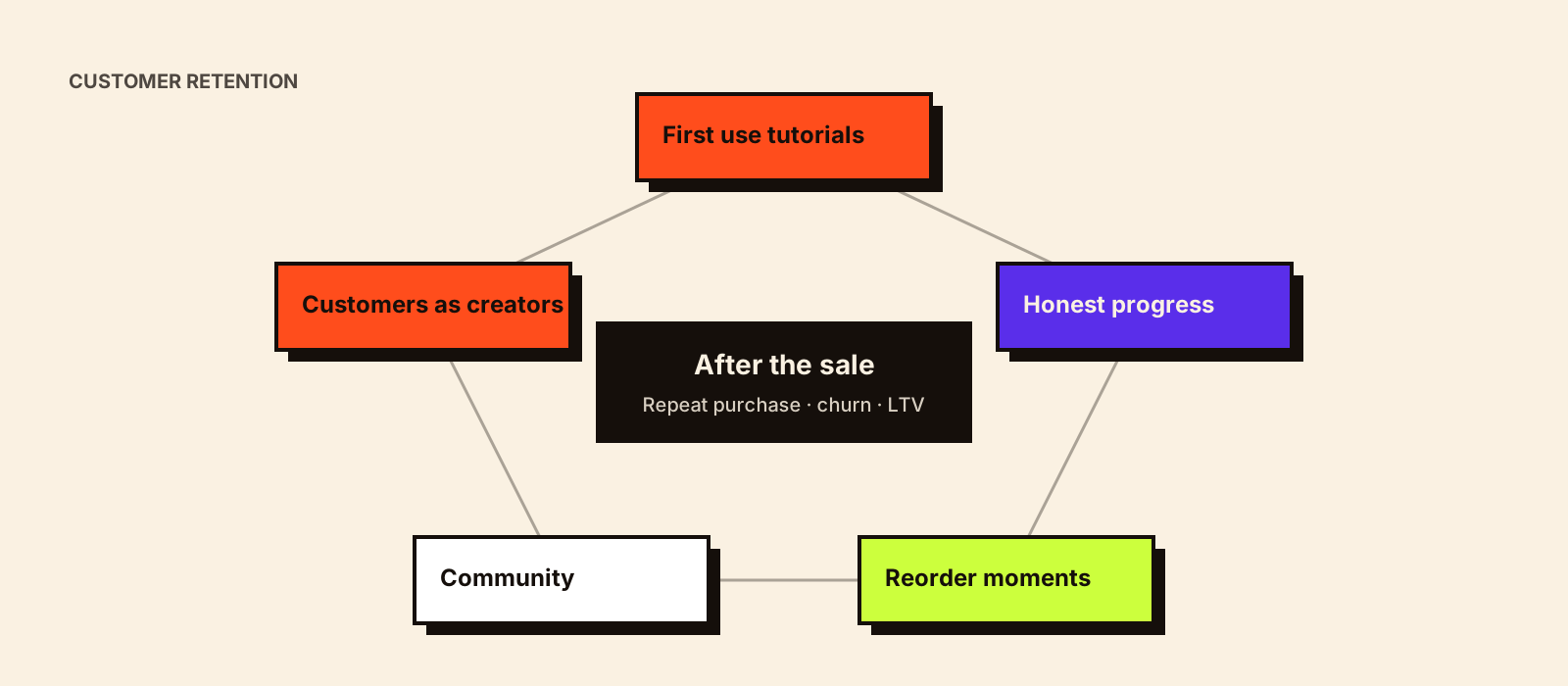
Most creator budgets stop at the first order. Yet many brands lose customers in the weeks after purchase: the product wasn't used properly, results took longer than expected, or a competitor's creator reached them first. Creators can help after the sale too, and the content is often cheaper to make because it answers questions customers are already asking.
Quick answer
Influencer marketing supports retention by helping customers succeed with the product (tutorials, routines, troubleshooting), keeping the brand present at reorder moments, building community around shared use, and turning satisfied customers into creators and advocates. Distribute this content through owned channels (email, WhatsApp, packaging QR codes, app) as well as social, and measure repeat purchase rate, time to second order, churn and lifetime value for exposed versus unexposed customers.
Where customers drop off
| Moment | What goes wrong | Creator content that helps |
|---|---|---|
| First use | Wrong usage, disappointing first result | How-to and first-week guides from trusted creators |
| Waiting for results | Doubt before benefits appear | Honest progress series over weeks |
| Reorder window | Forgetting, or switching to a competitor | Reminder content, new uses, variants |
| Plateau | Boredom with the product | New recipes, routines, accessories, occasions |
| Problems | Unresolved questions | Troubleshooting and FAQ content |
Four retention plays
1. Onboarding content
Commission short tutorials from creators whose audiences resemble your customers, and send them after purchase by email or WhatsApp, or through a QR code in the box. Usage rights for owned channels need agreeing upfront.
2. Reorder moments
Time creator content to typical reorder windows: new ways to use the product, seasonal variants, bundles. Retargeting existing customers with creator content can feel more useful than a discount email.
3. Community
Creator-hosted live sessions, challenges and groups give customers a reason to stay engaged. Communities work when there's a shared goal (fitness, cooking, skincare routines, learning) rather than simply a brand.
4. Customers as creators
Your most loyal customers are often the most believable creators. Invite them into a customer creator or advocacy program with clear, disclosed rewards (early access, products, commission). Disclosure applies to customers too when they receive something of value; see the creator disclosure guide.
Programs that support retention
| Program | Retention role | Guide |
|---|---|---|
| Ambassador program | Consistent faces customers follow | Influencer ambassador programs |
| Always-on creator program | Regular fresh content for owned channels | Always-on influencer marketing |
| UGC library | Real customer content on product pages and emails | Always-on UGC marketing |
| Referral and affiliate | Rewards for bringing new customers | Influencer marketing vs affiliate marketing |
Guides: influencer ambassador programs, always-on influencer marketing, always-on UGC marketing and influencer marketing vs affiliate marketing.
Measuring retention impact
| Metric | How to read it |
|---|---|
| Repeat purchase rate | Share of customers who buy again within a set period |
| Time to second order | Whether content shortens the gap |
| Churn (subscriptions) | Cancellations among exposed vs unexposed customers |
| Lifetime value by acquisition source | Whether creator-acquired customers stay longer |
| Content engagement from customers | Tutorial views, QR scans, community participation |
Compare groups fairly: customers who received creator onboarding content against similar customers who didn't, over the same period. Acquisition-side measurement is covered in influencer marketing for sales.
An illustrative program
Illustrative example, not a case study. A D2C coffee brand notices many first-time buyers never reorder. It commissions three brewing tutorials from coffee creators, links them through a QR code on the pack and a day-3 WhatsApp message, and invites its most engaged customers into a monthly creator recipe series. After a quarter, it compares reorder rates for customers who received the tutorials with those who ordered before the program started.
Common mistakes
- Spending all creator budget on acquisition while repeat rates fall.
- Onboarding content without usage rights for owned channels.
- Undisclosed rewards for customer advocates.
- Communities with no shared purpose beyond the brand.
- Measuring retention without a comparison group.
Conclusion
Creators can keep customers as well as win them: help people succeed with the product, show up at reorder moments, build community and turn loyal customers into advocates. Distribute through owned channels, disclose rewards, and measure repeat purchase against a fair comparison.