How Creator Content Can Help Reduce Product Returns: 12 Ways
How brands can use creator content to reduce avoidable returns: mapping return reasons to content, 12 ways from fit across bodies to compatibility checks, where to place it and how to measure the effect honestly.
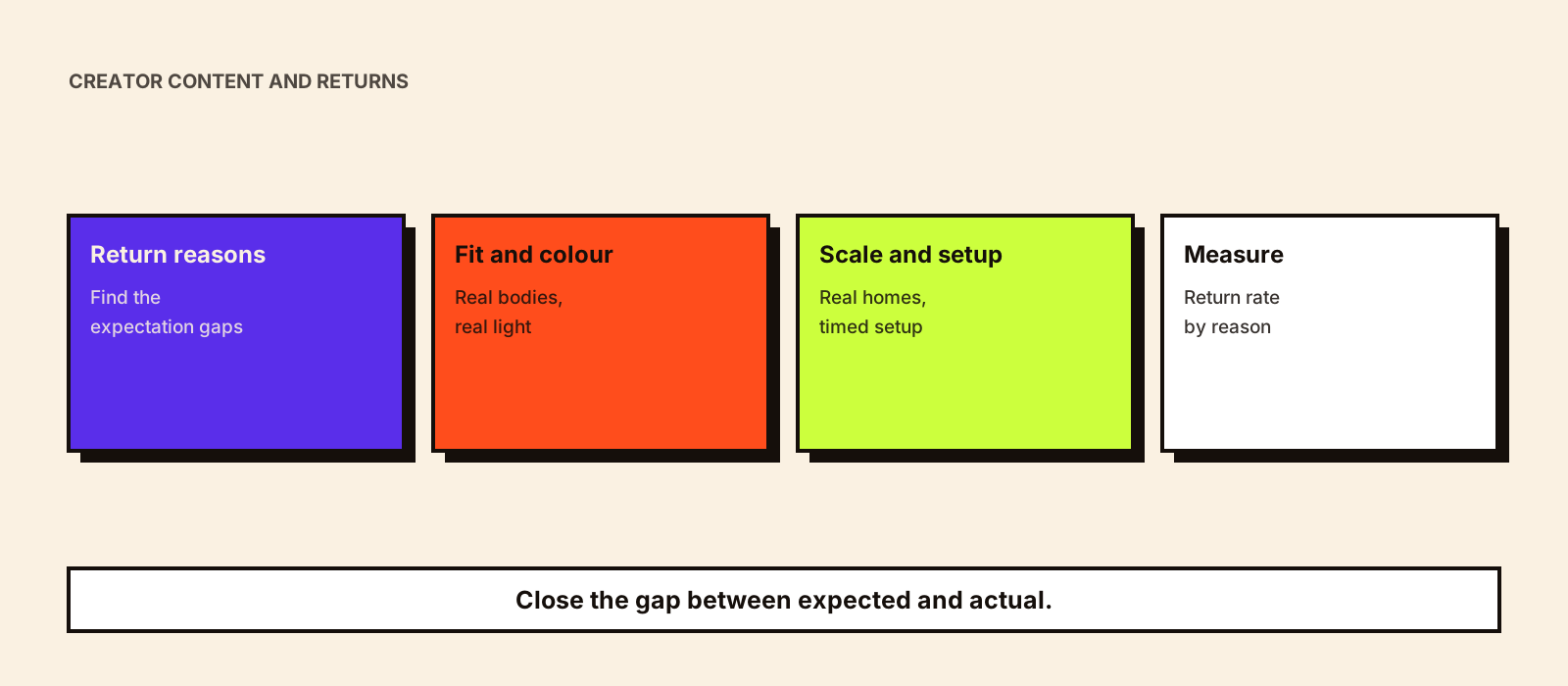
Many returns aren't about faulty products. The shirt fitted differently from the photo, the shade looked darker at home, the blender was louder than expected, the shelf didn't fit the wall. Creator content can't fix a bad product, but it can close the gap between what a buyer imagines and what arrives, which is where a lot of avoidable returns start. This guide covers how to find which returns content could help with, what to show, where to put it and how to tell whether it worked.
Quick answer
Creator content may help reduce returns when it sets accurate expectations before purchase: fit on different bodies with sizes stated, true colour in natural light, real scale in real homes, honest setup time, and clear notes on who a product doesn't suit. Start from your return reasons, match each to a piece of content, place it beside the size, colour or variant selector, and measure return rates by reason against a period or group without the content. Whether it works depends on the product, the content and how it's used; content that oversells can raise returns instead.
Start from your return reasons
Pull return and exchange reasons for your top-returned products from your store, marketplaces and customer service. Group them, then decide which are expectation problems that content could address and which are product, logistics or quality problems that it can't.
| Return reason | Expectation gap? | Content that may help |
|---|---|---|
| Size or fit | Yes | Creators of different sizes wearing stated sizes |
| Colour or shade looked different | Yes | Unfiltered video in daylight and indoor light |
| Smaller or bigger than expected | Yes | The product in a real room, hand or body, with dimensions |
| Too hard to set up or use | Yes | Setup from box to first use, timed |
| Didn't suit my needs | Often | Who it's for and who it isn't, said plainly |
| Wrong variant ordered | Often | Variant differences shown side by side |
| Damaged or defective | No | Packaging and quality fixes, not content |
| Arrived late | No | Logistics, not content |
12 ways to use creator content against avoidable returns
1. Fit across bodies
Ask several creators with different body types to wear the same item, each stating height, usual size and the size they're wearing.
- Place it beside the size selector, not at the bottom of the page.
- Works for apparel, footwear, innerwear and accessories.
2. The creator's measurements against the size chart
A creator measures themselves on camera, reads your size chart and explains which size they chose and why.
- Only use the current size chart; old charts cause the returns you're trying to prevent.
3. True colour in more than one light
Show the product in daylight, indoor light and on different skin tones where relevant, without filters.
- Especially useful for cosmetics shades, paint, fabrics and furniture finishes.
4. Variant side by side
For products with several variants (shades, sizes, capacities, models), one video showing them together helps buyers pick the right one first time.
- Label each variant on screen with the exact name used on the product page.
5. Real scale
Show the product in a real home, hand or bag, with the dimensions on screen.
- Furniture, appliances, luggage and jewellery are common scale surprises.
6. Unbox to first use
Film setup from opening the box to first use in one take or with the time shown.
- Put it in the order confirmation or delivery email as well as the product page.
7. Compatibility checks
For products that must work with something else (a phone, a car, a tap fitting, a router), show the creator checking compatibility and where to find the model number.
- Keep compatibility claims to what the brand has tested.
8. Who it's not for
A short creator explanation of who should choose a different product, or a different variant.
- Counter-intuitive, but honest guidance often builds trust with the buyers who stay.
9. Expected versus actual
Creators show what the product looks like in everyday use compared with the studio photo: texture, noise, finish, portion size.
- Avoid edits that make the real product look better than it is.
10. A few weeks in
A dated follow-up after a few weeks shows how a product holds up in normal use.
- Don't let creators make durability promises; show their experience and date it.
11. Answers to the questions that precede returns
Turn the most common pre-purchase questions from customer service into short creator answers.
- Questions about fit, washing, battery life and assembly are typical.
12. Care and use after delivery
How to wash, store or maintain the product, so it doesn't fail early through misuse.
- Send it after delivery, not only before purchase.
Category-specific ideas for fashion, jewellery, food and home products are in the UGC category idea banks, and how variants and specifications can be compared fairly is in how to brief creators for honest product comparisons.
Where the content goes
| Place | What to put there |
|---|---|
| Beside the size, colour or variant selector | Fit, true colour and variant comparisons |
| Product page gallery | Real scale and expected versus actual |
| Ads and retargeting | Who it's for, honest demos |
| Order confirmation and delivery emails | Setup and first-use videos |
| Box insert with a QR code | Setup and care videos |
| Marketplace listings, where video is supported | The same fit and scale content |
India's Consumer Protection (E-Commerce) Rules, 2020 require e-commerce entities to display return, refund and exchange information, so keep creator content consistent with the policy shown on the page. How to place creator content on product pages is covered in UGC content for e-commerce.
How to measure it
- Choose a few high-return products and record the return rate by reason for a baseline period.
- Add the content, then compare the same reasons over a similar period, accounting for seasonality and sales events.
- If your platform allows it, compare orders from shoppers who watched the video with those who didn't, while noting that watchers may differ in other ways.
- Watch conversion as well: content that lowers returns but also lowers sales isn't a win.
- Track returns by creator for creator-driven orders.
Tracking returns by creator is part of measuring customer quality from influencer campaigns.
Limits
- Content can't fix inconsistent sizing, defects or delivery problems.
- Fit content helps most when creators resemble your customers.
- Overselling in creator content raises returns rather than reducing them.
- Results vary by product and audience; test before rolling it out across the catalogue.
Conclusion
Use creator content where returns come from surprises: fit, colour, scale, setup and suitability. Start from return reasons, put the right clip at the right decision point, keep it honest and measure by reason. Kudozz produces fit, demo and setup content with creators through its UGC content production service.