Influencer Marketing for Sales: How Brands Can Turn Creator Campaigns Into Revenue
How brands use influencer marketing to drive sales and acquire new customers: when creators drive direct sales, creator types and formats that convert, codes, links and affiliate structures, offers, paid amplification of creator content, tracking across websites and marketplaces, CAC, repeat purchase and measuring incrementality.
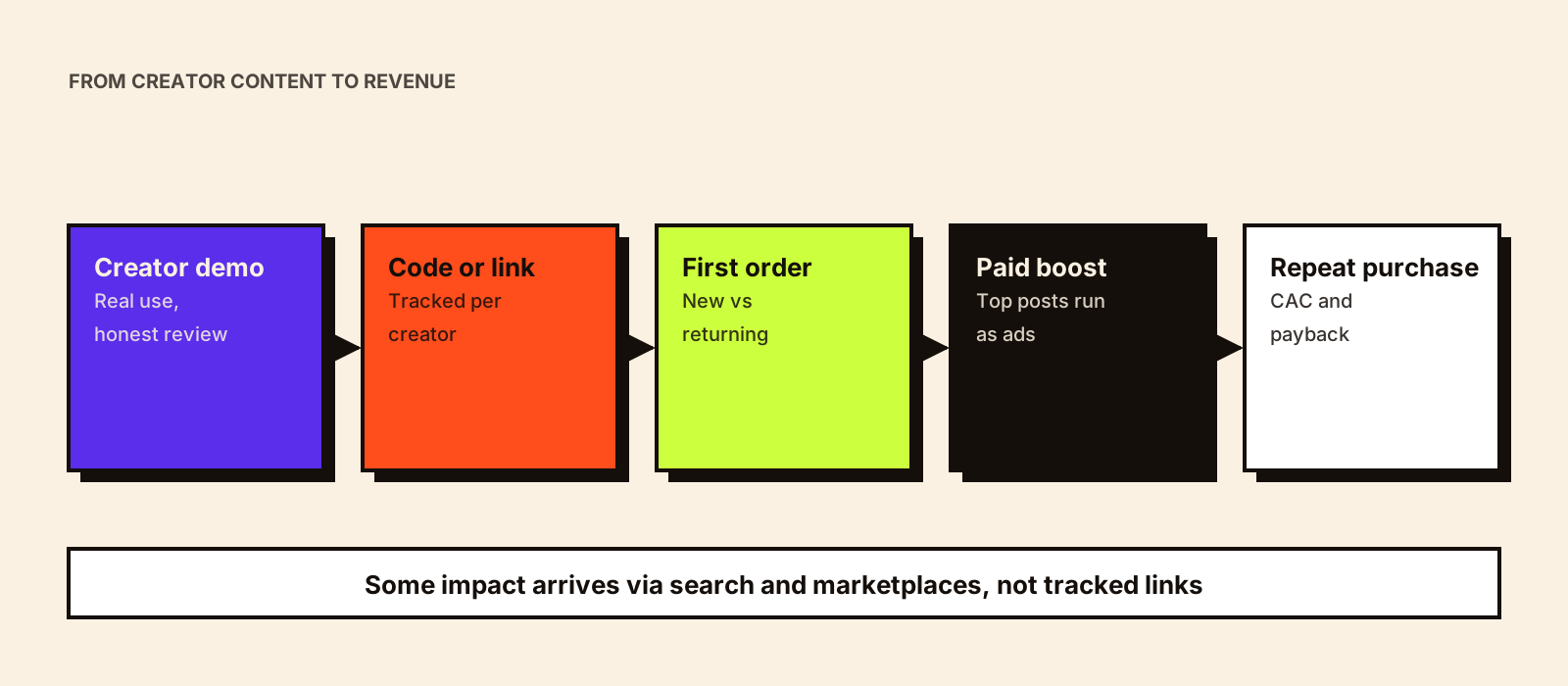
Performance marketers often come to influencer marketing with a fair question: does it actually sell, or is it an awareness line item? The honest answer is that creators can drive sales and new customers well, when the product, creator, offer and tracking are set up for it, and that some of the value will always show up in places a discount code can't see.
Quick answer
Influencer marketing drives sales when creators with buying-intent audiences show the product in real use, give a clear reason and way to buy (a link, code or shoppable tag), and the best-performing content is amplified with paid media. Track with creator-specific codes and links, measure new-customer orders and cost per acquisition against your other channels, watch repeat purchase, and use holdouts or before-after comparisons to judge incrementality. Expect some impact to arrive through search, direct visits and marketplaces rather than tracked links.
When creators drive direct sales
| Stronger for direct sales | Weaker for direct sales |
|---|---|
| Products that are easy to show and understand in a video | Products needing long explanation or high trust (use lead generation) |
| Price points people buy on impulse or after short research | Very high-ticket purchases |
| Audiences already buying in the category | Entertainment audiences with no buying context |
| Available where the audience shops (site, marketplace, quick commerce) | Limited availability or stock |
For considered purchases, see influencer marketing for lead generation.
Formats and creators that convert
- Demonstrations and honest reviews, showing the product solving a real problem.
- Comparisons and "what I actually use" content from trusted niche creators.
- Tutorials and routines where the product is part of the process.
- Micro and mid-tier specialists with engaged, relevant audiences often convert better per rupee than broad-reach creators; test to find out for your category.
- Repeat appearances: several posts over weeks beat one sponsored post.
Codes, links and compensation
| Mechanism | Strength | Watch for |
|---|---|---|
| Creator discount codes | Easy to track, gives the audience a reason to act | Code-sharing sites; margin impact |
| UTM links | Tracks traffic and site conversion | Lost on marketplaces and in-app browsers |
| Affiliate commission | Pay for results | Few creators accept commission-only; combine with a fee |
| Shoppable tags and platform shopping | Short path to purchase | Availability varies by platform and country |
| Hybrid fee plus commission | Aligns incentives | Clear attribution rules needed |
Affiliate structures are compared in influencer marketing vs affiliate marketing, and platform shopping in Instagram influencer affiliate marketing.
Amplify what works
Organic creator posts reach part of the audience once. Running the best creator content as ads (for example through Instagram partnership ads, with the creator's permission and usage agreed) extends reach to lookalike and retargeting audiences with content that already proved it can persuade. Budget for usage rights and media from the start. See Instagram partnership ads.
Tracking across site, marketplaces and quick commerce
- Own website: UTM links, codes and post-purchase "how did you hear about us" surveys.
- Marketplaces: brand-level sales and search trends during campaign windows; tracked links are harder, so use codes and time-based comparison.
- Quick commerce and offline: regional sales lift in campaign cities compared with similar non-campaign cities.
- Branded search: a common sign creators sent people looking.
Customer acquisition, not just orders
| Metric | How to use it |
|---|---|
| New vs returning customers | Did creators bring new customers or discount existing ones? |
| Cost per acquisition (CAC) | Total campaign cost divided by new customers; compare with paid social and search |
| First-order value | Did creator customers buy more or less than average? |
| Repeat purchase | Do creator-acquired customers come back? Check at 30, 60, 90 days |
| Payback | How long until gross margin from these customers covers the CAC |
Creator-acquired customers sometimes behave differently from discount-driven ones; tracking cohorts shows whether you're buying loyal customers or one-time bargain hunters. D2C-specific measurement is covered in the D2C influencer marketing funnel.
Running the paid side of this properly, from rights to creative testing, is covered in influencer performance marketing.
Incrementality
Codes and links undercount (people forget codes, buy on marketplaces, search later) and overcount (code-sharing, existing customers using discounts). For bigger campaigns, compare campaign regions with similar non-campaign regions, or compare periods before and after with other spend held steady. Treat results as ranges and improve the method each campaign.
Illustrative sales campaign
Illustrative example, not a case study. A kitchen appliance brand runs 12 micro-creators making recipe demos, each with a code for a small first-order discount. After two weeks, four creators account for most coded orders; their videos are run as partnership ads for a further month. The team tracks new-customer share, CAC against paid social, and 60-day repeat purchase before deciding which creators to rebook.
Common mistakes
- Expecting one post to sell.
- Deep discounts that train buyers to wait for codes.
- Ignoring marketplace and search impact because codes undercount.
- Not agreeing usage rights before wanting to run creator content as ads.
- Counting orders without separating new customers.
Conclusion
Creators sell when the product shows well, the audience buys in the category, the path to purchase is short and tracked, and the best content gets paid reach. Judge success on new customers, CAC and repeat purchase, accept that some impact shows up outside tracked links, and scale the creators and content that prove themselves.