Influencer Marketing for Website Traffic: How to Drive Qualified Visitors From Creators
How brands use creators to drive qualified website traffic: when traffic is the right objective, how links actually work on Instagram, YouTube and other platforms, tracking with UTMs, landing pages that match the creator's promise, quality metrics beyond clicks, and fixing campaigns that send visitors who leave.
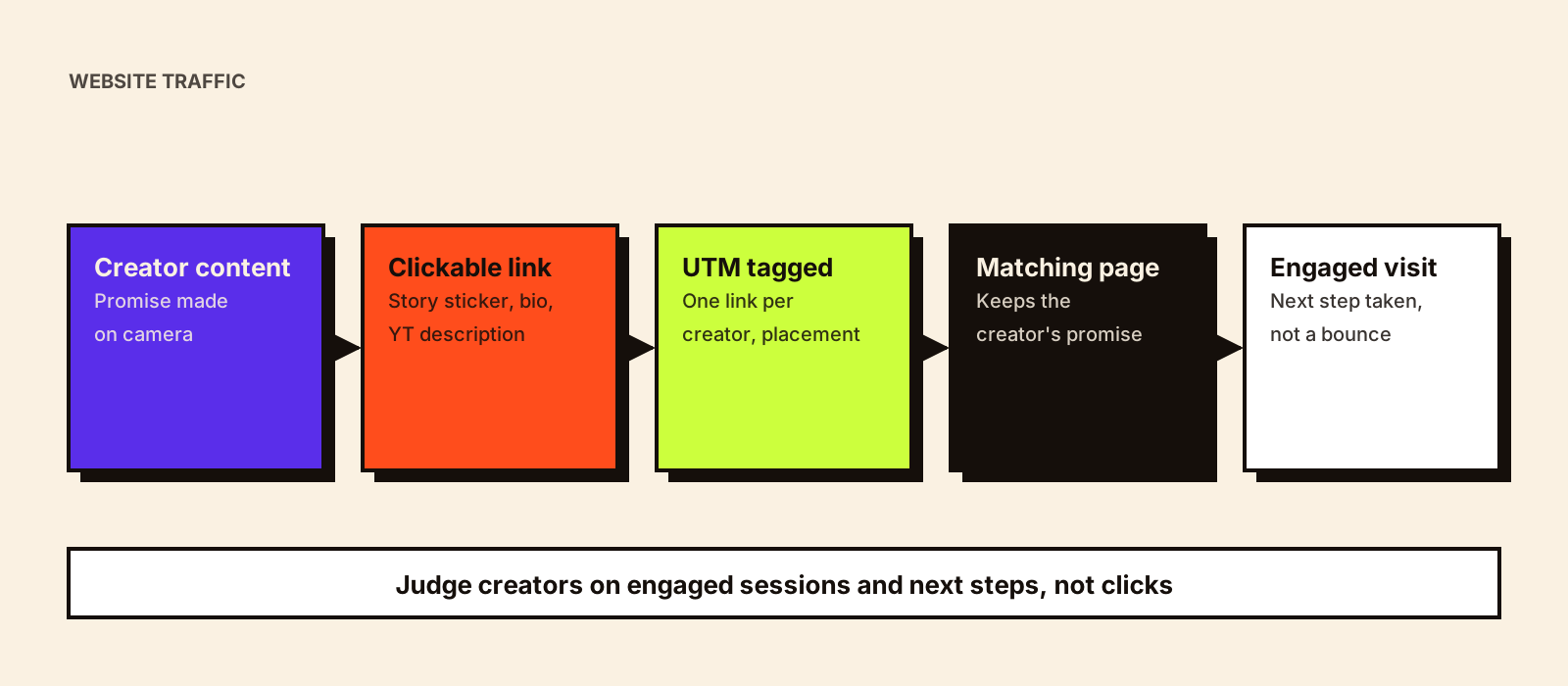
Traffic is the objective brands most often set for creator campaigns and then quietly regret. A campaign can send thousands of clicks that bounce in seconds, or a few hundred visitors who read, compare and come back. The difference is rarely the creator's reach; it's the link, the promise in the content and the page it lands on.
Quick answer
To drive qualified website traffic from creators: choose formats where links are actually clickable (Instagram Story link stickers and bio links, YouTube long-form descriptions and pinned comments, newsletters and blogs), give every creator a UTM-tagged link, send visitors to a landing page that continues the creator's story, and judge the campaign on engaged sessions, pages per visit and downstream actions rather than raw clicks. Traffic is a good objective when the website is where the next step genuinely happens: research, comparison, sign-up or purchase.
When traffic is the right objective
| Good fit | Poor fit |
|---|---|
| Considered purchases researched on your site | Impulse products bought on marketplaces |
| Content-rich sites (guides, tools, calculators) | Thin sites with little beyond a homepage |
| Launches where the site explains the product | Awareness bursts where recall matters more than visits |
| Retargeting pools for later ads | Audiences outside your target market |
If the real goal is orders or enquiries, set that as the objective and treat traffic as a step; see influencer marketing for sales and influencer marketing for lead generation.
How links actually work, by platform
| Platform and format | Link options (September 2026) | Implication |
|---|---|---|
| Instagram Stories | Link sticker | The most dependable click path on Instagram; pair Reels with a Story |
| Instagram profile | Links in bio | Creators can add a link temporarily; ask for dates |
| Instagram Reels and feed posts | Caption links aren't clickable; clickable Reel links are limited to some accounts and paid tiers | Use Stories, bio links or comment-to-DM flows rather than relying on captions |
| YouTube long-form | Clickable description links and pinned comments | Strongest for considered traffic |
| YouTube Shorts | Description and comment links have not been clickable since 2023; limited surfaces such as related video links exist | Use Shorts for awareness and send traffic via long-form or channel links |
| Newsletters, blogs, LinkedIn posts | Standard links | Often the highest-intent visitors |
Link features change often and vary by account, so confirm what each creator can use before briefing. Sources: YouTube's 2023 announcement on Shorts links, as reported by Tubefilter, and platform help centres.
Tracking: UTMs and naming
utm_source=creator-handle
utm_medium=influencer
utm_campaign=serum-launch-oct
utm_content=story-link  (or yt-description, bio-link)

One link per creator per placement. Shorten with a branded short link if the creator prefers.
- Create links before content is made, and put them in the brief.
- Test every link on mobile before go-live.
- Keep a sheet mapping links to creators and placements.
- Expect some traffic without tags (people who search your brand after watching); watch branded search and direct traffic too.
Landing pages that keep visitors
| Creator content promised | Landing page should show |
|---|---|
| "Here's the serum I use for pigmentation" | That product, the claim, how to use it, reviews |
| "This calculator saved me time" | The calculator, not the homepage |
| "Use my code for the launch offer" | The offer applied or clearly explained |
| "Full comparison on their site" | The comparison, above the fold |
- Fast on mobile data; many creator viewers arrive on phones in low-bandwidth conditions.
- In the language of the creator's content, where you can support it.
- One clear next step: buy, sign up, try the tool, book a call.
- A way back into the site for visitors who want to explore.
Measure quality, not clicks
| Metric | What it tells you |
|---|---|
| Engaged sessions and engagement rate | Whether visitors actually used the page |
| Pages per session, time on key pages | Depth of interest |
| Next-step actions | Sign-ups, add-to-carts, tool uses, enquiries |
| Returning visitors | Whether creator traffic comes back later |
| Cost per engaged session | Efficiency across creators |
| Assisted conversions | Traffic that converts on a later visit |
Full metric definitions are in influencer marketing KPIs.
Fixing traffic that bounces
| Symptom | Likely cause | Fix |
|---|---|---|
| Many clicks, instant exits | Landing page doesn't match the content | Deep-link to the exact product or tool |
| Low clicks despite high views | Link hidden or format not clickable | Add a Story link sticker; pin the link |
| Traffic from outside your market | Creator audience mismatch | Check audience location before booking |
| Slow pages | Heavy page on mobile | Speed up or use a lighter landing page |
Common mistakes
- Linking every creator to the homepage.
- Asking for links in formats where they aren't clickable.
- No UTMs, so all creator traffic looks like "direct" or "social".
- Judging creators by clicks instead of engaged sessions and next steps.
- Launching traffic campaigns before the site can convert.
Conclusion
Creator traffic is worth having when the website is where the next step happens. Use formats with real links, tag every link, land visitors on a page that keeps the creator's promise, and measure engagement and next steps rather than clicks.