Why Influencer Campaigns Generate Engagement but Not Sales
Likes and comments without orders usually have a findable cause: broken tracking, the wrong audience, a weak next step, a landing page that loses people, or an objective that was never about sales. A stage-by-stage diagnosis and what to change.
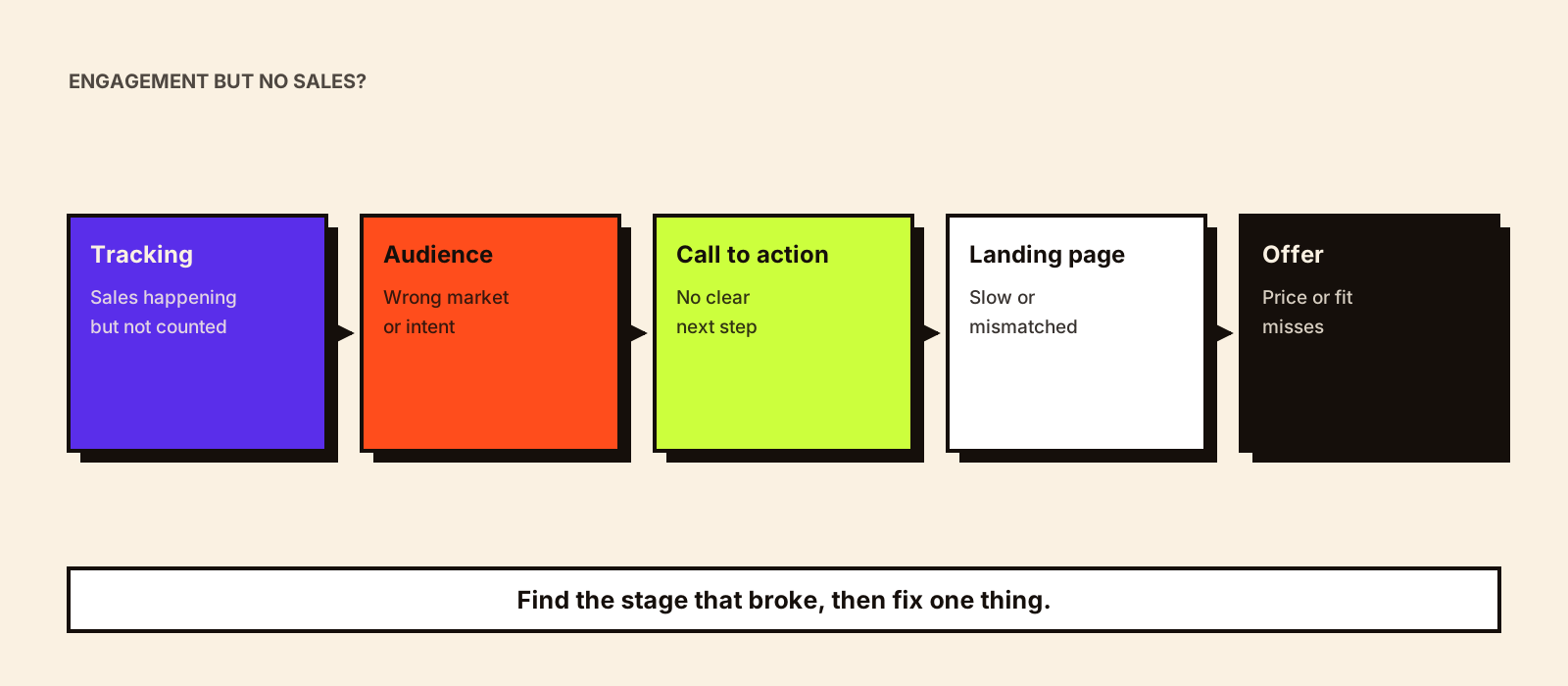
The Reels did well. Thousands of likes, hundreds of comments, creators happy with the numbers. The sales report shows a handful of orders. Before deciding that influencer marketing doesn't work for your brand, find out where the chain from attention to purchase broke. It usually breaks in one or two specific places, and most of them can be fixed.
Quick answer
Engagement without sales usually comes from one of six causes: sales are happening but aren't being tracked, the engaged audience isn't your buyer (wrong country, age or intent), the content entertained without giving a clear reason or way to buy, the landing page or checkout lost people, the offer or price didn't fit the audience, or the campaign was built for awareness and judged on sales. Check them in that order, using clicks, landing-page behavior and orders as stage-by-stage evidence, and change one thing at a time.
Step 1: check whether sales are really missing
- Do the creator links work on a phone, and do the tags survive any redirect?
- Is the code active, on the right products, and spelled the way the creator said it?
- Are buyers going to a marketplace, a store, WhatsApp or cash on delivery, where your report can't see them?
- Has enough time passed? Considered purchases can follow days or weeks after the post.
- Did branded search, direct traffic or baseline sales move during the campaign, even if codes didn't?
If the answer to any of these is unclear, fix measurement before judging the creators. How to track influencer sales covers codes, links and untracked channels, and how long influencer marketing takes to show results covers sensible waiting times.
Step 2: find the stage where people drop off
Write the chain out with your own numbers. Hypothetical example: 2,00,000 views, 0.4% of viewers click (800 clicks), 1% of visitors buy (8 orders). Then compare each step with your normal rates from other channels. If your site usually converts 2.5% of visitors and creator traffic converts 1%, the problem is after the click. If creator traffic converts normally but almost nobody clicks, the problem is in the content, the audience or the call to action.
| Symptom | Likely causes | What to check |
|---|---|---|
| High engagement, very few clicks | No clear call to action; link hard to find; content entertained but didn't sell; audience not in a buying mood | Was the product shown in use? Was there a reason to act now? Where was the link? |
| Engagement from the wrong places | Creator's audience outside your selling regions or age group | Audience location and age from creator insights; traffic by country in analytics |
| Suspiciously generic engagement | Giveaway hunters, engagement groups or bought engagement | Comment audit: product questions versus emojis and 'nice post' |
| Clicks, but visitors leave quickly | Slow page, wrong landing page, message mismatch, in-app browser problems | Load time on mobile; does the page show what the creator showed? |
| Add to cart, but no orders | Shipping cost or delivery coverage, payment options, price surprise | Checkout drop-off; delivery pin codes or regions; cash on delivery availability |
| Orders only with a big discount | Audience curious but price-sensitive; product-audience fit | Order value and margin by creator; repeat purchase later |
Judging engagement quality, including comment audits and suspicious patterns, is covered in influencer engagement quality.
Step 3: check the objective and the creator fit
Some campaigns were never built to sell directly. Entertainment-led creators, broad lifestyle audiences and storytelling briefs build familiarity, and familiarity often turns into sales slowly and through other channels. If the brief asked for reach and the review asks for orders, the campaign hasn't failed; the measurement has. Equally, if you need direct sales, the creator mix should lean towards people whose audiences already buy on their recommendation: reviewers, experts and creators with a history of driving clicks.
- Was the primary KPI agreed before launch? Influencer marketing KPIs covers matching KPIs to objectives.
- Have these creators driven sales for other brands in your price range?
- Did the content show the product being used, by someone the audience trusts on that topic?
- Was the price a stretch for this audience?
The full KPI framework is in influencer marketing KPIs.
What to change, and in what order
| Where it broke | First change to try |
|---|---|
| Measurement | Fix links and codes; add a post-purchase survey; extend the window |
| Content | Brief for product-in-use, a specific reason to buy and a clear next step; keep the creator's voice |
| Call to action | Story link sticker or pinned link plus a spoken code; one action, not three |
| Audience | Rebook creators whose audience is in your market and price range |
| Landing page | Send creator traffic to the product shown, fast on mobile, with the code applied automatically if possible |
| Offer or price | Test a bundle or starter size rather than a deeper discount |
Change one thing per round, so you know what worked. Mid-campaign influencer optimization covers what can still change while posts are live, and creator campaign testing covers structured tests.
When to stop rather than fix
If measurement is sound, the landing page converts other traffic normally, the creators fit and a fixed round still produces sales far below break-even, the answer may be that this audience, product or price doesn't work through creators right now. How to decide whether to scale, pause or stop an influencer campaign sets out how to make that call on evidence.
Common mistakes
- Judging an awareness brief on direct sales.
- Blaming creators before testing the links, code and landing page.
- Choosing creators by engagement rate alone, without checking audience location and buying intent.
- Sending creator traffic to the homepage.
- Fixing several things at once, so nothing is learned.
Conclusion
Engagement without sales is a symptom, not a verdict. Check measurement first, find the stage where people drop off by comparing with your normal rates, confirm the objective and creator fit, then fix one thing at a time. If a fixed, well-measured round still falls short, stop with confidence rather than on a hunch.