How to Track Influencer Sales With Promo Codes, Affiliate Links and Analytics
Promo codes, tagged links, affiliate platforms and post-purchase surveys each catch a different slice of creator-driven sales. How to set each up, combine them without double counting, and track orders that happen on marketplaces, WhatsApp or cash on delivery.
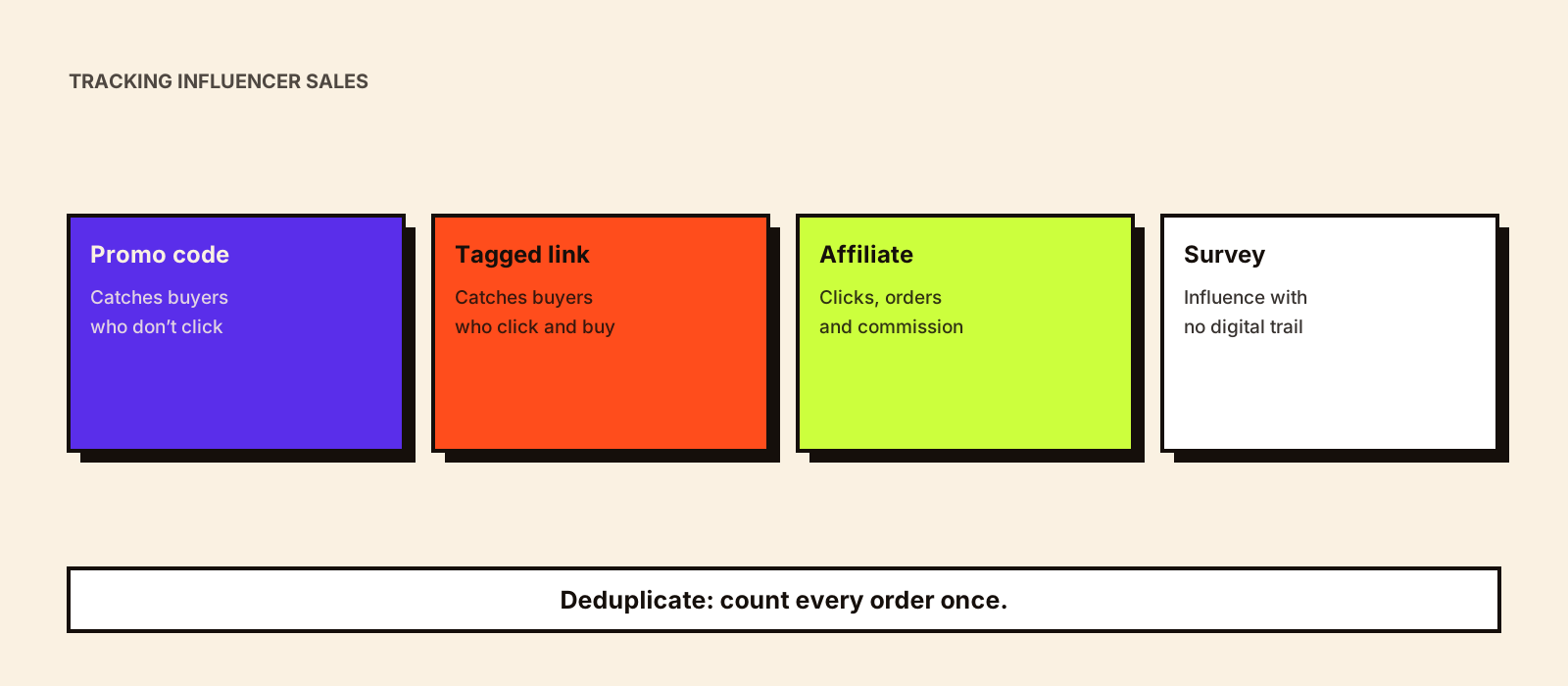
A creator posts, sales go up, and three reports give three different answers: the code report, the analytics report and the creator's own screenshot. Each is counting something real. The job is to know what each method catches, set them up so they can be joined, and report the result without counting the same order twice.
Quick answer
Track influencer sales with at least two methods per creator: a unique promo code and a unique tagged link, recorded against each order. Add an affiliate platform if creators are paid on commission, and a 'how did you hear about us?' question at checkout to catch people who used neither. Agree a rule for which method gets credit when an order has more than one, count delivered orders net of returns, and report the total as attributed sales, not as the sales the campaign caused.
The methods compared
| Method | What it catches | What it misses | Watch out for |
|---|---|---|---|
| Unique promo code | Buyers who enter the code, even without clicking | Buyers who forget or skip it | Leakage to coupon sites; the discount changes who buys |
| Tagged link (UTM) | Buyers who click and buy in the same browser | Buyers who search later, switch device or buy elsewhere | Consent, in-app browsers, redirects |
| Affiliate platform link | Clicks and orders within the cookie window, with commission tracking | Same gaps as links; credit rules vary by platform | Last-click rules that override other channels |
| Vanity URL | Spoken mentions on podcasts and video | People who don't type it | Redirects that drop tags |
| Post-purchase survey | Influence with no digital trail | People who don't answer or misremember | Small samples; list creators by name |
| Creator-specific product page or bundle | Orders for an offer only that creator promotes | Buyers of the standard product | Only practical for larger partnerships |
Setting up promo codes properly
- One code per creator, short and easy to say: the creator's name plus a number works.
- Set usage limits per customer, an expiry date and the products it applies to.
- Record the code on the order and in your customer record, so repeat purchases can be traced later.
- Watch for leakage: if a code appears on coupon sites, orders from it stop meaning 'this creator's audience'.
- Keep discounts comparable across creators you want to compare; a bigger discount buys more orders and different customers.
A discount is not free measurement. It reduces margin on every order, including orders from people who would have paid full price. Count it as a campaign cost when you calculate ROI.
Affiliate links and commission programs
Affiliate platforms track clicks and orders within a cookie or attribution window and calculate commissions automatically. Before you rely on one, check how it decides credit when a buyer clicked a creator link and later came through a paid search ad: many platforms credit the last affiliate click, which can disagree with your analytics. Commission links are a material connection, so creators must disclose them; ASCI's influencer guidelines in India, and the advertising rules in the other markets you sell in, apply to affiliate content too. Influencer affiliate programs covers program design.
Connecting it in analytics
Each creator link should carry UTM tags, set up with one naming convention across the campaign. In your store or CRM, store the code, the landing source and the survey answer on the order record, so one export shows every signal for every order. Influencer UTM tracking covers the tags, and how GA4 groups creator traffic.
Avoid counting the same order twice
An order can carry a creator code, arrive through that creator's link and name them in the survey. Add the three reports together and you count it three times. Agree one credit order before launch and apply it to every order: for example, code first, then tagged link, then survey answer.
| Signal on the order (hypothetical) | Orders | Credited to creator under 'code, then link, then survey' |
|---|---|---|
| Code only | 120 | 120 |
| Code and tagged link | 80 | 80 (counted once) |
| Tagged link only | 60 | 60 |
| Survey answer only | 40 | 40, reported separately as self-reported |
| Sum of the three raw reports | Codes 200 + links 140 + survey 40 = 380 | Deduplicated total: 300 |
Hypothetical figures for illustration. Keep self-reported orders in their own line: they are useful evidence, but they rest on memory rather than a recorded action.
Marketplaces, cash on delivery and WhatsApp orders
- Marketplaces: Amazon's Attribution tool measures off-Amazon traffic to Amazon listings for eligible sellers and vendors, and Amazon lists India, the UAE, Saudi Arabia, the UK, Australia and Singapore among its marketplaces. Check eligibility in your account. Where no tool exists, compare listing sales during the campaign against a baseline.
- Cash on delivery: credit creators with delivered, non-returned orders, not placed orders.
- WhatsApp and phone orders: add a 'source' field that staff fill in, with creator names as options, and ask for the code at the time of order.
- Stores and bookings: creator-specific offer names, booking source fields and staff prompts at checkout.
Amazon's Attribution page lists the supported marketplaces and requirements. Amazon and Flipkart seller tactics, including reviews you must not ask for, are covered in influencer marketing for Amazon and Flipkart sellers.
A creator sales sheet
Creator | Platform | Code | Link ID | Post date | Window end
Orders (deduplicated) | Delivered, net of returns | Net revenue | Discount cost
New customers | Repeat customers | Survey mentions (separate)
Total creator cost (fee + product + rights + amplification + management)
Cost per delivered order | Contribution after creator cost
The last two columns are where the sheet becomes a decision tool. How to measure influencer marketing ROI shows how to turn them into a return figure, and customer quality from influencer campaigns follows those customers beyond the first order.
Report it honestly
- Call the total 'attributed sales': orders with a creator signal, not orders the creator caused.
- Some attributed buyers would have bought anyway; some influenced buyers left no trace. The two errors don't cancel out neatly.
- Show deduplicated orders, self-reported mentions and any lift in branded search or baseline sales as separate lines.
- Where the decision is large, test what the creators actually added with a holdout or geographic comparison.
Influencer marketing incrementality explains those tests.
Common mistakes
- One generic code for every creator.
- Adding code, link and affiliate reports together.
- Counting placed orders where cash on delivery is common.
- Forgetting the discount when calculating cost per order.
- Ignoring marketplace and offline sales because they're hard to see.
- Losing the creator signal after the first order, so repeat purchases can't be credited.
Conclusion
No single method tracks all creator sales. Use a code and a tagged link for every creator, a survey for the rest, one deduplication rule and delivered orders as the unit. Report what you can count as the minimum, and test for the rest when the budget makes it worth it.