How Long Does It Take to See Results From Influencer Marketing?
When reach, clicks, sales, leads and brand effects from influencer marketing usually show up, why some results arrive late, and how long to wait before judging a creator, a campaign or the channel.
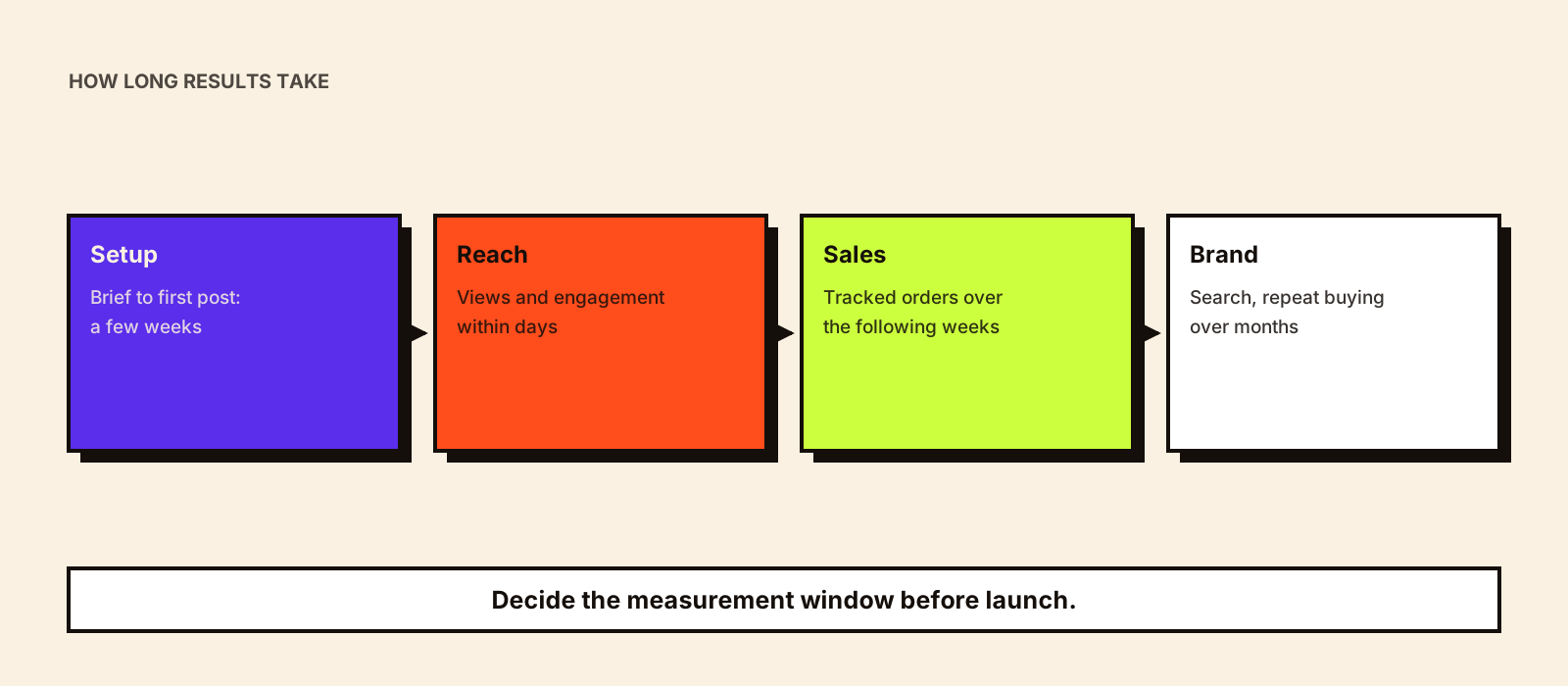
Founders usually ask this question at the worst moment: a week after the first posts went live, when the views are in but the sales dashboard hasn't moved much. Some results do arrive that fast. Others take weeks or months, and a few only show up when you compare one quarter with the last. Knowing which clock each result runs on stops you killing a campaign that's working, or renewing one that isn't.
Quick answer
Expect three to ten weeks of setup before content goes live, depending on how many creators you book and how fast approvals are. Once content is live, reach and engagement show up within days. Clicks and code-tracked sales on short-form content mostly arrive in the first week or two after each post, while YouTube videos and search-discoverable content can keep bringing traffic for months. Considered purchases and B2B leads take weeks to months to convert. Brand effects such as more branded search, repeat purchase and word of mouth build over several months of repeated presence. As a planning assumption rather than a benchmark, give a single campaign a few weeks after the last post before you judge it, and give the channel two or three campaign cycles, usually one to two quarters.
The four clocks
| Clock | What it measures | Typical length | What controls it |
|---|---|---|---|
| Setup | Brief to first post live | A few weeks for a small test; longer for launches and many creators | Creator availability, contracts, shipping, approvals |
| Content | How long a post keeps getting seen | Days for most feed and Reels content; months for search-led YouTube content | Platform, format and whether people search for the topic |
| Buying | Time from seeing a product to buying it | Same day for impulse buys; weeks or months for considered and B2B purchases | Price, category and how many people are involved in the decision |
| Learning | Time until you know what works | Usually two or three campaign cycles | How many creators you compare and how cleanly you track them |
The setup clock is covered stage by stage in influencer marketing campaign timeline. This article is about the other three.
When each result shows up
| Result | Starts showing | Read it after | Watch out for |
|---|---|---|---|
| Views and reach | Hours to days after posting | About a week for short-form; longer for YouTube | Reach outside your target audience; ask creators for audience location insights |
| Engagement and comments | Hours to days | About a week | Comment quality matters more than the count |
| Link clicks and site visits | Same day as the post | One to two weeks after each post | Platform and site numbers rarely match exactly |
| Code and link sales | Same day | Two to four weeks after the last post, longer for considered purchases | Codes undercount: marketplace, cash-on-delivery and word-of-mouth orders slip through |
| Leads and sign-ups | Days | Until leads have moved through your sales stages | Count qualified leads, not form fills |
| Branded search and direct traffic | Within days of large posts | Compare with the weeks before the campaign | Seasonality and other marketing running at the same time |
| Repeat purchase and retention | Weeks to months | One purchase cycle after first orders | Small cohorts swing a lot |
| Brand awareness and consideration | Weeks to months | Only with a survey or brand lift study | Can't be inferred from views alone |
Which metric to judge each objective on is covered in influencer marketing KPIs, and why platform reports and your analytics disagree in influencer reporting discrepancies.
Why some creator content keeps working
How long a post keeps earning depends on how people find it. Content that spreads mainly through feeds and recommendations tends to get most of its views soon after posting. Content people search for behaves differently: YouTube ranks videos in search by relevance, engagement and quality signals, so a well-titled review can keep surfacing for months, and Instagram also indexes posts for search. A creator tutorial answering a question your customers ask can still bring clicks long after a trend-led Reel has faded.
If you want results that last, include some search-friendly formats (reviews, comparisons, how-tos) alongside short-form content, and agree how long the creator keeps the post up.
Why results often look slow at first
- People rarely buy the first time they see a product. Many need to see it from several creators, or see it again in an ad, before they act.
- Tracking windows cut off late buyers. Check the attribution and lookback settings in your analytics and ad accounts so late conversions aren't silently dropped.
- Orders that leave no trail, such as marketplace purchases, cash-on-delivery orders and products recommended in a WhatsApp group, never touch your code or link.
- Creator content used as ads tends to improve as the platform learns who responds. Meta's own October 2026 creator white paper argues that creator ads can look average in their first weeks and pay off over a longer period; that is the platform's analysis, so test it on your own account.
Meta's paper is summarised in PPC Land's October 2026 report. The practical point stands regardless of the platform's numbers: decide your measurement window before launch, write it down, and don't move it after you see the first results.
How long to wait, by objective
| Objective | Judge it | Main evidence |
|---|---|---|
| Awareness burst or launch | One to two weeks after the launch window | Reach in the target audience, branded search, early reviews and sell-through |
| Direct sales (D2C, apps) | Two to four weeks after the last post | Cost per tracked order or install, plus sales lift against the previous period |
| Considered purchases (cars, property, education, finance) | One to three months | Qualified leads, test drives or applications, and sales-team feedback |
| B2B | One or more sales cycles | Pipeline influenced, meetings booked, deal velocity |
| UGC for ads | Once each asset has had a fair test budget in paid social | Cost per result against your existing ads |
| Always-on program | Quarterly | Rolling cost per result, repeat purchase, content reused |
Long B2B and high-ticket cycles have their own measurement guide: influencer marketing for long sales cycles. For brand effects that views can't show, see influencer brand lift surveys.
Not working, or not working yet?
| Signal | Probably not working | Probably too early to say |
|---|---|---|
| Reach | Posts reached far fewer people than the creator usually does, or the wrong audience | Reach is normal, conversions still coming in |
| Clicks | Very few clicks despite normal reach | Clicks are healthy; orders lag in a considered category |
| Comments | Comments question the creator's honesty or the product | Comments ask about price, sizes or availability |
| Creators | Every creator underperforms in the same way | A few creators are strong, others weak: a fit question, not a channel verdict |
If the left-hand column describes your campaign, act during the campaign rather than after it; mid-campaign optimization and influencer campaign underperformance explain what you can still change.
Timing factors in India and the Gulf
- Festive and sale seasons in India (Diwali, regional festivals, marketplace sale events) compress buying into short windows and raise creator demand, so book earlier and compare results with the same season last year, not with an ordinary month.
- Cash-on-delivery orders confirm only on delivery, and returns arrive later, so read net sales after the return window.
- In the GCC, Ramadan changes viewing and buying patterns, and checking creators' licences or permits adds to setup time; see the GCC influencer marketing playbook.
What a brand should see at each checkpoint of a first campaign is set out in what to expect in the first 30, 60 and 90 days of an influencer campaign.
Conclusion
Influencer marketing produces results on several clocks at once. Views arrive in days, tracked sales in weeks, considered purchases and brand effects over months. Decide the measurement window before launch, look beyond codes, judge individual creators separately from the channel, and give the channel two or three cycles before deciding it does or doesn't work for you.