What Should a Brand Expect in the First 30, 60 and 90 Days of an Influencer Campaign?
A checkpoint plan for a brand's first influencer campaign: what happens in the first 30, 60 and 90 days, what you should receive at each point, decisions you'll make, and warning signs.
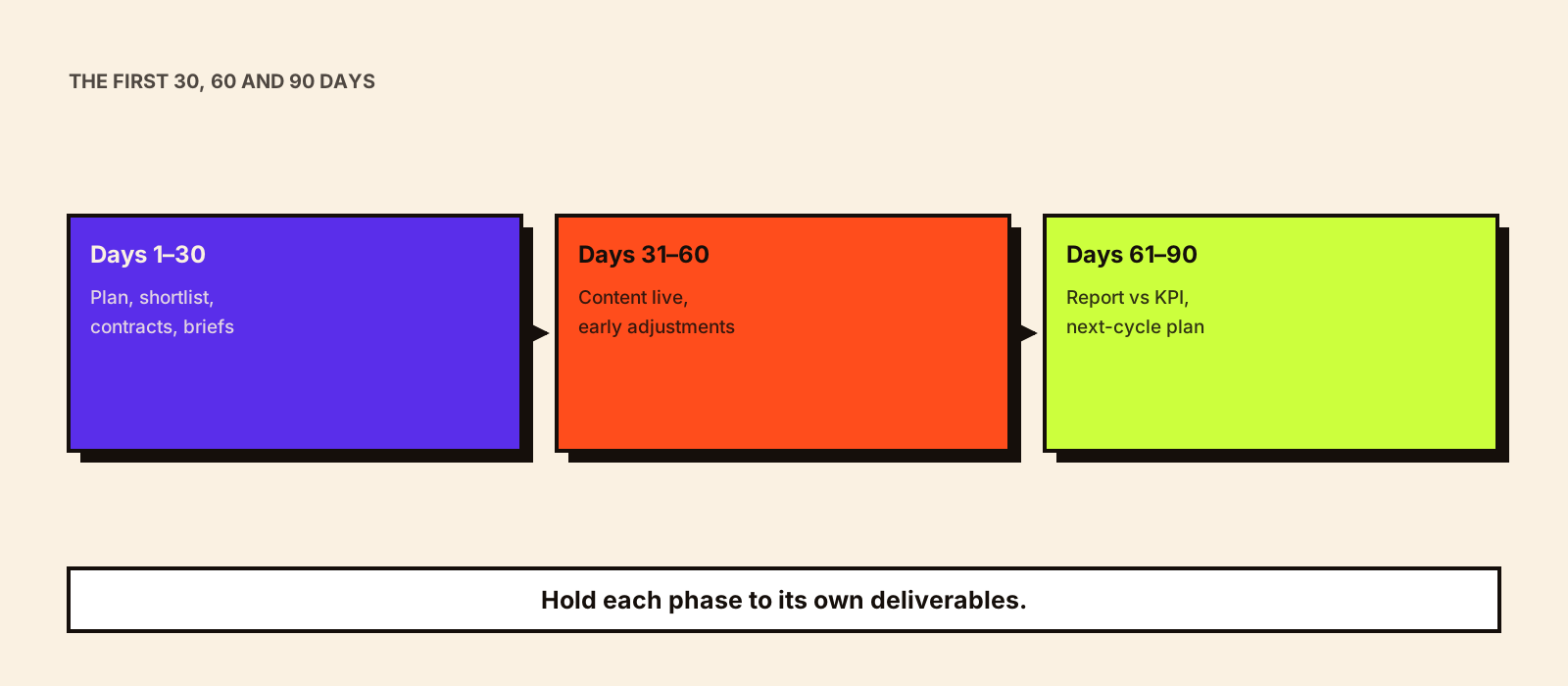
Founders often expect creator content in the first fortnight and sales in the first month. A well-run first campaign usually looks different: most of the first month is invisible preparation, content goes live in the second, and the third is when you learn what worked. Knowing what each month should produce helps you hold an agency or your own team to account without demanding results the calendar can't deliver.
Quick answer
In the first 30 days, expect setup: onboarding, a written plan with one objective and KPI, a vetted creator shortlist, contracts, product shipped, briefs and tested tracking, with little or no public content. Between days 31 and 60, content goes live in stages, you get weekly updates and early signals, and the weakest elements are adjusted. Between days 61 and 90, results are read against the KPI, you get a creator-level report and a recommendation for the next cycle, and you decide what to rebook, change or stop. This assumes a first campaign of moderate size starting from scratch; existing creator relationships or a fixed launch date change the pace.
The 90 days at a glance
| Phase | What happens | What you should receive | Decisions you make | Warning signs |
|---|---|---|---|---|
| Days 1–30: set up | Onboarding, strategy, sourcing, vetting, outreach, contracts, shipping, briefs | Written plan, shortlist with reasons, signed agreements, briefs, tested links and codes | Approve objective, shortlist, budget split and briefs | Creators proposed before the objective is agreed; no audience data on the shortlist |
| Days 31–60: go live | Drafts reviewed, posts published in stages, monitoring, early fixes | Live links, weekly status, early metrics by creator | Approve drafts on time; agree any mid-campaign changes | Missed posting dates with no explanation; disclosure missing on live posts |
| Days 61–90: learn and decide | Tracking window closes, results compiled, debrief | Report against the KPI, creator-level results, content library with rights, next-cycle plan | Rebook, rotate, stop or scale | A report of views and likes with no reference to the agreed KPI |
Days 1 to 30: setup you can check
The first month should end with everything ready to publish, even if almost nothing is public yet. What the brand needs to provide is covered in influencer marketing agency onboarding; what the brand should receive is below.
- A written plan: one primary objective and KPI, audience, platform, creator mix, budget split, timeline and measurement window.
- A shortlist where every creator has a reason: audience fit with dated insights, recent content, authenticity checks and any brand-safety notes.
- Signed agreements covering deliverables, dates, fees, usage rights, exclusivity and disclosure.
- Briefs that give creators the objective, key messages, approved claims and guardrails, without scripting them.
- Tracking tested end to end: each creator's link and code works, and conversions show up in your analytics.
How long each setup step takes, and what slows it down, is covered in influencer marketing campaign timeline. If the plan, shortlist or tracking isn't ready by about day 30, find out why before content dates are fixed.
Days 31 to 60: content goes live
- Drafts arrive for review. Your approval speed now sets the pace; agree turnaround times and keep to them.
- Posts go live in stages rather than all on one day, so you can learn from the first ones.
- Every live post is checked for disclosure, correct links and codes, and the agreed claims.
- Weekly updates show what's live, what's late and early numbers per creator.
- Early adjustments: a stronger hook or offer for later posts, more support for creators whose posts are working, a replacement for a creator who drops out.
Early numbers mostly reflect reach and engagement. Sales and leads lag behind, especially for considered purchases; how long different results take is explained in how long influencer marketing takes to work. What you can still change during the campaign is covered in mid-campaign optimization.
Days 61 to 90: results and decisions
- A report against the KPI agreed on day one, not a new metric chosen afterwards.
- Results by creator and by content, with real cost per result for each creator.
- Sales lift and branded search in the campaign weeks compared with the weeks before, alongside tracked orders.
- A content library listing every asset, where it may be used and until when.
- A short learning memo: which creator types, messages and formats worked, and what to test next.
- A recommendation for cycle two: who to rebook, what to change, the budget it needs and what it should achieve.
What a useful report contains is covered in how to create an influencer marketing report, and the ROI calculation in how to measure influencer marketing ROI.
What not to expect by day 90
- A settled cost per customer for the channel. One campaign gives you a first reading, not a stable figure.
- Proof of brand awareness from views alone. That needs a survey or brand lift study.
- Guaranteed virality. Nobody can promise it, and anyone who does is a warning sign.
- A fully built always-on program. That follows from repeating what worked.
A checkpoint scorecard for agency or in-house teams
| Checkpoint | Ask | Good answer |
|---|---|---|
| Day 30 | Is everything ready to publish, and is tracking tested? | Yes, with signed agreements, approved briefs and a test conversion you've seen |
| Day 45 | What have the first posts taught us? | A specific change for later posts, backed by early numbers |
| Day 60 | Is every agreed post live and disclosed? | Yes, or a named replacement and date for anything missing |
| Day 90 | Did we hit the KPI, and what do we do next? | A clear answer, creator-level evidence and a costed next-cycle plan |
A missed checkpoint isn't automatically a failure, but you should hear about it before you have to ask, with a reason and a recovery plan. If you're working with an agency, agree these checkpoints in the statement of work; the influencer marketing agency checklist covers what the contract should say.
When the 90 days look different
| Situation | How the plan changes |
|---|---|
| Fixed launch date | Plan backwards from the date; seeding and embargoed drafts happen before launch, so most of the first 60 days are pre-launch |
| Festive or sale season in India | Start sourcing two to three months ahead, as popular creators book up early |
| Regulated category | Add time for claim substantiation and legal review of drafts |
| GCC markets | Allow time to verify creator licences and permits and review Arabic content natively |
| Existing creator relationships | Setup is shorter, so content can go live within the first month |
| B2B or high-ticket products | Results take longer than 90 days; agree interim lead-quality measures |
Conclusion
A first influencer campaign has a predictable shape: prepare in month one, publish and adjust in month two, learn and decide in month three. Hold each phase to its own deliverables, read results against the KPI you agreed at the start, and use day 90 to plan a better second cycle rather than to pass a final verdict on the channel.