Influencer Marketing Agency Onboarding: What Brands Should Prepare Before a Campaign Starts
What brands should set up in the first weeks with a new influencer marketing agency: the onboarding pack, access and assets, the approval matrix, claims and compliance, finance and vendor setup, tracking, the kickoff meeting agenda and the first-30-days plan.
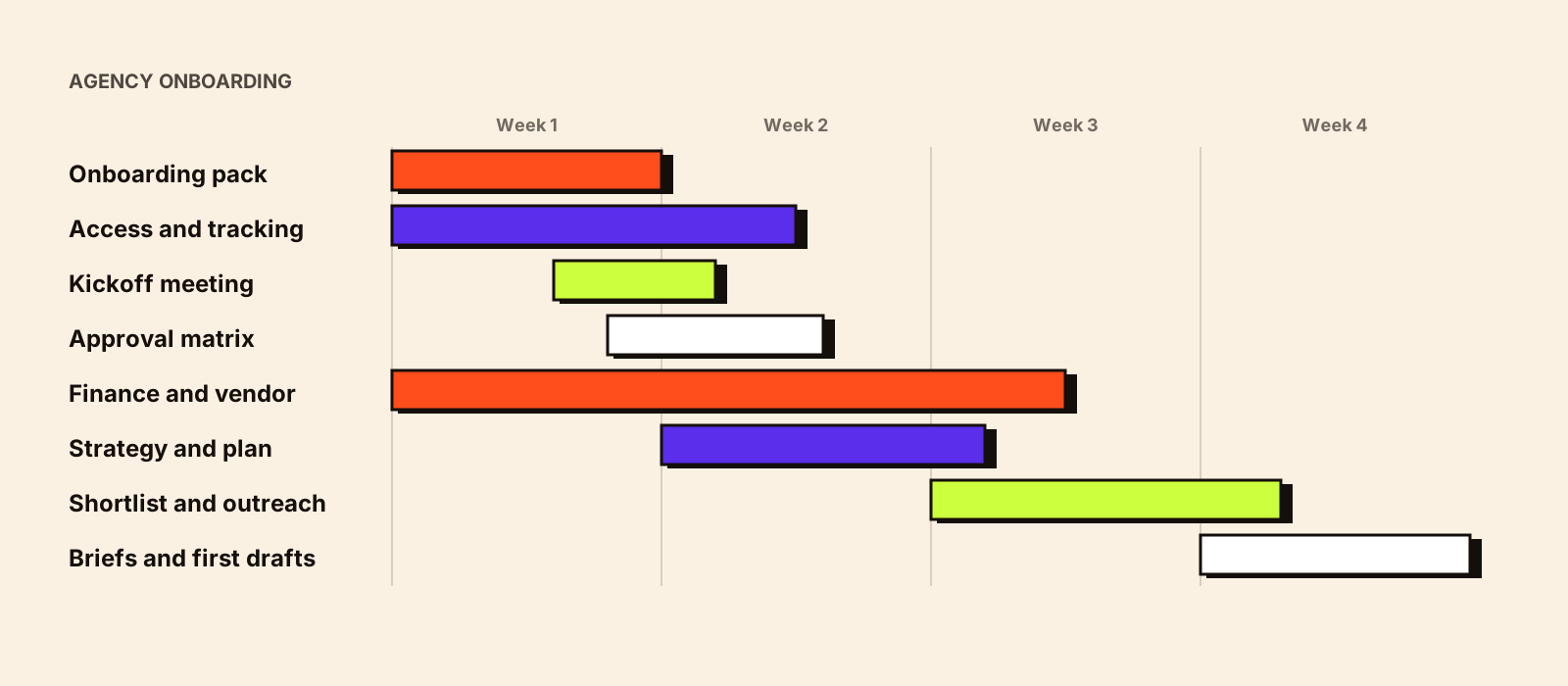
The contract is signed and everyone wants the first campaign live. Then the delays begin: the agency waits for brand guidelines, product samples sit in a warehouse, nobody knows who approves captions, and the vendor code takes three weeks. Most early agency relationships stumble on setup, not strategy. A few days of onboarding prevents it.
Quick answer
Before the first campaign, give the agency an onboarding pack (brand guidelines, product information, approved claims, past campaigns and learnings), set up access and assets, agree an approval matrix with named approvers and turnaround times, complete finance and vendor setup, confirm tracking (links, codes, analytics access), and hold a kickoff meeting that ends with a first-30-days plan. Assign one internal owner who can make decisions quickly.
The onboarding pack
| Item | Why the agency needs it |
|---|---|
| Brand guidelines and tone of voice | Briefs and reviews that match the brand |
| Product information and samples | Accurate creator briefs; product for seeding |
| Approved claims list and evidence | Content that won't be pulled or challenged |
| Words, topics and competitors to avoid | Faster reviews, fewer risks |
| Past creator campaigns and results | Avoid repeating what didn't work |
| Target customer data | Audience-fit screening |
| Calendar of launches, sales and events | Planning creator timing |
| Existing creator relationships | Continuity and no double outreach |
The approval matrix
| Decision | Approver (example) | Turnaround (to agree) |
|---|---|---|
| Campaign plan and budget split | Marketing head | Agreed working days |
| Creator shortlist | Brand manager | Agreed working days |
| Creator briefs | Brand manager | Agreed working days |
| Content drafts | Brand manager; legal for regulated claims | Agreed working days |
| Paid usage and amplification | Performance lead | Agreed working days |
| Invoices | Finance | Per payment terms |
Slow approvals are the most common cause of campaign delays; see influencer campaign timeline for where they hit hardest.
Finance, vendor and legal setup
- Vendor registration, purchase orders and GST details completed before the first invoice.
- Who pays creators, and the payment timeline, confirmed in writing.
- Master agreement and statement of work signed; see the influencer marketing agency checklist.
- Confidentiality and data-sharing terms for customer data.
- Legal reviewer named for regulated categories.
Contract points: influencer marketing agency checklist.
Tracking and data access
- UTM convention and link-shortening approach agreed.
- Discount or referral codes created in your store or app.
- Read access to relevant analytics, or an agreed weekly data export.
- Ad account permissions if the agency coordinates creator ads.
- The report format and first report date agreed; see influencer campaign reporting.
Reporting expectations: influencer campaign reporting.
The kickoff meeting
1. Business context and objectives for the first quarter (brand)
2. Target customer and markets (brand, with data)
3. What's worked and what hasn't with creators so far (brand)
4. Agency's approach and first campaign outline (agency)
5. Approval matrix and turnaround times (both)
6. Tracking, reporting format and cadence (both)
7. Communication: channels, weekly check-in, escalation contacts (both)
8. First-30-days plan and owners (both)
The first 30 days
| Week | Focus |
|---|---|
| 1 | Onboarding pack delivered, access set up, kickoff held |
| 2 | Strategy and first campaign plan agreed; shortlist in progress |
| 3 | Shortlist approved; outreach and contracts; product shipped |
| 4 | Briefs out; first drafts; first weekly report on progress |
Hold a short review at day 30: what's slowing things down on either side, and what to change before the first campaign goes live. Day-to-day execution follows how influencer campaign management works.
Common mistakes
- No single internal owner, so questions wait for days.
- Claims approved only after content is made.
- Vendor setup started after the first invoice.
- Tracking decided after posts go live.
- Treating the kickoff as a formality instead of a working session.
Conclusion
Agency onboarding is a week of preparation that saves weeks of delay: a complete onboarding pack, clear approvers and turnaround times, finance and tracking ready before launch, and a kickoff that ends with owners and a 30-day plan.