How to Build an Influencer Landing Page That Converts GCC Traffic
How to build landing pages for creator traffic in the UAE, Saudi Arabia and the GCC: message continuity from the creator's video, mobile-first layout, Arabic and right-to-left pages, trust signals for local shoppers, low-friction forms and checkout, speed, tracking and a pre-launch checklist.
Creator traffic is unusual: almost all of it arrives on a phone, straight from a short video, with high interest and very little patience. Sending it to a generic homepage wastes much of what the creator built. This guide is for e-commerce, lead-generation and app teams building pages for creator campaigns in the UAE, Saudi Arabia and the wider GCC.
Quick answer
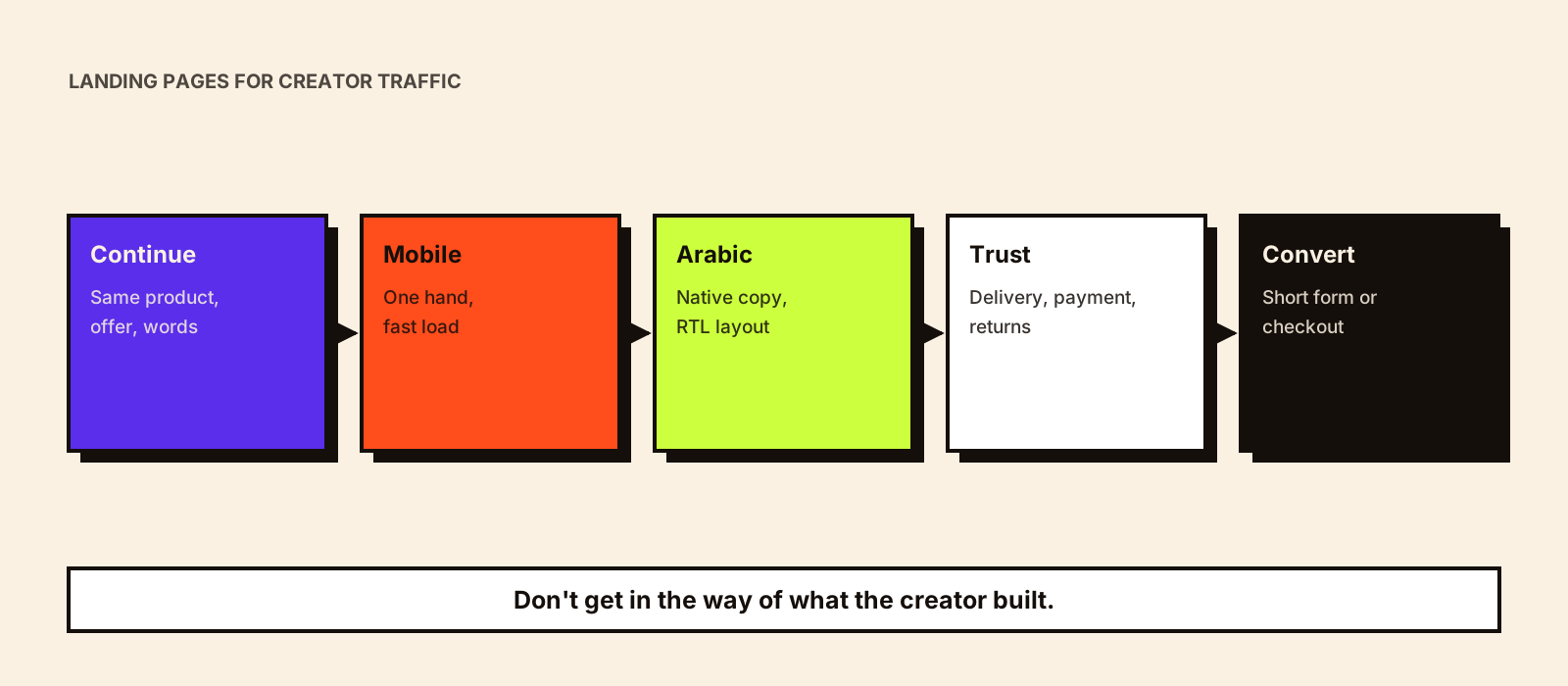
An influencer landing page converts when it continues the creator's message (the same product, offer and words, ideally the creator's own clip), loads fast on mobile, is available in Arabic with a proper right-to-left layout as well as English, shows the trust signals Gulf shoppers look for (local delivery, payment options including cash on delivery where offered, returns, support), and asks for as little as possible: one product, one action, a short form or a short checkout. Track it per creator and test one change at a time.
Message continuity
- Lead with the exact product and offer the creator showed
- Use the creator's words or a short clip from their video near the top (with rights agreed)
- Apply the creator's code automatically, or show it clearly
- One page per creator or per creator group if messages differ
- Don't send people to a category page and make them search
Mobile first
- Design for a phone held in one hand: large buttons, the main action visible without scrolling
- Short sections; one idea per screen
- Images and video compressed; avoid heavy pop-ups that cover the page
- Test on mid-range phones and mobile data, not just office Wi-Fi
- Remember that in-app browsers (inside Instagram or TikTok) may behave differently from Safari or Chrome
Arabic and right-to-left pages
If the creator speaks Arabic, the page should too. An Arabic page is more than translated text: the whole layout mirrors for right-to-left reading. The W3C recommends setting direction in the HTML (dir="rtl") rather than with CSS, using logical layout properties, and isolating mixed-direction content such as product codes, prices and English brand names.
- Native Arabic copy matching the creator's dialect and tone, not machine translation
- Mirrored layout: navigation, icons with direction, progress indicators
- Prices, phone numbers and codes displayed correctly inside Arabic text
- A clear language switch that keeps the visitor on the same product
- Fonts that render Arabic well on phones
Trust signals for GCC shoppers
| Concern | Signal |
|---|---|
| Will it arrive, and when? | Delivery time by city and country, stated before checkout |
| How do I pay? | Local cards and wallets you support; cash on delivery if offered |
| Can I return it? | Plain-language returns policy, linked near the button |
| Is this a real business? | Local contact details, WhatsApp or chat support, company information |
| Is the price right? | Price in AED, SAR or the local currency, VAT included where required |
| Is the creator's claim true? | Approved product facts, reviews, certifications |
Reduce form and checkout friction
- Ask only for what you need now; collect the rest later
- Phone fields that accept local formats and country codes (+971, +966 and so on)
- Autofill and the right keyboard for each field (numbers for phone, email keyboard for email)
- Guest checkout; account creation optional
- Clear error messages next to the field, in the page's language
- For lead generation, a WhatsApp or click-to-call option alongside the form
Tracking
- A unique UTM-tagged link per creator, plus a creator code where codes are used
- Events for page view, add to cart or form start, and purchase or form submit
- Report conversion rate per creator, not just clicks
- Check that tracking works inside in-app browsers before launch
Setting a target before launch is covered in how to calculate break-even ROAS for influencer campaigns, and reading traffic quality in influencer marketing and website traffic.
Pre-launch checklist
- Product, offer and code match the creator's content
- Page tested on several phones and in Instagram, TikTok and Snapchat in-app browsers
- Arabic page mirrors correctly; prices and codes display properly
- Stock is available for every size or variant shown
- Delivery promise, payment options and returns are visible
- Form or checkout works with local phone numbers
- Tracking events fire and show creator source
Common mistakes
- Sending creator traffic to the homepage
- An English-only page for an Arabic creator's audience
- Forms that reject local phone formats
- Delivery costs revealed only at the last step
- Never testing inside in-app browsers
Conclusion
The creator does the persuading; the landing page should simply not get in the way. Continue the message, design for the phone, build Arabic properly, answer local trust questions and remove every unnecessary step. Then measure conversion per creator and improve one thing at a time.