Customer Advocacy Programs: How Brands Can Turn Existing Fans Into Creator Partners
How to build a customer advocacy program: finding the fans already talking about you, choosing who to invite, rewards that don't buy opinions, disclosure for customers, content rights, when an advocate becomes a paid creator, and what to measure.
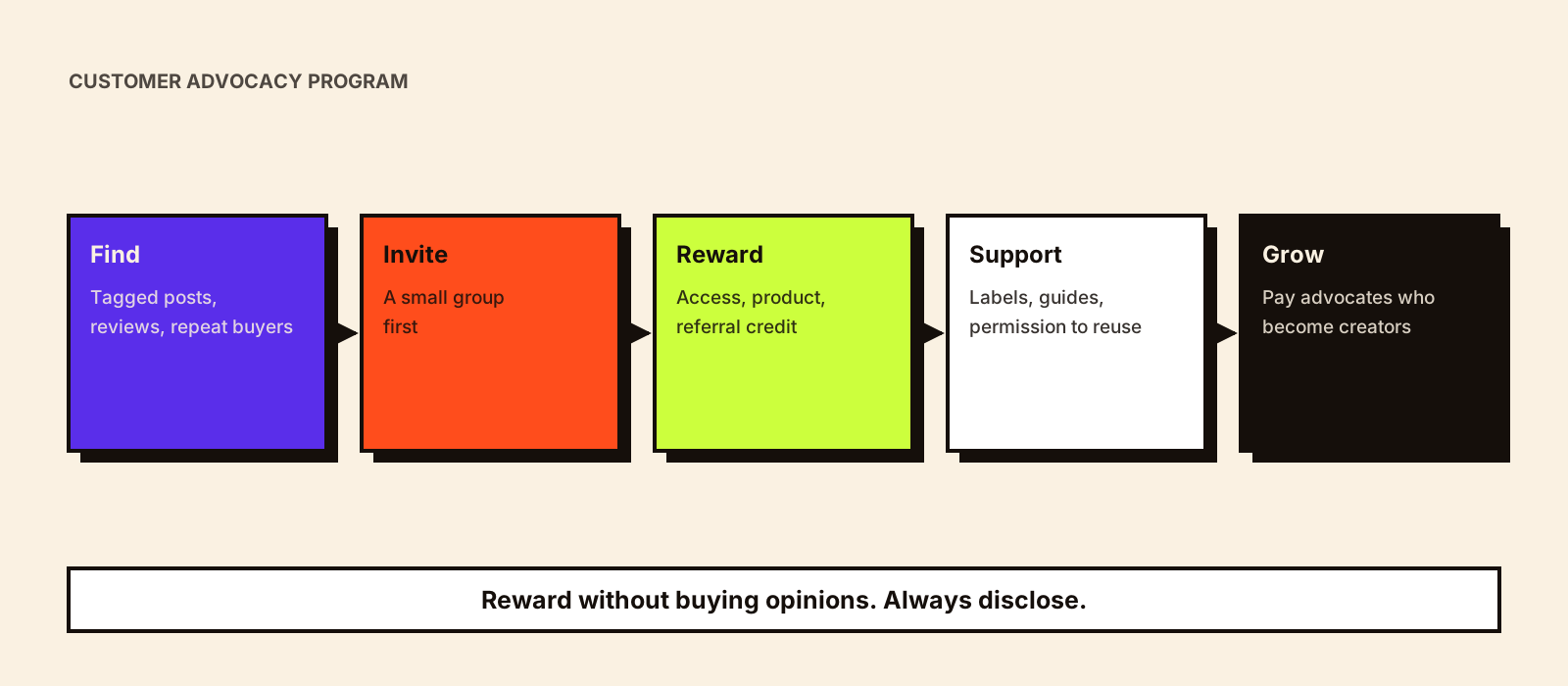
Some of a brand's most convincing content comes from people it never paid: customers who post their routines, tag the product in reviews or answer questions in comment sections. A customer advocacy program gives those people a reason and a structure to keep going, without turning their honesty into a script. It sits between organic word of mouth and a paid creator roster.
Quick answer
A customer advocacy program invites existing customers who already talk about your brand to share their experience more often, in exchange for non-cash or modest rewards such as early access, products, recognition or referral credit. Find them through tagged posts, reviews and support history, invite a small group first, require disclosure whenever they receive anything of value, agree on how you may reuse their content, and move the most consistent advocates into paid creator partnerships with proper contracts.
Advocates, ambassadors and affiliates
| Customer advocates | Ambassadors | Affiliates | |
|---|---|---|---|
| Who they are | Existing customers, often with small followings | Creators chosen for audience and fit | Anyone who can drive tracked sales |
| Why they post | They already like the product | A paid, longer-term partnership | Commission on sales |
| Typical reward | Early access, products, recognition, referral credit | Fees plus product | Commission per sale |
| Main value | Credibility, real use cases, content volume | Consistent reach and a recognizable face | Measurable sales |
| Main risk | Undisclosed rewards, uneven quality | Cost, fit over time | Coupon leakage, low-quality traffic |
Programs often run together: advocates feed content and referrals, the best become ambassadors, and affiliate links handle tracked sales. See influencer ambassador programs and influencer affiliate programs for those structures.
Finding the fans you already have
- Tagged posts and mentions: people who post about you without being asked. Brand mention monitoring helps here.
- Reviews: detailed, specific reviews (positive or balanced) on your site and marketplaces.
- Repeat customers: people with several orders or long subscriptions, especially if they've referred others.
- Support and community: customers who answer other customers' questions in groups or comments.
- Sales and service teams: in B2B, account managers know which clients speak well of you in public.
Only contact people through channels they've used with you, and use what you know about them for the purpose they'd expect. Customer data falls under India's data protection framework; see influencer marketing data privacy for the practical rules. Monitoring for mentions is covered in brand mention monitoring.
Choosing who to invite
| Criterion | Look for | Be wary of |
|---|---|---|
| Genuine use | Posts and reviews over months, not one burst | Accounts that post about many competing brands |
| Specificity | Real details: how they use it, what didn't work | Generic praise that could be about any product |
| Tone | Helpful to other customers | Hostility toward competitors or other customers |
| Content history | Nothing you couldn't stand behind | Past posts that conflict with your brand's values |
| Audience | Followers who resemble your customers | Large but unrelated followings |
Start with ten to thirty people. A small group lets you learn what they need, check content quality and fix the rules before you scale.
Rewards that don't buy opinions
The value of an advocate is that they'd say it anyway. Rewards should thank and equip them, not pay for praise. Never make a reward conditional on a positive post or a star rating.
| Reward | Works well for | Watch out for |
|---|---|---|
| Early access and previews | Launches; advocates love being first | Confidentiality: agree what can be shown, and when |
| Free products to try | New variants, honest first impressions | Counts as a material connection, so it must be disclosed |
| Recognition (features, badges, events) | Community-driven categories | Featuring their content needs permission |
| Referral credit | Repeat-purchase categories | Track it, and disclose it like any incentive |
| Feedback sessions with the product team | Advocates who care about the product | Make sure feedback is acted on and acknowledged |
Disclosure applies to customers too
Under ASCI's influencer guidelines, a material connection includes free products (even unsolicited ones), discounts, gifts, contest entries and other benefits, and it must be disclosed with a label such as 'Free gift', 'Collaboration' or 'Ad', in English or the language of the post. The government's endorsement guidance for influencers says the same in plain terms. Small followings don't change this. Give advocates the exact label to use, show them where it goes (upfront, not buried in hashtags), and check posts. The full rules are in the creator disclosure guide.
Reviews need extra care. Marketplaces restrict reviews written in exchange for products or rewards, and India's voluntary standard for online reviews (IS 19000:2022) expects paid reviews to be disclosed. Keep advocacy content on social channels and your own site, and don't ask advocates for marketplace ratings in return for anything.
Content rights and reuse
Seeing a customer's post doesn't give you the right to use it in ads or on product pages. Ask each time, in writing, and say where it will appear and for how long. For program members, a simple standing agreement can cover reposts on your own social accounts, with separate permission for paid ads. Usage terms are explained in influencer usage rights.
When a customer becomes a creator partner
Some advocates will grow audiences or produce work good enough for ads. When you start asking for specific deliverables, deadlines or paid usage, the relationship has become a creator partnership: offer a fee, a written agreement and the same terms you'd give any creator. Keeping someone on product rewards while asking for professional output is unfair and tends to end the relationship.
| Signal | What to offer |
|---|---|
| Consistent, high-quality posts over several months | A paid trial collaboration with a brief |
| Content that performs well when reposted | A usage-rights fee for ads |
| Growing, relevant audience | A place in the ambassador program |
| Strong referrals | An affiliate agreement with commission |
What to measure
- Content volume and quality: posts per month, share usable on your own channels.
- Reach among relevant people, not total impressions.
- Referral sales and new customers, net of returns.
- Repeat purchase and retention among advocates and the customers they refer.
- Questions answered and sentiment in comments where advocates are active.
- Program health: active members, drop-off, disclosure compliance rate.
Compare referred customers with similar customers from other sources before drawing conclusions; see how to measure customer quality from influencer campaigns.
Hypothetical example
Hypothetical, for illustration only. A home-baking supplies brand finds 40 customers who regularly post bakes with its products. It invites 20, offers early access to new flavors and a referral code, and gives everyone a one-page guide: use 'Free gift' when posting about products you received, say what you actually think, and tell us before we repost. After three months, six members post consistently; the brand offers three of them paid recipe collaborations with usage rights for ads.
Common mistakes
- Rewarding only positive posts or star ratings.
- Assuming small accounts don't need to disclose.
- Reposting customer content in ads without permission.
- Asking advocates for professional deliverables without paying them.
- Inviting hundreds of people before testing the program with a few.
- Measuring only referral codes and ignoring retention.
Conclusion
A customer advocacy program works when it amplifies what customers already believe. Find the fans you have, reward them without buying their opinions, make disclosure easy, ask before reusing their content, and pay the ones who become creators. For the wider retention picture, see influencer marketing for customer retention.