Influencer Marketing in Tier 2 and Tier 3 Cities: How Brands Can Scale Beyond Metros
How brands use creators to grow beyond metro cities: deciding which states and cities to prioritize, the difference between tier 2 and tier 3 audiences, creator types and platforms that work, price and availability realities, local trust, offline conversion paths and measuring market expansion.
Many Indian brands reach a point where metro growth slows and the next customers live in Indore, Coimbatore, Guwahati, Nashik, Bhubaneswar and hundreds of smaller towns. Creators are often the most practical way to reach them, because local creators already hold the trust that a brand from a big city hasn't earned yet. The mistake is treating "tier 2 and 3" as one audience.
Language strategy is covered in regional and vernacular influencer marketing, and running campaigns across many markets at once in how to run a pan-India influencer marketing campaign. This guide is about the decision to expand beyond metros and how to do it.
Quick answer
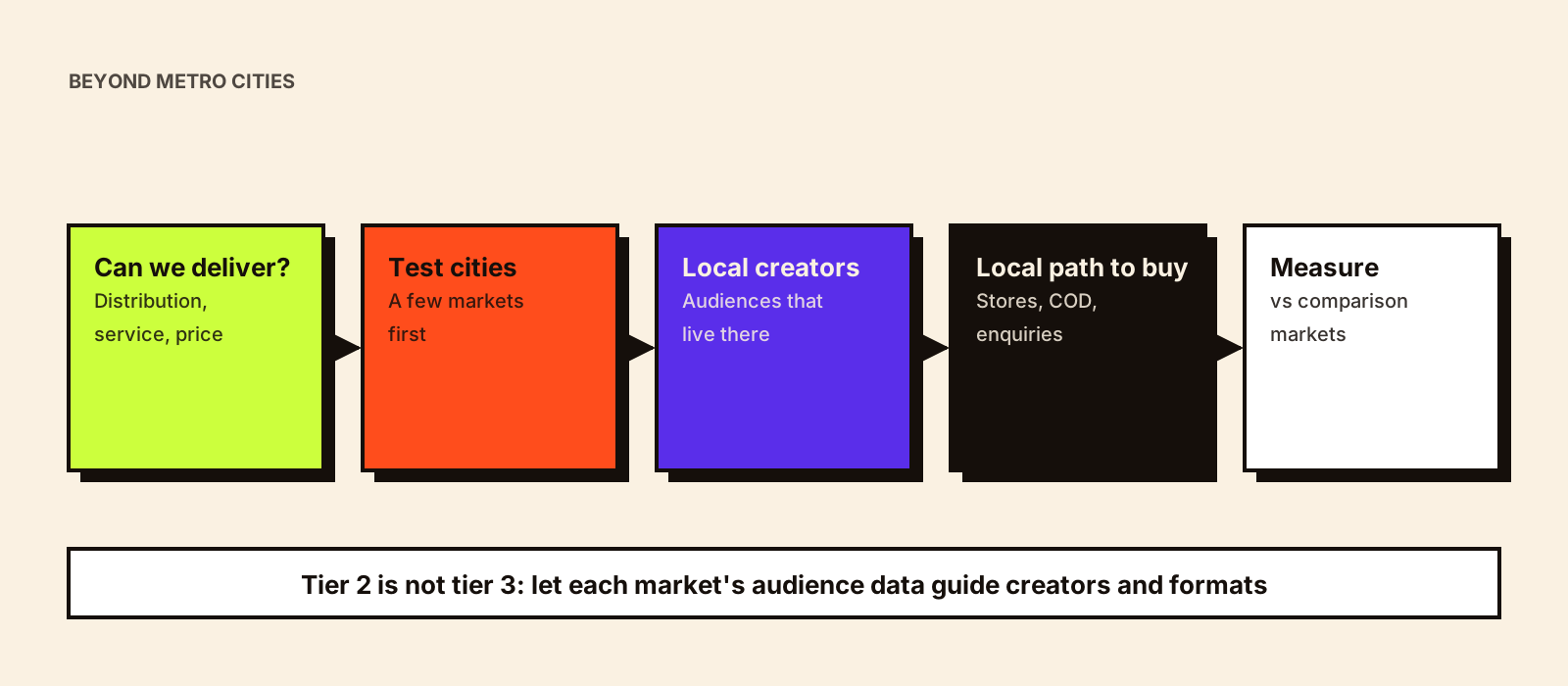
To scale beyond metros with creators: pick states and cities where you can actually deliver (distribution, delivery, service, price points), test a few markets before rolling out, work with local and regional-language creators whose audiences live there, use formats that fit how those audiences use platforms, give content a local conversion path (nearby stores, cash-on-delivery options, local offers), and measure market by market against comparable markets you haven't targeted yet.
Decide where to go first
| Question | Data to use |
|---|---|
| Can we deliver and serve customers there? | Delivery coverage, store and dealer presence, service network |
| Is there demand already? | Orders, searches and enquiries from those cities |
| Does our price and pack size fit? | Local price sensitivity, smaller packs or entry variants |
| Which language and culture? | Primary languages, local festivals and occasions |
| Who competes locally? | Regional brands and their creators |
Start with a handful of cities where these answers are good, learn, then expand in clusters by state or language rather than scattering across the map.
Tier 2 is not tier 3
| Tier 2 cities (broadly) | Tier 3 towns and beyond (broadly) | |
|---|---|---|
| Audience | Aspirational, often bilingual, growing online shopping | More local-language, value-conscious, strong community ties |
| Creators | City lifestyle, food, fashion, tech creators | Local and regional-language creators, family and community creators |
| Formats | Reels and Shorts, reviews, city discovery | Simple demos, relatable humor, local stories, longer explainers |
| Conversion | Online orders plus local stores | Local stores, cash on delivery, WhatsApp enquiries, dealers |
These are broad tendencies, not rules; audiences vary widely within each tier. Let the audience data for specific creators guide choices.
Finding local creators
- Search in the local language and script, and by city names and local landmarks.
- Check where each creator's audience actually lives; see influencer audience quality and fit.
- Look for community and family creators, local food explorers and small-town comedy and storytelling creators.
- Ask local distributors, store owners and sales teams which creators customers mention.
- Expect smaller follower counts with strong local trust; that's the point.
Audience checks: influencer audience quality and fit. Shortlisting: how to build an influencer shortlist.
Content that works beyond metros
- Show the product in local, everyday settings rather than metro lifestyles.
- Explain value clearly: price, quantity, how long it lasts.
- Answer trust questions: where to buy, how returns work, whether it's genuine.
- Use local festivals and occasions, which vary by region.
- Keep the core product facts consistent across all markets.
Conversion paths
| Path | When it fits |
|---|---|
| "Available at" local stores | Retail and FMCG with distribution |
| Online with cash on delivery | Categories where trust in prepaid is lower |
| Quick commerce | Only where the service actually operates |
| WhatsApp or call enquiry | Services, education, property, automobiles |
| Dealer or franchise visit | Durables, vehicles, building materials |
Never promote availability you can't deliver; nothing damages a new market faster than creators sending people to a product they can't buy.
Measuring expansion
- Sales or orders by pin code and city, during and after the campaign.
- Comparison markets: similar cities without creator activity.
- Store-level sell-through in campaign cities.
- Local search and enquiry trends.
- Creator-level engagement from the target cities (from creator insights).
Measurement methods are covered in how to measure influencer marketing ROI for Indian brands.
Common mistakes
- Treating all non-metro markets as one audience.
- Metro creators with national audiences booked for local reach.
- Promoting products that aren't available locally.
- Translated metro content instead of locally made content.
- Measuring only national totals, hiding which markets responded.
Conclusion
Growth beyond metros is won city by city. Choose markets where you can deliver, test before rolling out, work with local creators whose audiences live there, make content that fits local life, give people a local way to buy, and measure each market against a comparison so the next expansion goes where it works.