How to Plan Influencer Campaigns Around Your Product's Lifecycle
Launch, growth, maturity, decline and relaunch each need different creators, content and KPIs. How to match influencer activity to where a product actually is, with a stage planning sheet.
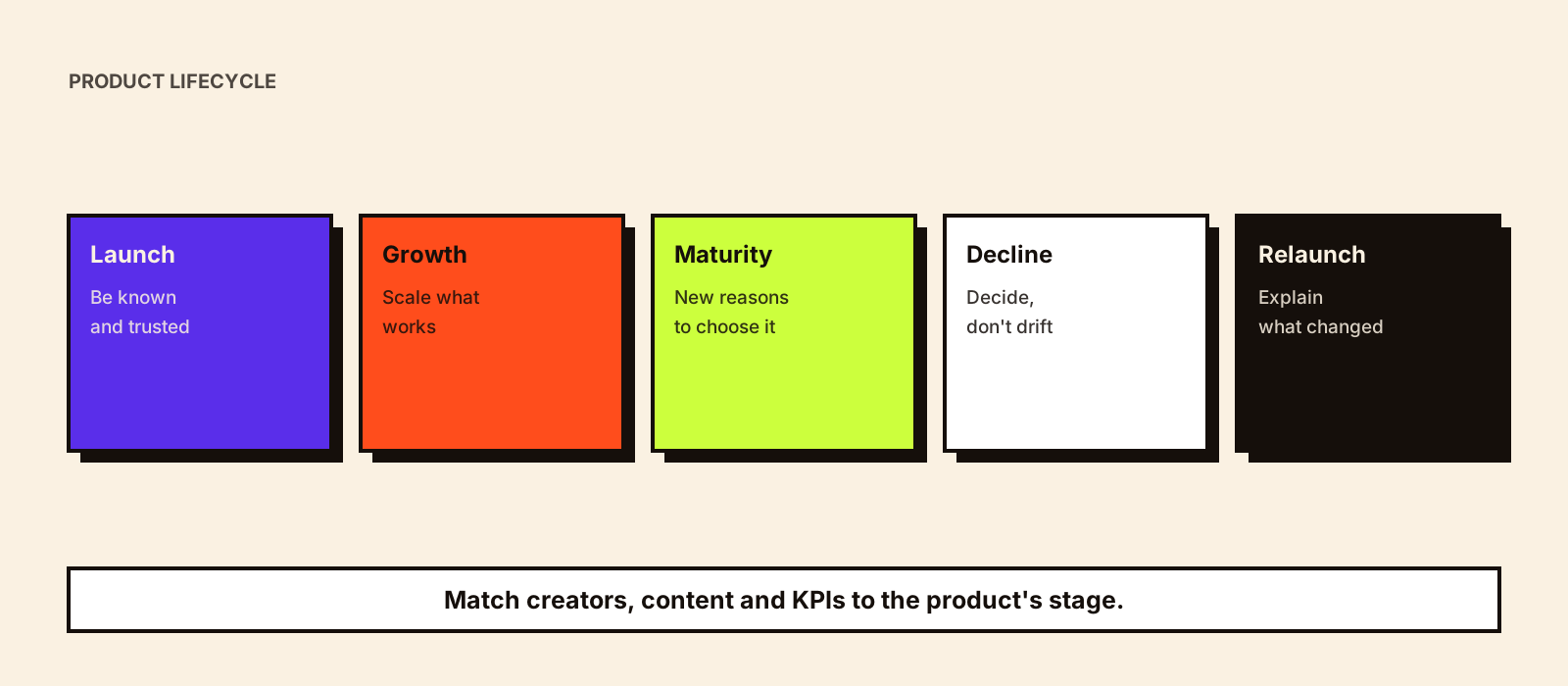
A creator campaign that works for a launch can waste money a year later. When a product is new, people need to hear that it exists; once it's established, they need reasons to choose it over alternatives, remember it or come back to it. Matching creator activity to the product's stage keeps the brief, the creators and the measures honest.
Quick answer
Plan influencer marketing around the product's stage. At launch, use creators for awareness and first reviews; during growth, scale with more creators and turn the best content into ads; at maturity, shift to differentiation, new uses, loyalty and always-on programmes; when sales decline, decide whether to refresh the product's story, reposition it or reduce spend; and for a relaunch, treat it like a launch but address what changed. Each stage needs different creators, content and KPIs.
The stages at a glance
| Stage | What the product needs | Creator approach | Primary KPI |
|---|---|---|---|
| Pre-launch and launch | People to know it exists and trust it | Seeding, embargoed reviews, launch-day creators | Reach in the target audience, first reviews, early sales |
| Growth | More people trying it, efficiently | More micro creators, creator content as ads, affiliates | Cost per new customer, content performance as ads |
| Maturity | Reasons to choose it over rivals and buy again | New use cases, comparisons, routines, ambassadors | Share of category conversation, repeat purchase |
| Decline | Slow the drop or find new audiences | Selective creators for new segments; reduce spend where it doesn't help | Contribution per order; incremental sales |
| Relaunch or reformulation | Explain what's new without confusing existing buyers | Returning creators who knew the old version, honest comparisons | Awareness of the change, trial among lapsed buyers |
Launch: be known and trusted
Launch work is covered in detail in influencer marketing for product launches. The lifecycle point is to plan beyond launch day: the creators who post first are often the ones whose later content keeps working, so agree usage rights and a follow-up post upfront.
Growth: scale what works
- Expand from the creators and formats that performed in the launch, rather than starting again.
- Run the best creator videos as partnership ads, with paid usage agreed.
- Add affiliates or codes to make performance measurable at scale.
- Test new cities, languages or audiences one at a time.
Maturity: give people new reasons
Mature products face familiarity: the audience already knows them. Creator content needs a new angle.
- New use cases and occasions: recipes, routines, gifting, seasons.
- Comparisons and 'why I switched' content from creators who genuinely use it.
- Ambassadors and long-term partners who show the product over months.
- Customer and UGC content on product pages and in retention emails.
Decline: decide, don't drift
When a product's sales are falling, more creators rarely fix the underlying reason. Check whether the problem is the product, price, distribution or awareness. Creators help when the issue is relevance with a new audience; they don't help when stock, price or quality is the problem. Run a small test against a comparison group before committing budget; see scaling, pausing or stopping an influencer campaign.
Relaunch and reformulation
A relaunch has to explain what changed to people who knew the old version. Creators who used the original are credible here, provided they can honestly compare. Keep claims about the improvement substantiated, and plan for comments from loyal customers who preferred the old version. Brand-level changes are covered in influencer marketing during a rebrand.
Planning a portfolio of products at different stages
Most brands have products at several stages at once. Give each product a stage, an objective and a budget line in the annual creator plan, so launch spend doesn't crowd out the mature products that pay the bills. The annual plan structure is in influencer marketing annual plan.
Product | Stage (launch / growth / maturity / decline / relaunch) | Evidence for the stage (sales trend, awareness, repeat rate)
Objective this quarter | Creator approach | Budget share | Primary KPI and target
What would make us change the plan (e.g. KPI below X for 8 weeks)
If you're still deciding which products deserve creator budget at all, start with how to decide which products to prioritise for influencer marketing.
Common mistakes
- Running the launch playbook on a mature product.
- Cutting creator spend on mature best-sellers to fund every new launch.
- Expecting creators to fix price, stock or product problems.
- Not agreeing usage rights at launch, then paying again for the content in the growth stage.
- Judging a maturity-stage campaign on reach instead of repeat purchase or share of conversation.
Conclusion
Influencer marketing works best when the brief matches where the product is: known, growing, established, fading or changing. Name the stage, set the KPI that fits it, and choose creators and formats for that job. Kudozz plans creator activity across product portfolios through its campaign strategy service.