Influencer Follow-Up Strategy: When and How Brands Should Follow Up With Creators
A follow-up system for every stage of a creator relationship: no reply to first outreach, a 'maybe', after a rate card, after a call, during the campaign and after it ends, with timing, wording, when to stop and how to stay respectful.
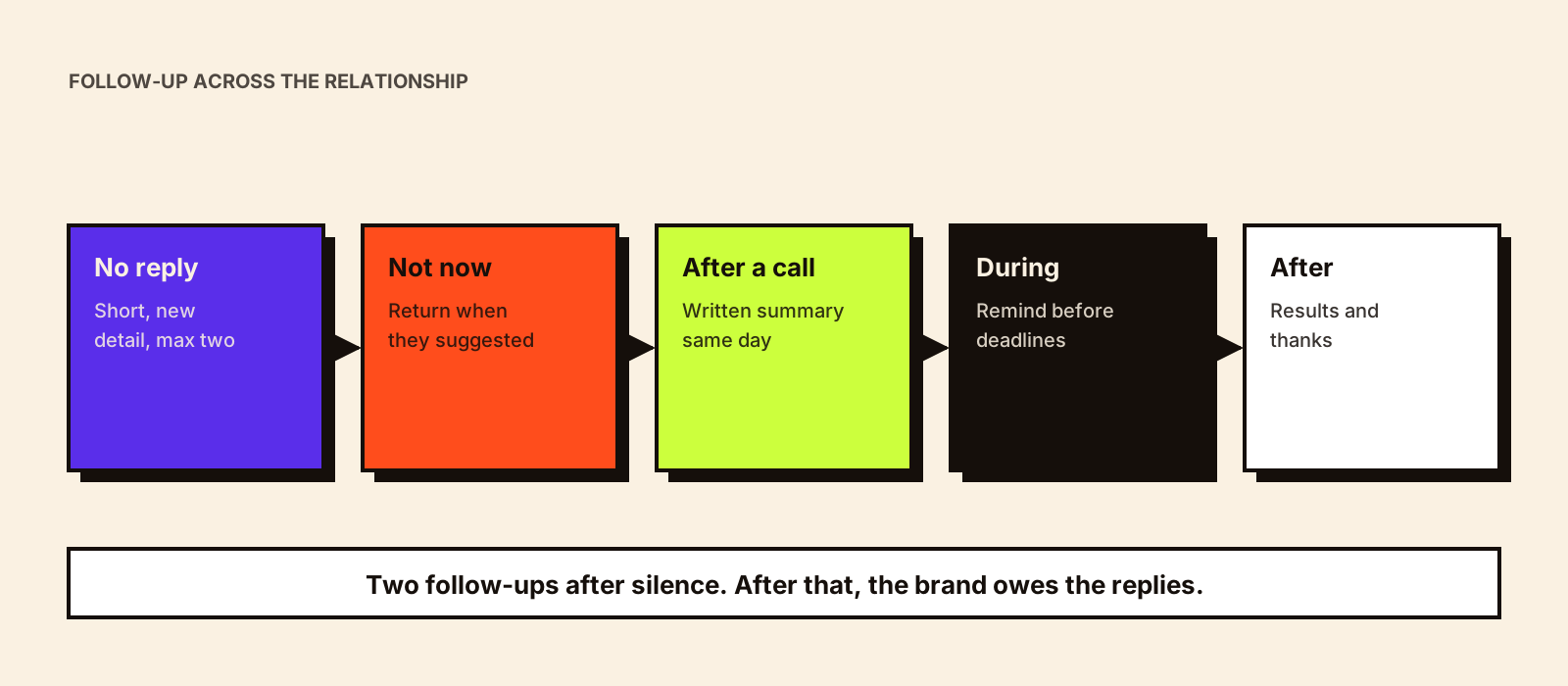
Most follow-up advice stops at 'send a reminder after a few days'. In practice, brands need to follow up at many points: when a creator hasn't replied, when they've said 'maybe later', when a rate card arrives and nobody responds for a week, after a promising call, when a draft is late, and after a campaign that went well. Each needs a different tone. Getting them right is how one conversation becomes a working relationship.
Quick answer
Follow up once or twice after a first message gets no reply, a few days to a week apart, each time adding something new and keeping it short; then stop. After a creator replies, the brand should do most of the following up: respond to rate cards and questions within a couple of working days, send a written summary after any call, confirm decisions promptly, and follow up after the campaign with results and thanks. Stop when a creator declines, asks you to, or doesn't answer two follow-ups, and record it so nobody contacts them again for the same thing.
Follow-ups by stage
| Stage | When | Purpose | Stop when |
|---|---|---|---|
| No reply to first outreach | After about 4–7 days; second after another week | Resurface the message with something new | Two follow-ups without reply |
| Creator said 'maybe' or 'not now' | At the time they suggested, or next relevant campaign | Reopen with a specific opportunity | They say no or don't respond |
| Rate card received | Within 1–2 working days | Acknowledge; confirm interest or next step | n/a: the brand owes the reply |
| After a call | Same or next day | Written summary of what was agreed | n/a |
| Terms sent, no response | After 3–5 days | Check if anything is unclear | After one follow-up, ask directly if they'd prefer to pass |
| During the campaign (drafts, go-live) | Before deadlines, not after | Keep timelines on track | n/a |
| After the campaign | After results are in | Share results, thank, discuss what's next | n/a |
Following up when there's no reply
- Keep it shorter than the first message.
- Add one new piece of information: dates confirmed, budget approved, product ready, a reason the timing works.
- Reply in the same thread so context is visible.
- Use the same channel; don't jump from email to DM to manager at once.
- Make declining easy: 'If it's not a fit, a quick no is completely fine.'
Hi [name], following up on my note about [campaign] for [month]. We've now confirmed [new detail: budget / dates / product ready to ship]. If it's not right for you this time, a quick no is completely fine. Otherwise, happy to share the brief.
Hi [name], last note from me on [campaign]. We're finalising creators on [date]. If you're interested, just reply here; if not, no problem at all and thanks for your time.
Two follow-ups is a sensible default. Beyond that, persistence starts to feel like pressure, and it costs goodwill you may want for a future campaign. Automated sequences should stop the moment a creator replies anywhere; influencer outreach automation covers stop rules.
Following up after a 'maybe' or 'not now'
A creator who says 'not this month' or 'maybe for a future launch' has given you permission to return, not to chase. Note when and why in your records, then come back with a specific opportunity at the right time:
Hi [name], when we spoke in [month] you mentioned [reason: busy with festival campaigns / wanted to try the product first]. We're planning [new campaign] for [month] and thought of you because [specific reason]. Would you like to see the brief?
The brand's follow-ups once a creator replies
Once a creator engages, the follow-up burden shifts to the brand. Slow responses from the brand side are one of the most common reasons promising conversations stall. Good practice:
- Acknowledge rate cards and questions within a couple of working days, even if the answer is 'we're reviewing and will reply by Friday'.
- After every call, send a short written summary: deliverables, dates, fee, rights, open questions.
- If budget approval is delayed, say so rather than going quiet.
- If you decide not to proceed, tell the creator. Silence after they've shared rates damages your reputation with creators and their managers.
Hi [name], thanks for the call. Summary of what we discussed:
• Deliverables: [ ]
• Timeline: draft by [date], live on [date]
• Fee: ₹[ ] + GST, paid [terms]
• Usage: [organic only / paid ads for X months]
• Open questions: [ ]
I'll send the agreement by [date]. Shout if I've missed anything.
Follow-ups during the campaign
- Remind before deadlines, not after. A note two or three days before a draft is due is helpful; a note the day after it's late feels like a reprimand.
- Give feedback on drafts within the time you promised.
- If a creator is late, ask whether something's wrong before restating the contract.
Following up after the campaign
The most valuable follow-up is the one most brands skip. A short note after results are in, with specific thanks, a result or two you can share and a word about future plans, is often what turns a one-off post into a repeat partnership. Repeat influencer collaborations explains how to build on it.
Hi [name], wanted to share how your [post] did: [one or two specific results you can share]. The [specific thing they did] worked especially well. Thank you. We're planning [next campaign/quarter] and would love to work with you again; I'll reach out with details when we have them.
When to stop
- The creator says no, or asks not to be contacted.
- Two follow-ups with no response.
- A manager says the creator isn't taking brand work.
- The creator has started an exclusive partnership with a competitor.
Record the reason, and respect it in future campaigns. Influencer collaboration rejection covers responding gracefully when creators decline.
Who owns follow-ups
Follow-ups fall through the cracks when nobody owns them. Assign one person per creator and track the next follow-up date in your tracker or CRM. Influencer marketing CRM explains how to keep this history.
| Follow-up | Owner | Due |
|---|---|---|
| No reply to outreach | Campaign manager | 4–7 days, then once more |
| Rate card received | Campaign manager (with budget owner) | Within 2 working days |
| Post-call summary | Whoever led the call | Same or next day |
| Draft feedback | Reviewer | Within the promised window |
| Payment status | Campaign manager with finance | Before the agreed date |
| Post-campaign note | Relationship owner | Once results are in |
Follow-ups with managers
- Keep the manager copied on anything commercial.
- One follow-up to the manager is usually enough before asking whether the creator is taking work.
- Don't bypass the manager by messaging the creator about terms.
Hypothetical example: from first contact to a long-term deal
Hypothetical: a skincare brand contacts a Malayalam beauty creator in March. No reply. A follow-up a week later mentions that products are ready to ship; she replies that she's fully booked until May. The brand notes it and returns in early May with a monsoon-skincare brief. After a call, it sends a written summary the same day, and pays within the agreed 15 days of going live. After results come in, it shares them and offers a three-post series for Onam. Each follow-up was short, timely and added something; together they turned a cold message into a partnership.
Common mistakes
- Repeating the same message as a follow-up.
- Following up on email, DM and WhatsApp on the same day.
- Going silent after receiving a creator's rates.
- Never following up after the campaign.
- Guilt-tripping language ('We haven't heard back from you yet…').
Once a campaign is under way, influencer communication covers channels, response times and keeping decisions in writing.
Conclusion
Follow-up is a habit across the whole relationship, not a reminder after first outreach. Keep early follow-ups short, new and limited to two; once creators engage, respond promptly and put agreements in writing; remind before deadlines; and always follow up after the campaign. That last step is where long-term partnerships start.