Australian Influencer Advertising Rules: ACCC, AANA and Disclosure Explained
The rules for influencer advertising in Australia, explained for brands: the Australian Consumer Law and ACCC enforcement, the AANA Code of Ethics and Ad Standards, what counts as clear disclosure for paid, gifted and affiliate posts, fake and edited reviews, TGA and ABAC sector rules, children's advertising and a compliance checklist.
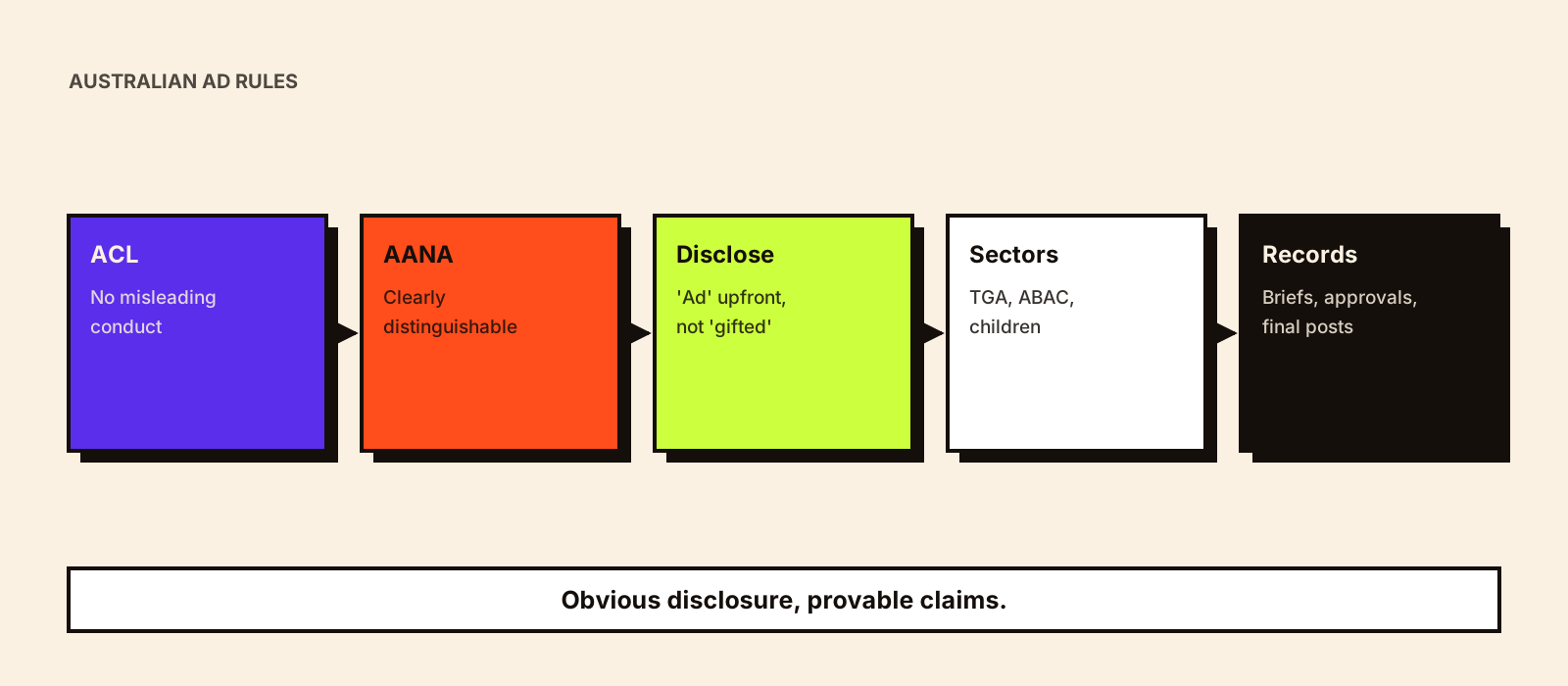
Australia regulates influencer advertising through two layers: the Australian Consumer Law, which is legally binding and enforced by the ACCC, and industry self-regulation under the AANA codes, administered by Ad Standards. Sector rules add more for therapeutic goods and alcohol. This guide explains each layer for brands. It's general information, not legal advice; take advice for specific campaigns or disputes.
Quick answer
In Australia, influencer posts must not be misleading or deceptive under the Australian Consumer Law, which means paid, gifted and affiliate relationships must be disclosed in a way that is immediately obvious, and product claims must be true and provable. The AANA Code of Ethics separately requires advertising to be clearly distinguishable as advertising; Ad Standards has found labels like 'gift' insufficient. Brands can be responsible too: the ACCC has penalised businesses that told influencers not to disclose or edited their reviews. Sunscreen and other therapeutic goods can't be promoted with paid or gifted testimonials, and alcohol influencers must follow the ABAC code.
Law vs self-regulation
| Australian Consumer Law | AANA codes | |
|---|---|---|
| Type | Legislation | Industry self-regulation |
| Main rule | No misleading or deceptive conduct in trade or commerce | Advertising must be clearly distinguishable as such (Code of Ethics clause 2.7) |
| Who it applies to | Businesses and influencers engaged in trade or commerce | Advertisers and marketers |
| Enforcement | ACCC: infringement notices, court action, penalties | Ad Standards Community Panel determinations; removal or amendment |
| Sources | ACCC guidance and cases | AANA Code of Ethics, Ad Standards case reports |
Sources: the AANA Code of Ethics and Ad Standards.
What the ACCC has found
Reviewed 9 October 2026. The ACCC's internet sweep, published in December 2023, found that 81% of the 118 influencers reviewed made posts raising concerns about potentially misleading advertising, most often by not disclosing brand relationships, and flagged vague labels such as 'sp', 'spon' and 'collab' as unlikely to fix a misleading impression. In 2026 PhotobookShop paid $39,600 in penalties after the ACCC alleged it told influencers not to disclose that it paid them in free products and made undisclosed edits to a review, and Hismile paid $138,600 over social media videos presenting employees as 'random shoppers'. The ACCC also says businesses are responsible for false or misleading posts and comments others make on their own social media pages.
What clear disclosure looks like
| Relationship | Disclose? | Better practice |
|---|---|---|
| Paid post | Yes | 'Ad' or 'Advertisement' at the start, plus the platform's paid partnership label |
| Gifted product with any expectation of content | Yes | Say it's an ad or gifted ad, not just 'gifted' or 'thanks to' |
| Affiliate link or discount code with commission | Yes | State that you earn commission, near the link or code |
| Brand ambassador or ongoing partnership | Yes, in each post | Don't rely on a bio statement alone |
| Brand reposts creator content as its own ad | It's the brand's advertising | Make the ad clearly advertising; don't present it as a spontaneous review |
| Hosted trip, event, meal or stay | Yes | Say it was hosted or paid for, in each post about it |
| Employee, family member or investor | Yes | State the connection; don't present it as an ordinary customer's view |
| Livestream with a sponsored segment | Yes | Say it out loud, keep an on-screen label and repeat it for people who join late |
No single hashtag guarantees compliance. The test is whether the overall impression is clear: the label must be visible without expanding the caption, in the video itself for video formats, and in words the audience understands. Ad Standards upheld a complaint where the word 'gift' didn't make Instagram Stories clearly distinguishable as advertising.
Platform labels and their limits
Use each platform's paid partnership or branded content tool, because it adds a visible label and gives the brand access to results. But a label on its own may not be enough if the content still looks like an independent opinion, or if the label is hard to see on a video. Put 'Ad' at the start of the caption and in the first seconds of the video as well. Disclosure also doesn't fix a misleading claim: a clearly labelled ad must still be accurate. The ACCC's December 2023 sweep report still says it plans targeted influencer guidance; as of our 9 October 2026 check we couldn't find it published.
Reviews and testimonials
- Don't write, edit or ask for fake reviews; don't edit a creator's review without disclosure
- Don't present staff, family or paid people as ordinary customers
- Don't selectively hide negative reviews in a way that misleads
- Incentivised reviews must disclose the incentive
The ACCC's guidance on online reviews explains these points for businesses.
Sector rules
| Category | Rule | Source |
|---|---|---|
| Therapeutic goods (medicines, supplements, sunscreens) | Paid or incentivised testimonials aren't permitted; paid endorsements must be clearly identified as advertising; health professionals can't endorse | TGA social media guidance (updated November 2025) |
| Regulated health services (clinics, practitioners) | Testimonials in advertising are banned; cosmetic procedure guidelines from 2 September 2025 strengthen the ban on influencer testimonials | Ahpra |
| Alcohol | ABAC guidance: brands are responsible for influencer posts; influencers must be 25 or over and use 18+ audience controls | ABAC influencer guide (July 2026) |
| Advertising to children | Advertising directed primarily at children under 15 must meet the Children's Advertising Code | AANA Children's Code |
| Financial products | Recommendations can be unlicensed financial product advice; unique paid links can be 'dealing by arranging'; licensees can be liable | ASIC INFO 269 |
| Food and drink to children | Occasional food advertising must not target children under 15 | AANA Food & Beverages Code |
| Environmental claims | Specific, evidenced claims; avoid vague terms | ACCC environmental claims guidance |
| Gambling | Separate laws and regulators apply | Take specialist advice |
Sources: the TGA's social media guidance, the ABAC guide for brands working with influencers, and the AANA Children's Advertising Code. Beauty specifics are in beauty and skincare influencer marketing in Australia; other sectors are covered in our guides to health, wellness and fitness, financial services, food and beverage and sustainability claims.
A compliance checklist
- Every paid, gifted and affiliate post disclosed clearly and upfront, in the brief and contract
- Approved claims with evidence on file
- No instructions to hide the relationship, and no undisclosed edits to creator reviews
- Sector check: therapeutic goods, alcohol, children, finance
- Comments on your own pages monitored for misleading content
- Records of briefs, approvals and final posts
- A plan for fixing a post quickly if disclosure is missing
If the same campaign also runs in the UK, labels and responsibilities differ; see UK influencer advertising rules.
Common mistakes
- Relying on 'gifted', 'collab' or a brand tag
- Disclosure hidden after 'more' or at the end of a long caption
- Sunscreen testimonials from paid creators
- Assuming the creator carries all the risk
- Editing reviews without saying so
Conclusion
Australian rules come down to honesty that's obvious to the audience: say clearly when content is advertising, make only claims you can prove, and follow the extra rules for health products, alcohol and children. Put disclosure and claims into every brief and contract, and take legal advice for complex arrangements.