Influencer Marketing in Australia: A Practical Guide for Brands
A practical guide for brands planning creator campaigns in Australia: how creator content fits the path to purchase, the rules that apply (Australian Consumer Law, AANA codes, TGA and ABAC), platforms and the under-16 restrictions, creator tiers including micro and UGC creators, budgets in AUD, measurement and how to plan a first campaign.
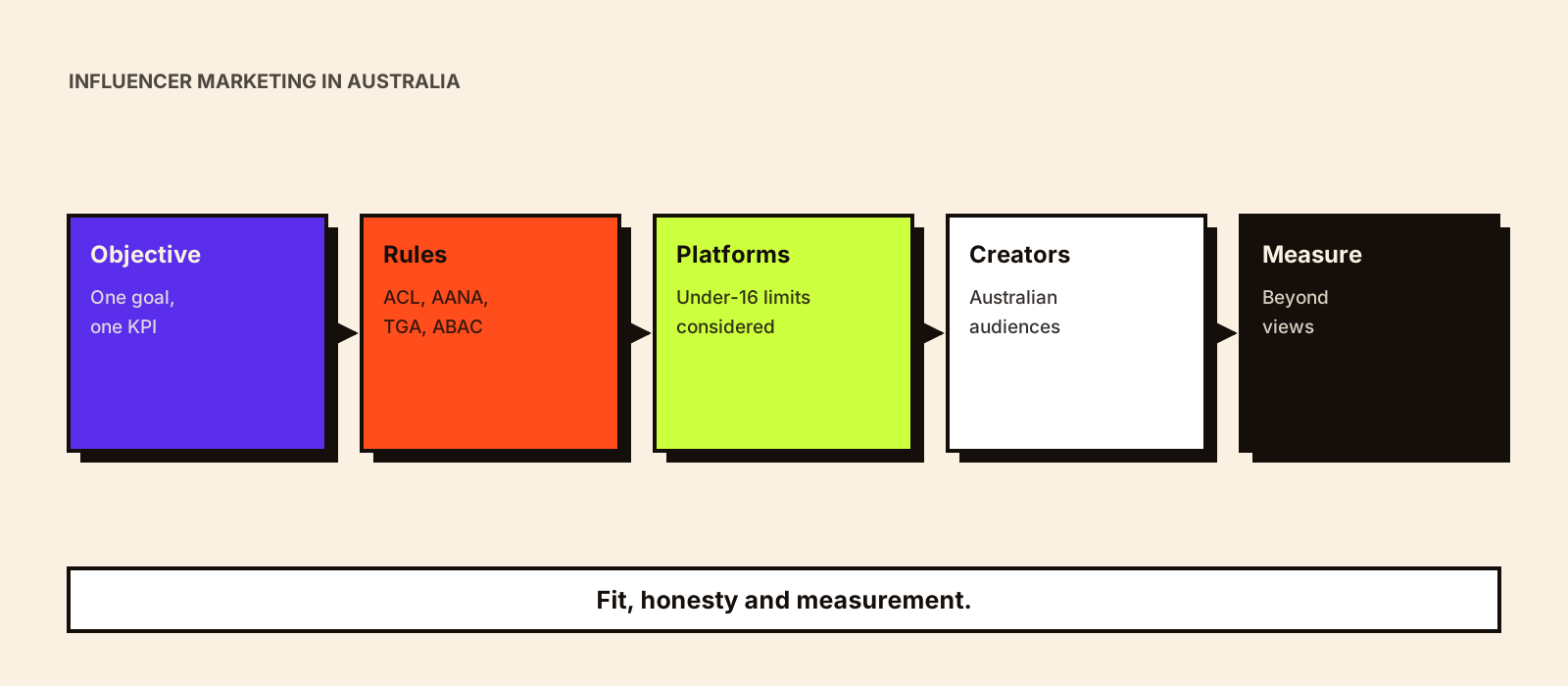
Creators are now part of how many Australians shop. IAB Australia's Creator Connect Report 2026 found that six in ten Australian shoppers, and more than eight in ten under 40, pass through creator content before they buy, and that authenticity and brand fit matter more than reach. Australia also has a well-developed set of rules: consumer law enforced by the ACCC, industry codes, sector rules for health products and alcohol, and from December 2025 a minimum age for social media accounts. This guide is for brands planning creator campaigns in Australia, and links to detailed guides on each topic.
Quick answer
To run influencer marketing in Australia, set one objective, choose creators whose audiences are in Australia and match your category, and make sure every paid, gifted or affiliate post is clearly disclosed and makes only claims you can prove, because misleading posts can breach the Australian Consumer Law for both brand and creator. Check sector rules (TGA for therapeutic goods including sunscreen, ABAC for alcohol), plan around platforms' under-16 restrictions, budget in AUD including GST where it applies, and measure results beyond views.
How creators fit the Australian path to purchase
IAB Australia's research positions creator content alongside search and online stores rather than replacing them: shoppers still search and compare, but creators appear at every stage. The same report notes that most brands are not yet measuring this channel properly. The practical implication is to plan creators as part of the media mix, with clear roles and measurement, rather than as one-off posts.
The rules that apply
| Layer | What it covers | Who enforces |
|---|---|---|
| Australian Consumer Law | Misleading or deceptive conduct, including undisclosed paid posts and fake or edited reviews | ACCC (and state fair trading agencies) |
| AANA Code of Ethics | Advertising must be clearly distinguishable as advertising (clause 2.7) | Ad Standards (industry self-regulation) |
| AANA Children's Advertising Code | Advertising directed at children under 15 | Ad Standards |
| Therapeutic Goods Advertising Code | Medicines, supplements, sunscreens; no paid or gifted testimonials | TGA |
| ABAC Code | Alcohol marketing, including influencers | ABAC scheme |
| Social media minimum age | Platforms must stop under-16s holding accounts | eSafety Commissioner |
The detail, with sources, is in Australian influencer advertising rules, and the account-age law in Australia's under-16 social media restrictions.
Platforms
Instagram, TikTok and YouTube carry most Australian creator campaigns, with Facebook, Snapchat and Pinterest for specific audiences and LinkedIn for B2B. Commerce features differ from other markets: as of our review, TikTok Shop had not launched for Australian shoppers and YouTube's Shopping affiliate program didn't list Australia. All three major platforms are covered by the under-16 account restriction. Planning by platform is covered in Instagram, TikTok and YouTube influencer marketing in Australia.
Creator tiers, micro-influencers and UGC creators
| Creator type | Best for | Watch out for |
|---|---|---|
| Micro-influencers (often 10,000–100,000 followers) | Niche credibility, local audiences, testing several creators | More management per result; check audience is in Australia |
| Nano creators | Local businesses, community and suburb-level reach | Inconsistent posting and reporting |
| Mid-tier and macro creators | Launches and national reach | Higher fees, overlap, more sponsored content |
| UGC creators | Content for your own channels and ads, not their audience | Rights, licensing and approvals; the ad is yours to disclose |
| Expert creators | Health, finance, trades, B2B | Professional rules for their field |
For micro-influencers, the case is usually relevance rather than cost: a creator whose followers live in your city or care about your niche can outperform a larger account. For UGC creators, you're buying content, not reach, so the contract should state where you'll use it, for how long and whether paid ads are included. When UGC runs in your own ads, the ad is your advertising and must not mislead. Choosing and checking creators is covered in how to find and vet influencers in Australia.
Budgets in AUD
We found no independent survey of Australian creator rates, so plan from quotes rather than averages. Cost depends on audience, format, deliverables, usage rights, exclusivity and production. Remember GST: creators registered for GST will add it to invoices. The cost drivers and a budget worksheet are in influencer marketing costs in Australia.
Industry guides
Category-specific guides cover e-commerce brands, small businesses, tourism and regional destinations, restaurants, cafés and hospitality, beauty and skincare, health, wellness and fitness, financial services, food and beverage, sustainable and fashion brands, gaming and esports, universities and education, automotive brands and dealerships, and B2B and SaaS companies.
Measurement
- Set one primary objective and KPI before choosing creators
- Track each creator with a UTM-tagged link and, where useful, a code
- Report reach among Australian audiences, not total reach
- Go beyond clicks: orders, net revenue after returns, repeat customers
- Treat code sales as the minimum effect; creators influence people who never use a code
The difference between views, engagement, leads, revenue and incremental impact is explained in measuring influencer campaign ROI, which includes notes for Australian campaigns.
Entering Australia from overseas
Overseas brands launching in Australia often assume their home-market creator playbook will carry over. The rules are the first thing to check: the ACCC says an overseas business that sells directly to consumers in Australia must follow the Australian Consumer Law, including the rules on misleading claims and consumer guarantees. Then check whether your product needs Australian approvals (for example, therapeutic goods), and take tax advice on GST before you price.
| Decision | What we suggest |
|---|---|
| Local or international creators | Mostly Australia-based creators for persuasion; international creators only where audience data shows a real Australian following |
| Claims | Re-approve every claim for Australian rules; don't reuse overseas wording unchecked |
| Disclosure | Use clear advertising labels, and require the same standard from overseas creators in your contracts |
| Availability | Launch creators only when Australians can buy, with local delivery, returns and AUD pricing |
| Timing | Plan around the Australian calendar and seasons, which are opposite to the northern hemisphere |
| Test size | Start with several micro-creators in one or two cities before a national push |
Running Australia alongside other markets is covered in the international influencer campaign playbook.
A planning sequence
- 1. Objective, audience and one KPI
- 2. Rules check: consumer law, codes and any sector rules for your category
- 3. Platform choice, considering the audience's age and the under-16 restrictions
- 4. Creator shortlist with Australian audience data and a vetting check
- 5. Brief with approved claims and disclosure wording
- 6. Contracts covering fees, GST, usage rights, exclusivity and approvals
- 7. Launch, monitor comments and disclosure, report against the KPI
Templates and detail for each step: the influencer brief template for Australian brands, influencer campaign timelines in Australia, influencer contracts in Australia and local and regional campaigns. If you're comparing outside help, see how to choose an influencer marketing agency in Australia, and for campaigns that also run in India or the UAE, see influencer marketing across Australia, India and the UAE.
Common mistakes
- Vague disclosures such as 'gifted' or 'collab' instead of a clear advertising label
- Paid or gifted testimonials for sunscreen and other therapeutic goods
- Creators whose audiences are mostly overseas
- Planning youth campaigns without considering the under-16 restrictions
- Judging success on views alone
Conclusion
Australian audiences pay attention to creators they trust, and Australian regulators pay attention to whether that trust is respected. Choose creators for fit and audience location, disclose clearly, prove every claim, check sector rules, and measure what the campaign actually achieved.
Kudozz runs influencer campaigns for brands in Australia. If you are planning one, see how Kudozz runs influencer campaigns in Australia, including the consumer-law and TGA checks and the information we need for a proposal.