Influencer Marketing Brief Template for Australian Brands
A copy-ready influencer brief template for Australian brands, with the fields generic templates miss: claims you can substantiate, disclosure wording, sector rules (TGA, ABAC, ASIC), age limits, ABN and GST, usage rights and moral rights consent. Also covers what a good proposal back should contain and how to brief several creators without identical posts.
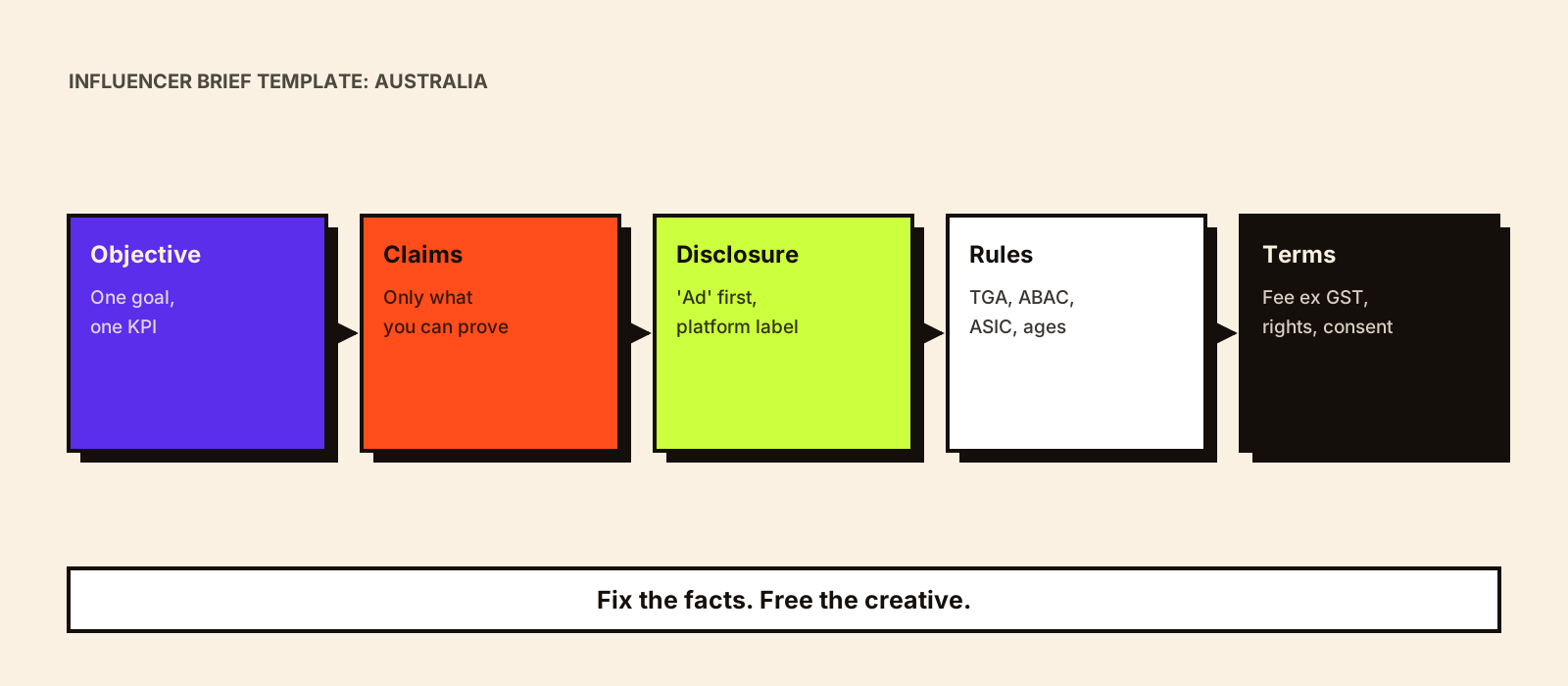
A creator brief tells someone outside your business what to make, what they can say and what happens after they post. In Australia, the brief also does compliance work: the ACCC says the usual advertising rules apply to posts a business pays for or incentivises influencers to make, so the claims, disclosure wording and sector rules need to be in the brief, not left to the creator. This page gives a copy-ready template, explains each field, and covers what a good proposal back from a creator or agency should contain.
Quick answer
A good Australian influencer brief fits on two pages and covers: the objective and one KPI; the audience (including age, given the under-16 account restrictions); the product facts and the exact claims the creator may make, with the evidence held by you; mandatory disclosure wording and the platform's paid partnership label; any sector rules (therapeutic goods, alcohol, financial products, health services, food to children); deliverables, dates and approval steps; and the commercial terms (fee ex GST, the creator's ABN and GST status, usage rights, exclusivity). Leave the creative idea to the creator.
The template
1. Brand and contact
   Business name, ABN, campaign contact, approver for facts

2. Objective and KPI
   One objective (awareness / consideration / sales / leads) and one primary measure

3. Audience
   Who, where (state or city if relevant), age range (no under-16 targeting on age-restricted platforms)

4. Product facts
   Name, price (incl. GST), availability, what's included, where to buy

5. Claims
   May say: ________ (each claim backed by evidence we hold)
   Must not say: ________ (e.g. 'cures', 'guaranteed', 'eco-friendly', unverified comparisons)

6. Disclosure
   Start of caption / first seconds of video: 'Ad' (or 'Ad | gifted')
   Use the platform's paid partnership label; repeat in livestreams

7. Sector rules (tick if relevant)
   [ ] Therapeutic goods (TGA)  [ ] Alcohol (ABAC, creator 25+)  [ ] Financial products (ASIC)
   [ ] Health services (Ahpra)  [ ] Food to children (AANA)  [ ] Environmental claims (ACCC)

8. Deliverables and dates
   Platform, format, number, draft date, go-live window, links / codes

9. Approval
   We check facts, claims and disclosure, not style. Turnaround: __ business days

10. Commercial terms
   Fee ex GST, creator's ABN and GST status, payment terms
   Usage: channels, paid ads (Y/N), duration, territory
   Exclusivity: category, period
   Moral rights consent: specific edits we may make

11. Reporting
   Screenshots of reach, views, link clicks and audience location, due __ days after posting
Fields generic templates miss
| Field | Why it matters in Australia | Where to read more |
|---|---|---|
| Claims you can prove | Misleading conduct is judged on the overall impression, and consumer law applies to posts a business pays or incentivises creators to make | ACCC social media promotions guidance |
| Disclosure wording | Ad Standards upheld a complaint where 'gift' alone didn't make posts clearly advertising | Australian influencer advertising rules |
| Sector tick-boxes | Therapeutic goods, alcohol, financial products and health services each have their own regulator and rules | Sector guides below |
| Audience age | Ten major platforms must stop under-16s holding accounts; some codes restrict advertising to children | Under-16 restrictions guide |
| ABN and GST | Creators registered for GST add 10%; budgets should show fees ex GST | Influencer marketing costs in Australia |
| Moral rights consent | Creators keep moral rights even if you license or buy the content; edits need specific written consent | Influencer contracts in Australia |
The ACCC's social media promotions guidance says the usual advertising rules cover posts a business pays for and posts it offers incentives to influencers to make. The disclosure test and sector rules are covered in Australian influencer advertising rules, and contract terms in influencer contracts in Australia.
Writing the claims section
- List each claim the creator may make in plain words, exactly as you can prove it
- Keep the evidence on file before the brief goes out, not after a complaint
- Name the claims to avoid: absolute words ('best', 'guaranteed', 'safe for everyone'), vague green terms, health outcomes
- Give prices including GST and any conditions, such as minimum spend or dates
- Let creators describe their genuine experience, but don't script a testimonial for therapeutic goods: paid or gifted testimonials aren't permitted under the TGA code
Category rules are explained in our guides to health and wellness, financial services, food and beverage and sustainability claims.
Briefing several creators without identical posts
When ten creators post the same script on the same day, the content looks bought and performs like an ad. Identical wording across creators also makes any claim problem ten times bigger. Keep the facts, claims and disclosure fixed, and vary everything else.
| Fixed for everyone | Different for each creator |
|---|---|
| Product facts, prices and availability | The angle (their routine, problem, use case or audience question) |
| Claims allowed and claims to avoid | Format (Reel, carousel, Story, long video, live) |
| Disclosure wording and label | Setting, voice and structure |
| Tracking link or code (unique per creator) | Posting day, spread over the campaign window |
| Approval rules | Which product or feature they lead with |
A simple method: send one shared brief, then a one-paragraph 'your angle' note for each creator that you agree on a call. If creators pitch ideas first, compare them side by side so two people don't make the same video. Coordination at larger scale is covered in influencer campaign coordination.
What a good proposal back should contain
Whether you brief creators directly or ask agencies to respond, a proposal should answer the brief in a way you can compare. Ask for these in writing:
- Their reading of the objective, and the measure they'd report against
- Creator recommendations with audience location by country and city, age split and dated screenshots
- The idea for each creator and why it suits their audience
- Deliverables and timeline, including draft and approval dates
- Fees ex GST, line by line: creator fees, usage rights, exclusivity, production, management
- Who checks claims and disclosure, and how
- What's not included, and assumptions behind the price
If you're comparing agencies, use the questions in how to choose an influencer marketing agency in Australia. A generic version of the creator-facing pitch is in our influencer collaboration proposal guide.
Common mistakes
- A script instead of a brief, which produces stiff content and identical claims
- Claims written by marketing without checking the evidence
- Disclosure left to the creator's judgement
- No mention of age or sector rules until legal review finds a problem
- Usage rights agreed after the content is made, when they cost more
- Fees quoted without saying whether GST is included
Conclusion
The best Australian briefs are short on creative direction and precise on facts, claims, disclosure and rights. Fix what must be accurate, free up what makes creator content work, and ask for proposals you can compare line by line. This is general information, not legal advice; take advice for regulated categories.