Influencer Marketing Contracts in Australia: Clauses, Law and Ambassador Agreements
What an Australian influencer contract should cover and the local law behind it: misleading conduct, unfair contract terms in standard form contracts with small businesses, GST and ABNs, superannuation for contractors paid for their labour, moral rights, usage rights, exclusivity, and how ambassador agreements differ from one-off deals.
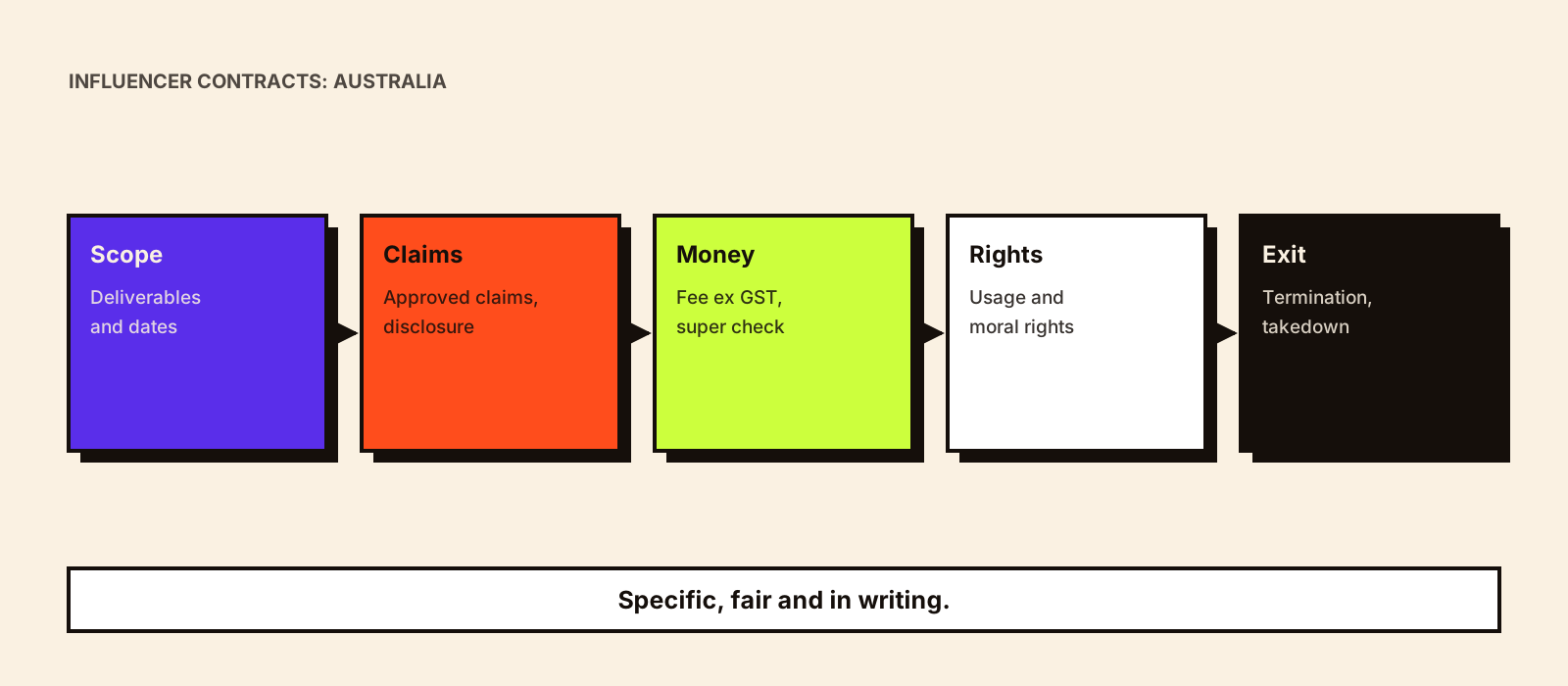
An influencer contract records what each side has agreed: what will be made, what can be said, what it costs and what the brand may do with it afterwards. Several areas of Australian law affect how those contracts should be written. This guide covers the clauses to include and the rules behind them. It's general information for brands and agencies, not legal advice; use a lawyer for your template.
Quick answer
An Australian influencer contract should cover the parties (including ABN and GST status), deliverables and dates, approved claims and mandatory disclosure, approval steps, fees and payment terms, usage rights and moral rights consent, exclusivity, conduct and termination, and record-keeping. Five areas of local law matter most: misleading conduct under the Australian Consumer Law, unfair contract terms if you use a standard form contract with a small business, GST, superannuation if a creator is paid mainly for their labour, and moral rights.
The clauses
| Clause | What to cover |
|---|---|
| Parties | Legal names, ABNs, GST registration, who signs for the creator (talent manager or company) |
| Deliverables | Platform, format, number, length, dates, links and codes; the brief attached |
| Claims and disclosure | Only approved claims; required disclosure wording and platform labels; no deleting disclosure later |
| Approval | What the brand checks (facts, claims, disclosure), turnaround times, number of revision rounds |
| Fees and payment | Amount ex GST, GST if registered, invoice requirements, payment terms |
| Usage rights | Organic reposting, paid ads, channels, duration, territory, edits allowed |
| Moral rights | Written consent to specific edits; attribution expectations |
| Exclusivity | Competitor category, platforms and period, priced separately |
| Conduct | Reasonable standards, what happens if either side is in a public controversy |
| Termination and cancellation | Notice, payment for work done, takedown, what happens to licensed content |
| Records | Screenshots, metrics and audience data within an agreed time |
Consumer law: both sides are exposed
The ACCC's guidance on social media promotions applies the usual advertising rules to posts businesses pay or incentivise influencers to make. In practice, the contract should require clear disclosure, limit claims to the approved list, and let the brand ask for corrections or removal if a post misleads. The ACCC's December 2023 sweep flagged 81% of 118 influencers reviewed for posts raising concerns, so this isn't theoretical.
Unfair contract terms
Many creators are small businesses. Since 9 November 2023, it has been prohibited to propose, use or rely on unfair terms in standard form contracts with consumers and small businesses, with penalties for contracts made, renewed or varied from that date. A small business means fewer than 100 employees or annual turnover under $10 million, and a contract is presumed to be standard form unless shown otherwise. Maximum penalties for a company are the greatest of $50 million, three times the benefit, or 30% of adjusted turnover during the breach period. The ACCC's announcement of the new penalties explains the changes.
- Avoid clauses that let only the brand vary fees, deliverables or rights
- Avoid one-sided termination without payment for work done
- Keep indemnities proportionate to what the creator controls
- Make exclusivity specific, time-limited and paid for
- Avoid automatic renewals that the creator can't easily exit
GST and ABNs
Creators carrying on a business usually quote an ABN. If they're registered for GST, which is compulsory at $75,000 annual turnover, they add 10% to their fee. Quote and compare fees ex GST, and ask creators to state their GST status in the contract. The ATO also treats non-cash benefits such as gifted products as assessable income for creators at market value; that's the creator's tax matter, but it's a reason to record gifts. See influencer marketing costs in Australia.
Superannuation for contractors
Under superannuation law, a contractor paid wholly or principally for their labour can be treated as an employee for super guarantee purposes, even with an ABN. The ATO's ruling TR 2023/4 sets out the test: there must be a contract, wholly or principally for a person's labour, and the person must do the work. A contract to achieve a result, or one that lets the worker delegate the work, generally falls outside it. A fixed fee per deliverable to a creator's company looks different from a day rate paid to an individual for filming. The super guarantee rate is 12% from 1 July 2025. Ask your accountant how this applies to your arrangements.
Usage rights and moral rights
Spell out where and for how long you can use the content, whether that includes paid ads, and what edits are allowed. Moral rights stay with the creator even if you buy the copyright, so get written consent for specific edits. Licences and buyouts are compared in influencer content in paid ads in Australia.
Ambassador agreements
Long-term ambassador programs need more than a one-off post agreement. They usually involve a retainer, regular deliverables, appearances and category exclusivity for months. That raises the stakes on several points:
- Disclosure in every post, not only in the bio
- Exclusivity that's specific and paid for, which also helps on unfair contract terms
- Review points (for example every quarter) where either side can change or end the program
- Whether the arrangement looks like paid labour for super purposes, especially for appearances paid by the day
- What happens to content and usage rights when the program ends
- Conduct expectations that are reasonable and mutual
Program design is covered in brand ambassador programs.
Creators under 18
Contracts with minors raise questions of capacity and parental consent, and state and territory rules on employing children in entertainment and advertising may apply. Check the under-16 social media account restrictions as well. Take legal advice before contracting creators under 18.
Common mistakes
- One-sided standard terms used with small creator businesses
- Fees agreed without saying whether GST is included
- Perpetual, worldwide rights for a one-off fee
- Disclosure and claims missing from the contract
- Ambassador deals with no review or exit point
- Ignoring super for labour-based engagements
Conclusion
A fair, specific contract protects both sides and tends to produce better work. Write claims and disclosure in, price rights and exclusivity separately, avoid one-sided standard terms, and check tax and super with your adviser. The generic clause guide is in influencer marketing contract.