Influencer Content in Paid Ads in Australia: Partnership Ads, Licensing and Buyouts
How Australian brands can use creator content beyond the original post: influencer marketing versus paid social, partnership ads and creator ad authorisation, licence versus buyout, moral rights, and reusing creator reviews on product pages and in email without breaching the ACCC's review rules or the Spam Act.
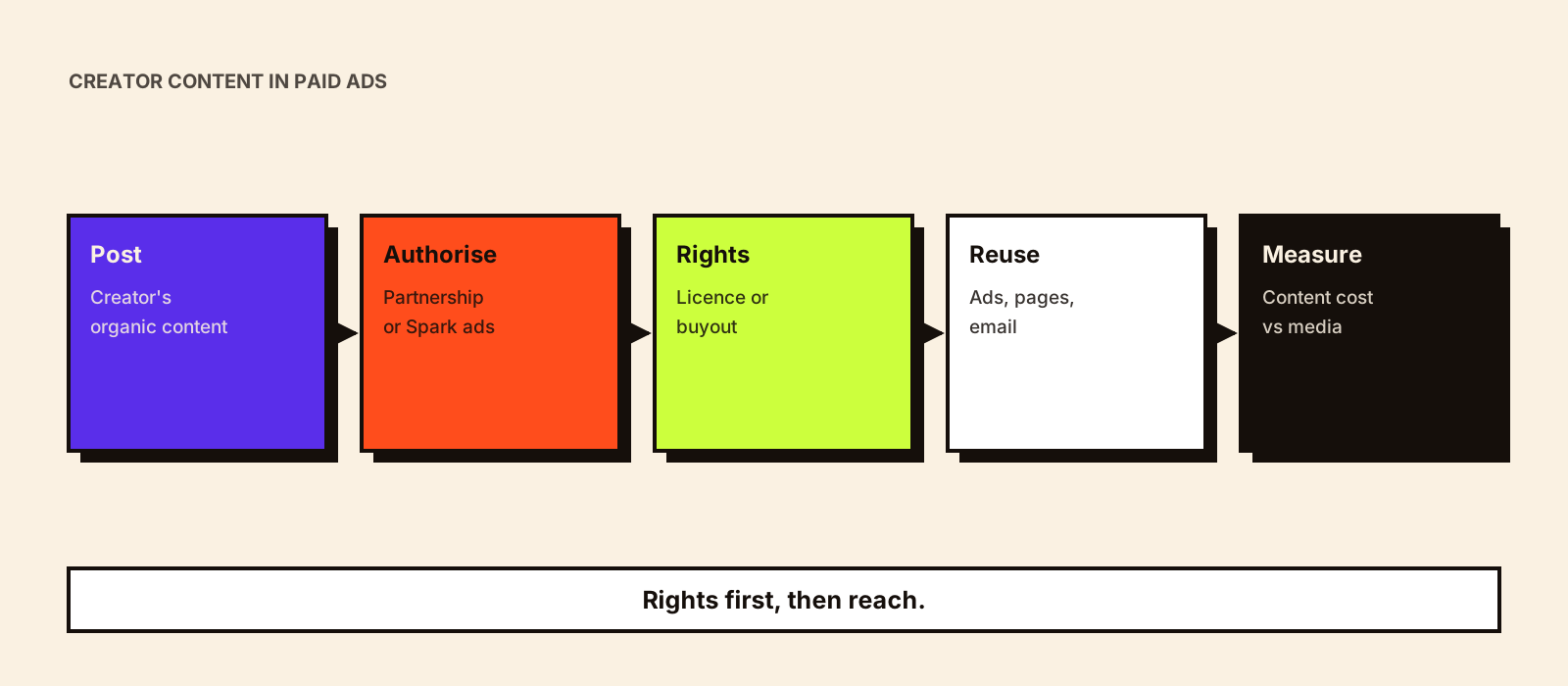
Much of the value in creator content now comes after the original post: as a paid ad, on a product page or in an email. That reuse raises three questions for Australian brands. Is influencer marketing or paid social the better use of budget? What rights do you need to run creator content as ads? And what do consumer law and spam law say about reusing creator reviews? This guide answers all three.
Quick answer
Influencer marketing and paid social work best together: creators supply credible content and an audience, and paid media scales the posts that work to the people you choose. To run creator content as ads you need written permission covering the channels, duration, territory and edits, either as a time-limited licence or a buyout. Ads must still be clearly advertising. Reused reviews must be genuine, unedited in meaning and not selectively presented, and marketing emails need consent and a working unsubscribe.
Influencer marketing vs paid social
| Influencer posts (organic) | Paid social (brand ads) | Creator content as paid ads | |
|---|---|---|---|
| Who it reaches | The creator's followers | Audiences you target | Audiences you target, with the creator's face and voice |
| Credibility | Highest when the fit is real | Lower; clearly the brand speaking | Higher than brand ads; labelled as advertising |
| Control | Low after posting | High | High |
| Cost basis | Creator fee | Media spend | Creator fee plus usage rights plus media |
| Best for | Trust, discovery, testing ideas | Scale, retargeting, offers | Scaling proven creator content |
| Main risk | Wrong creator, poor disclosure | Ad fatigue, low trust | Rights not agreed; claims not checked for an ad audience |
A practical sequence: run creators organically, find the posts that perform with your audience, then license those for paid use. Testing creative is covered in UGC for paid social.
Partnership ads and creator ad authorisation
Platforms let brands run ads from a creator's handle with the creator's permission. Meta brought its Instagram creator marketplace and partnership ads (formerly branded content ads) to Australia in February 2024; partnership ads show both accounts and a paid partnership label. TikTok's Spark Ads work similarly: the creator authorises a post for ads, for a period they choose, and the brand runs it from Ads Manager. Earlier, people called this 'whitelisting'.
- Agree in writing which posts, platforms, how long, which audiences and whether you can edit captions or cut-downs
- Agree who can see and respond to comments on the ad
- Check the platform's current authorisation steps; they change
- Remember the ad is your advertising: claims must be accurate for the ad's audience, not only the creator's followers
- End the authorisation when the licence ends, and record it
Platform detail is in Instagram partnership ads and influencer whitelisting.
Licence or buyout?
| Licence | Buyout (assignment) | |
|---|---|---|
| What you get | Permission to use content for agreed channels, time and territory | Ownership of copyright in the content |
| Cost | Lower; renewable | Higher; one-off |
| Best for | Most campaigns; testing which content works | Content you'll use for years, such as product page videos |
| Moral rights | Creator keeps them | Creator still keeps them |
| Watch for | Expiry dates; ads left running | Using the creator's name and likeness beyond what they agreed |
Under Australian copyright law, creators also have moral rights: to be attributed, not to be falsely attributed, and to have their work's integrity respected. Moral rights can't be transferred, even with a buyout. If you plan to cut, re-voice or re-caption content, get the creator's written consent to those specific acts. Arts Law's moral rights information sheet warns against consents so broad they give unlimited scope to alter work. A buyout of the video also doesn't automatically give you the right to use the creator's name and image in new ads; say so in the contract.
Pricing and scope of rights are covered in influencer usage rights, and contract clauses in influencer contracts in Australia.
Reusing creator reviews on product pages and in email
A creator's honest review can work well on a product page or in an email. The ACCC's online reviews guidance sets the limits. Reviews must reflect the genuine opinion of someone who used the product; paid relationships must be stated; reviews must not be edited in a way that changes their meaning; and businesses must not suppress or remove genuine negative reviews to skew the picture. Incentives for reviews must be offered regardless of whether the review is positive and must be disclosed. Star ratings should show how many reviews they're based on.
- Label creator content on your site as paid or gifted where it was
- Quote creators accurately and in context; don't splice positive fragments
- Don't mix paid creator quotes into customer review widgets
- Remove quotes when the licence ends or the product changes
- For therapeutic goods, paid or gifted testimonials aren't permitted at all; see our health and wellness guide
Email and SMS add the Spam Act. The ACMA's guidance on avoiding spam says commercial messages need consent, must identify the sender and must include a working unsubscribe honoured within five working days. A creator video in a newsletter is fine; sending it to people who never opted in is not. See health and wellness influencer marketing in Australia for the therapeutic goods rules.
Measuring creator ads
- Compare creator ads with your best brand ads on the same objective and audience
- Report the content cost (fee plus rights) separately from media spend
- Watch frequency; creator content fatigues too
- Use holdouts or geographic tests where you can, rather than relying on platform attribution alone
Common mistakes
- Running a creator's post as an ad because it was 'public anyway'
- Licences without end dates, or ads left running after they expire
- Assuming a buyout removes moral rights
- Cherry-picking or trimming reviews for product pages
- Emailing creator content to lists without consent
- Checking claims for the original post but not for the wider ad audience
Conclusion
Treat creator content as an asset with terms attached. Agree rights before production, license first and buy out only what you'll use for years, keep ads clearly labelled, and reuse reviews honestly. This is general information, not legal advice.