Influencer Marketing for Australian Financial Services Brands: ASIC Rules for Finfluencers
How banks, super funds, brokers, insurers, fintechs and credit providers can work with creators in Australia: what ASIC's INFO 269 says about financial product advice and 'dealing by arranging', why licensees can be liable for influencers they use, design and distribution obligations, and safer campaign formats.
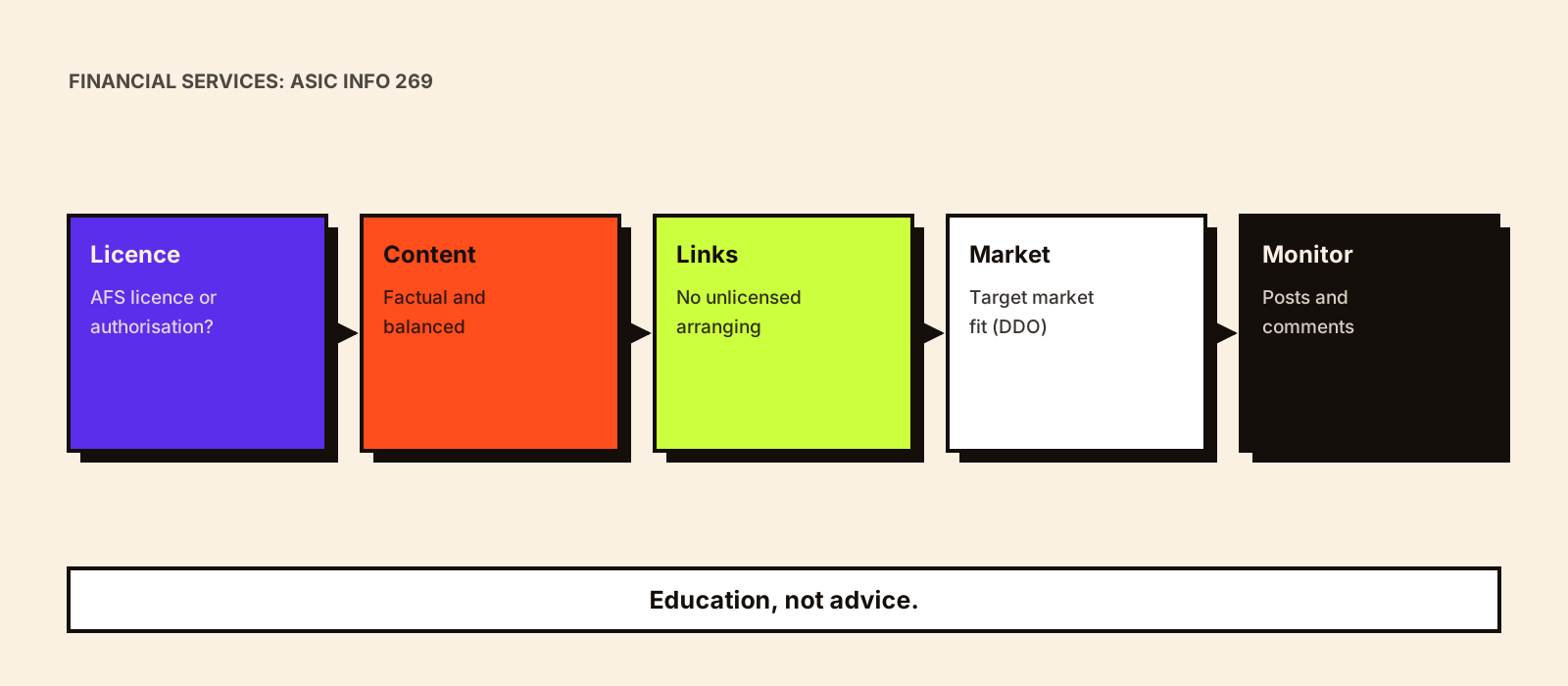
Money content is popular with Australian audiences, and financial brands want to reach them through creators. It's also one of the most tightly regulated categories for creator content. ASIC has published specific guidance for influencers and for the licensees that use them, and the Federal Court has found an Instagram finance influencer gave financial product advice without a licence. This guide is for marketing teams at banks, super funds, brokers, insurers, payment and credit providers and fintechs.
Quick answer
Under ASIC's INFO 269, an influencer who recommends or gives opinions about financial products intended to influence decisions may be giving financial product advice, which requires an Australian financial services (AFS) licence or authorisation. Promoting a unique link that pays per sign-up can be 'dealing by arranging'. Content must not be misleading, and AFS licensees can be liable for influencers they use. Safer formats are factual and educational, balanced on risk, reviewed by compliance, and never presented as personal advice.
What ASIC's INFO 269 says
| Issue | ASIC's position (summarised) | Example from the guidance |
|---|---|---|
| Financial product advice | A recommendation or opinion intended to influence a decision about a financial product. Being paid makes it more likely content is intended to influence. | 'Five stocks you should buy and hold' is likely advice; describing how shares and ETFs differ is unlikely to be |
| Dealing by arranging | Being actively involved in making a transaction happen is a financial service | A unique link to a trading platform paying per sign-up, with a benefit to followers, is likely arranging |
| Misleading conduct | Statements must be true and substantiated; predictions need reasonable grounds; judged on the overall impression on the actual audience | 'Risk-free way to make a quick profit' is likely misleading |
| Licensee obligations | Licensees may be liable for influencers they use; need due diligence, monitoring and compliance resources | Influencers acting on a licensee's behalf may be its representatives |
| Design and distribution | Consider whether influencers promote products to consumers outside the target market | A product's target market determination limits who should be targeted |
Source: ASIC's INFO 269, discussing financial products and services online (issued March 2022). ASIC notes that carrying on a financial services business without a licence is an offence, with penalties including up to five years' imprisonment for individuals.
The Scholz case
In December 2022, the Federal Court found that Tyson Scholz, known online as 'ASX Wolf', had provided financial product advice without a licence through Instagram posts and a paid online community. Reports said the court considered that referring to a company favourably could be a recommendation even without an explicit 'buy'. Permanent injunctions and costs orders followed. The case is a reminder that the substance of content matters, not just its wording.
What brands can do with creators
| Generally lower risk | Higher risk: needs specialist advice |
|---|---|
| Budgeting and saving habits that don't involve financial products | Recommending specific shares, funds, crypto or super options |
| Explaining how a product type works, with risks given equal prominence | Performance or return claims, especially 'guaranteed' or 'risk-free' |
| Showing how to use an app's features, factually | Unique links that pay per account opened or trade |
| Brand awareness without product recommendations | Content aimed at people outside the product's target market |
| Creators who are authorised representatives, within their authorisation | Creators offering paid communities with stock tips |
Whatever the format, disclosure is still required: say clearly that the post is paid. ASIC also suggests influencers use a documented agreement and check who is paying them. Contract terms are covered in influencer contracts in Australia.
A compliance checklist for licensees
- Check whether the creator holds an AFS licence or is an authorised representative, and what for
- Decide whether the creator would act on your behalf, and what that triggers
- Brief on facts only: features, fees, risks; no personal or general advice unless authorised
- Map targeting to the target market determination for each product
- Review scripts, captions, links and pinned comments before posting
- Avoid per-sign-up payments for unauthorised creators without legal advice
- Monitor posts and comments during and after the campaign; keep records
- Apply ASIC's advertising guidance (RG 234) to creator content as you would to ads
Credit, insurance and super
The same principles apply across product types, but each has its own licensing and disclosure rules: credit has its own licensing regime, insurance and super have product-specific rules, and buy now pay later is now regulated as credit. Brief your legal team on the specific product before choosing creators. Generic fintech planning is covered in our guides for fintech brands in India and in the UAE, which describe those markets' own rules.
Measuring finance campaigns
- Measure qualified applications and funded accounts, not clicks
- Track complaints and cancellations from creator-sourced customers
- Check that creator-sourced customers fit the target market
- Report brand search and awareness separately from acquisition
Common mistakes
- Briefing creators to 'share why they love' an investment product
- Paying unlicensed creators per account opened
- Ignoring comments where creators answer followers' personal questions
- Targeting young audiences for products outside their target market
- Treating disclosure as the whole compliance job
Conclusion
Creators can help financial brands explain products and build trust, but the line between education and advice is easy to cross. Start from ASIC's guidance, use factual formats, check licences, and monitor everything. This guide is general information for marketers, not legal advice. Rules change, so check the current guidance from the regulators linked here, and take legal or compliance advice before running campaigns in this category.