How to Choose an Influencer Marketing Agency in Australia
What Australian brands should compare when choosing an influencer marketing agency: compliance processes for consumer law and industry codes, creator sourcing and audience checks, transparency on creator fees and GST, contracts and rights, reporting, and the questions to ask in a pitch. No rankings, just criteria.
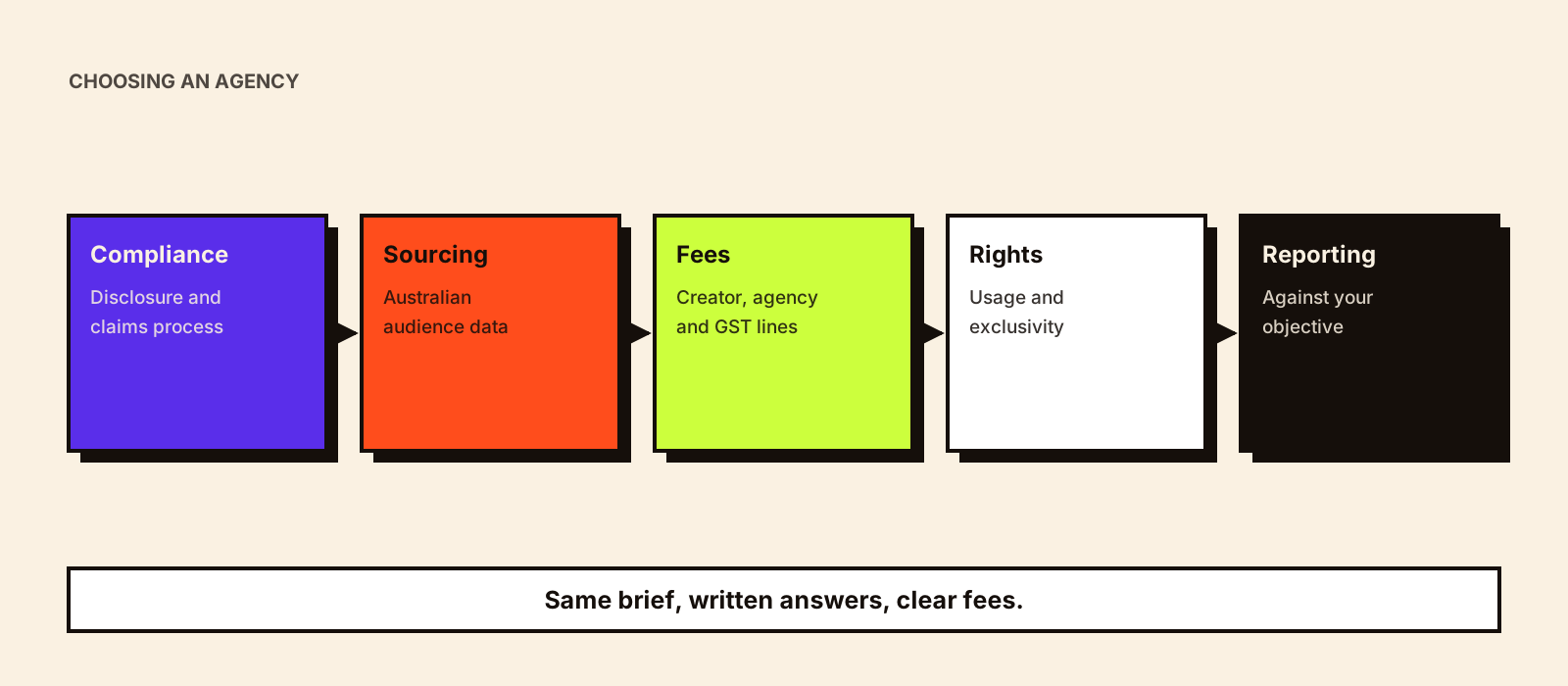
Australian brands can choose from specialist influencer agencies, social and media agencies with creator teams, talent agencies and platforms. They differ in what they actually do, how they charge and how seriously they take compliance. This guide gives you the criteria to compare them. It doesn't rank agencies, and Kudozz is one of the agencies you might compare: weigh our answers against the same criteria.
Quick answer
Choose an influencer marketing agency in Australia by comparing how it handles compliance (disclosure, claims, sector rules), how it finds and vets creators with Australian audiences, whether creator fees, agency fees and GST are shown separately, what the contract says about usage rights and exclusivity, and how it reports against your objective. Send every agency the same brief, ask for a written response, and speak to a reference client before signing.
What to compare
| Criterion | Good sign | Red flag |
|---|---|---|
| Compliance process | Written disclosure wording, claims review, awareness of TGA and ABAC rules where relevant | 'Creators handle disclosure' |
| Creator sourcing | Audience location and quality data for every recommended creator | Follower counts only |
| Fee transparency | Creator fees, agency fee, production and GST as separate lines | One bundled number |
| Rights and exclusivity | Usage rights by platform, duration and paid use, stated in the proposal | Rights 'included' with no detail |
| Reporting | Results against your KPI, with sample report | Reach and likes only |
| Team | Named people and their time on your account | Only the pitch team named |
| Experience | Verifiable examples relevant to your category | Unlabelled 'case studies' with no client you can contact |
Compliance questions to ask
- How do you make sure every paid, gifted or affiliate post is clearly disclosed?
- Who reviews product claims before posting, and against what evidence?
- How do you handle therapeutic goods (including sunscreen) under the TGA's testimonial rules?
- For alcohol, how do you apply the ABAC influencer guidance, including creator age and audience controls?
- What do you do if a creator posts without disclosure or edits a review?
- How do you plan youth-skewed campaigns given the under-16 account restrictions?
The ACCC has penalised businesses over influencer posts, including a 2026 case where a business told influencers not to disclose free products. The rules and cases are summarised in Australian influencer advertising rules.
Fees and GST
- Ask whether the agency fee is a retainer, a project fee or a percentage of creator spend
- Check whether creator fees are passed through at cost or marked up
- Confirm how GST is shown: the agency and GST-registered creators add it to invoices
- Ask who pays creators and on what terms; late payment damages creator relationships
Cost drivers and a budget worksheet are in influencer marketing costs in Australia.
Industry accreditation
The Australian Influencer Marketing Council (AiMCO) publishes best-practice material and runs an influencer marketing accreditation course. Accreditation shows training, not results, but it is a reasonable question to ask, alongside how the agency keeps up with ACCC and Ad Standards decisions.
Running the selection
- Write one brief with objective, audience, budget range and timing
- Send it to three or four agencies and ask for written responses
- Score responses against criteria agreed before reading them
- Ask for sample creators with audience data, not just names
- Call a reference client
- Start with a defined first campaign before a long retainer
A general scoring checklist is in the influencer marketing agency checklist, and pitch questions in 25 questions to ask an influencer marketing agency. If you're weighing an agency against building a team, see influencer marketing agency vs in-house.
In-house, agency or hybrid?
| In-house | Agency | Hybrid | |
|---|---|---|---|
| Best when | Always-on creator programs, strong brand knowledge, steady volume | Launches, new markets or categories, peaks, regulated categories | In-house strategy and relationships; agency for sourcing, contracting and peaks |
| Costs | Salaries, tools, time | Fees or margin on creator spend (ask which, ex GST) | Smaller retained scope |
| Compliance | Your team must know ACL, AANA and sector rules | Check the agency's process in writing | Agree who checks claims and disclosure |
| Risk | Key-person dependency | Less direct creator relationships | Unclear responsibilities if not written down |
Many Australian brands start with an agency for the first campaigns, learn what works, then bring always-on activity in-house. Whatever the model, keep creator contracts, content rights and results data in your name. The global comparison is in influencer marketing agency vs in-house, and briefing either team is easier with the influencer brief template for Australian brands.
Common mistakes
- Choosing on the most famous creator names in a pitch deck
- Accepting a single bundled fee
- Not asking how disclosure and claims are checked
- Signing a long retainer before a first campaign
- Assuming an agency's offshore creator results apply to Australian audiences
Conclusion
The right agency is the one that fits your objective, shows its working, protects you on compliance and reports honestly. Compare agencies on the same brief, look for transparency on fees, GST and rights, and start with a defined campaign you can judge.