Influencer Marketing for Sustainable Brands in Australia: Avoiding Greenwashing
How sustainable and fashion brands can brief creators on environmental claims in Australia: the ACCC's eight principles, the vague terms it recommends avoiding, the Clorox 'ocean plastic' penalty, what the 2022 greenwashing sweep found in clothing and other sectors, and a claims checklist for creator content.
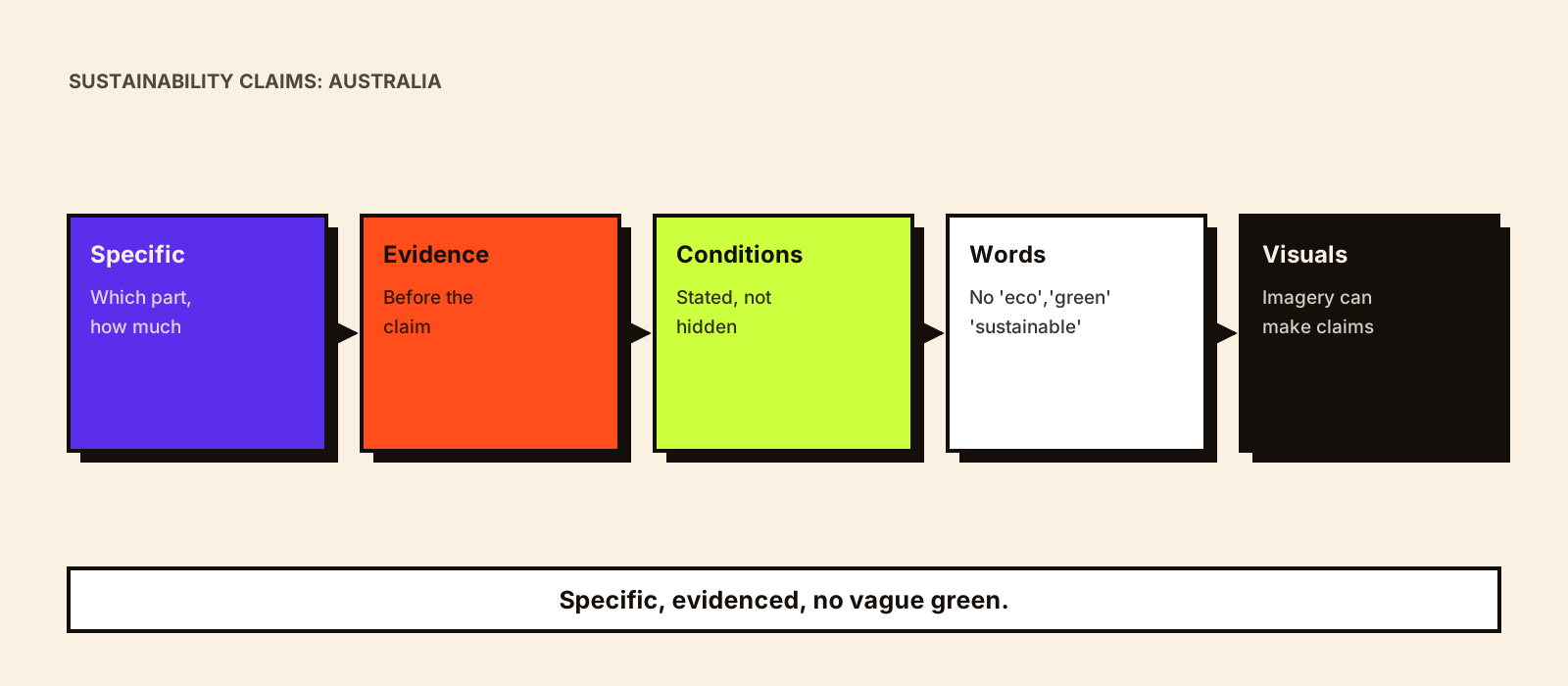
Creators are good at making sustainability feel personal, which is exactly why environmental claims in creator content need care. When a creator says a product is 'better for the planet', the claim comes from your brand, in an ad, to an audience that can't check it. The ACCC has made greenwashing an enforcement focus and published guidance on what good claims look like. This guide applies that guidance to creator campaigns, including fashion.
Quick answer
Give creators specific, evidenced environmental claims to use, and nothing broader. The ACCC recommends avoiding vague terms such as 'green', 'environmentally friendly', 'eco friendly' and 'sustainable', expects evidence before claims are made, and says small print and conditions must not contradict the headline. Visuals count: in the Clorox case, blue colours and wave imagery contributed to a misleading 'ocean plastic' impression and an $8.25 million penalty. Apply the same standard to creator posts as to packaging.
The ACCC's eight principles
| Principle | What it means for creator content |
|---|---|
| Make accurate and truthful claims | Consider the overall impression of the video, not just the words |
| Have evidence to back up claims | Hold evidence before briefing; independent, scientific evidence is most credible |
| Don't hide important information | If only one part of the product is recycled, say which |
| Explain any conditions | 'Recyclable' only through special bins must say so |
| Avoid broad and unqualified claims | Replace 'eco friendly' with the specific fact |
| Use clear and easy to understand language | No technical terms the audience won't understand |
| Visual elements shouldn't give the wrong impression | Nature imagery, green halos and recycling symbols can make claims |
| Be direct and open about sustainability transition | Goals need real plans; offsetting should be described as offsetting |
Source: the ACCC's environmental and sustainability claims guidance and its guide for business, published 12 December 2023.
What enforcement shows
On 14 April 2025 the Federal Court ordered Clorox Australia to pay $8.25 million for representing that GLAD bags were made of 50% recycled 'ocean plastic' when the plastic was collected from communities up to 50 kilometres from the shore. Clarifying statements on the back of the pack weren't enough to correct the impression. The court noted the blue colour and wave imagery, and that 'green' connoted environmental friendliness. Read the ACCC's release on the Clorox penalty.
The ACCC's 2022 internet sweep found 57% of 247 businesses reviewed made concerning environmental claims, with cosmetics and personal care, clothing and footwear, and food and drink among the sectors of most concern. See the greenwashing sweep findings.
Briefing creators on green claims
| Avoid in the brief | Use instead (if true and evidenced) |
|---|---|
| 'Sustainable', 'eco friendly', 'green' | 'Made with 60% recycled polyester (main fabric)' |
| 'Plastic free' | 'Plastic-free outer packaging; the inner seal contains plastic' |
| 'Carbon neutral' | What was reduced, what was offset, and how |
| 'Biodegradable' | Under what conditions and how long, or don't claim it |
| 'Better for the planet' | The specific comparison and its basis |
- Put approved environmental wording in the brief, word for word
- Ask creators not to add their own environmental claims
- Check visuals: nature settings and recycling symbols can imply claims
- Link to your evidence page from the caption where possible
- Review comments where creators answer sustainability questions
Fashion brands
Fashion is one of Australia's biggest creator categories, and clothing was one of the sectors where the ACCC's sweep found the most concerns. Beyond green claims, fashion creator content needs accurate prices and sale claims, honest descriptions of fabric and fit, and clear disclosure of gifted clothing, which is the most common gifting arrangement. Seasons are reversed from the northern hemisphere, so global content calendars rarely fit. Product and creator planning more generally is in our fashion brand guide, written for India but applicable in its method.
- 'Recycled', 'organic' and 'ethically made' need evidence and should say which part of the garment
- Resale, repair and take-back programs: explain how they actually work
- Haul content: gifted hauls need disclosure for every item received for free
- Sizing and fit: don't present edited or pinned fits as typical
Common mistakes
- Letting creators describe products as 'sustainable' in their own words
- Relying on a website disclaimer the viewer never sees
- Future goals presented as current facts
- Nature imagery that suggests more than the claim
- Offsetting presented as reduction
Conclusion
Genuine sustainability work deserves accurate claims. Give creators specific, evidenced wording, check visuals as well as words, and treat their posts as your advertising. This guide is general information for marketers, not legal advice. Rules change, so check the current guidance from the regulators linked here, and take legal or compliance advice before running campaigns in this category.