Influencer Marketing for Sustainable Brands in the GCC: Credible Claims and Creator Fit
How brands with environmental or social credentials can work with creators in the UAE, Saudi Arabia and other GCC markets without greenwashing: the legal position on green claims, a claims ladder from vague to specific, choosing credible creators, content that shows rather than asserts, and measuring trust.
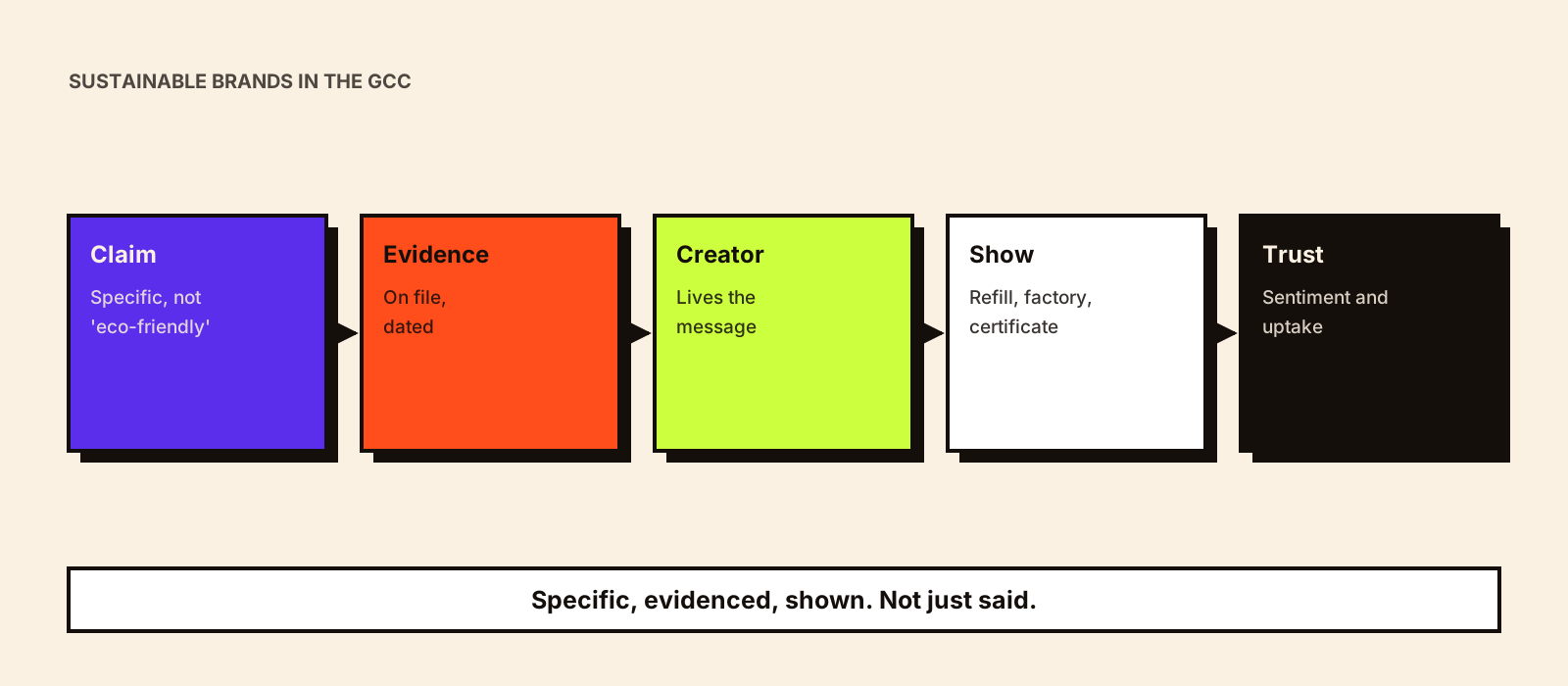
Sustainability messaging has become common in the Gulf, from refillable packaging and solar-powered stores to recycled materials and lower-emission products. Creators can explain these choices in a way that feels human, but they also amplify any claim that can't be backed up. This guide is for brands with genuine environmental or social credentials who want creator content that builds trust rather than accusations of greenwashing.
Quick answer
Sustainable brands in the GCC should give creators specific, evidenced claims ('made with 50% recycled plastic, certified by X') rather than vague ones ('eco-friendly', 'green'), choose creators whose own behavior is consistent with the message, and show proof in the content: the refill station, the certificate, the supply chain. The UAE has no dedicated green-claims rules, but general consumer protection and advertising law prohibit false or misleading descriptions, so unsupported environmental claims carry legal as well as reputational risk.
The legal position
Reviewed 9 October 2026. Not legal advice. According to CMS's UAE summary, there are no specific rules or guides on green marketing in the UAE, so general advertising, consumer protection and anti-fraud rules apply. Article 17 of the Consumer Protection Law (Federal Law No. 15 of 2020) bars advertisers from describing a product or service with false data or in a misleading way, which covers labels, packaging and promotions. Bird & Bird's green claims tracker reports the same position and points to international practice: terms like 'green', 'sustainable' and 'eco-friendly' shouldn't be used without explanation or substantiation. Saudi Arabia and the other GCC states also prohibit misleading advertising under their consumer and e-commerce rules. If you also sell in the EU, its stricter rules on environmental claims apply there.
A claims ladder
| Level | Example | Use with creators? |
|---|---|---|
| Vague | 'Eco-friendly', 'green', 'kind to the planet' | Avoid unless explained in the same sentence |
| Absolute | 'Carbon neutral', 'zero waste', '100% sustainable' | Only with robust, current evidence; often better avoided |
| Comparative | '30% less plastic than our previous bottle' | Yes, with the comparison and date stated |
| Specific and verified | 'Bottle made from 50% recycled plastic, certified by [scheme]' | Best: easy to explain and defend |
| Action-based | 'Return empties to any store for a refill' | Strong: creators can show it |
Choosing credible creators
- Consistency: a creator who flies weekly for luxury travel content will struggle to sell a low-impact lifestyle
- Knowledge: some creators specialise in sustainable living, food waste, fashion repair or outdoor life; they spot weak claims
- Local relevance: content about water, heat, cooling, waste and food that reflects Gulf life lands better than imported messaging
- Freedom to be honest: let creators say what the product doesn't do yet; it builds credibility
Content that shows, not asserts
- Visit the refill station, recycling partner or factory and film the process
- Explain one change in detail rather than listing every initiative
- Show the certificate or label and what it actually means
- Compare honestly with the previous product, not with competitors you can't measure
- Answer critical comments with facts rather than deleting them
Brief and review checklist
- Every environmental claim in the brief has evidence on file and a date
- Claims in Arabic and English say exactly the same thing
- No imagery that implies more than the claim (forests and oceans for a product with a small change)
- No comparison with competitors unless independently substantiated
- Disclosure of the paid relationship is clear; sustainability content is still advertising
Reviewing creator drafts for claims is covered in influencer campaign quality control, and reputational risk in influencer marketing brand safety.
Measuring trust, not just reach
| Signal | What it tells you |
|---|---|
| Comment sentiment and themes | Whether audiences believe the claim or challenge it |
| Questions asked | What people want proved; feed into FAQs and packaging |
| Uptake of the action | Refills, returns or trade-ins, where the claim is action-based |
| Brand perception surveys | Change in 'trusted' or 'responsible' attributes over time |
| Sales of the sustainable range | Whether the message moves product, not just sentiment |
Common mistakes
- Vague words like 'green' and 'eco' with nothing behind them
- Absolute claims based on offsets the brand can't explain
- Creators whose lifestyle contradicts the message
- Deleting critical comments instead of answering them
- Assuming no specific green law means no legal risk
Conclusion
Creators can make a sustainable brand's work tangible, but only with claims that are specific, evidenced and shown rather than asserted. In the GCC, general consumer and advertising law already prohibits misleading descriptions, and audiences are quick to notice greenwashing. Start with one well-proven claim and a creator who lives it.