Influencer Marketing Across Australia, India and the UAE: Rules, Platforms and Planning
A side-by-side guide for brands running creator campaigns in Australia, India and the UAE: who regulates influencer advertising, creator licensing, disclosure, platforms, language, currency and tax, and how to run one campaign across all three markets without copying the same plan.
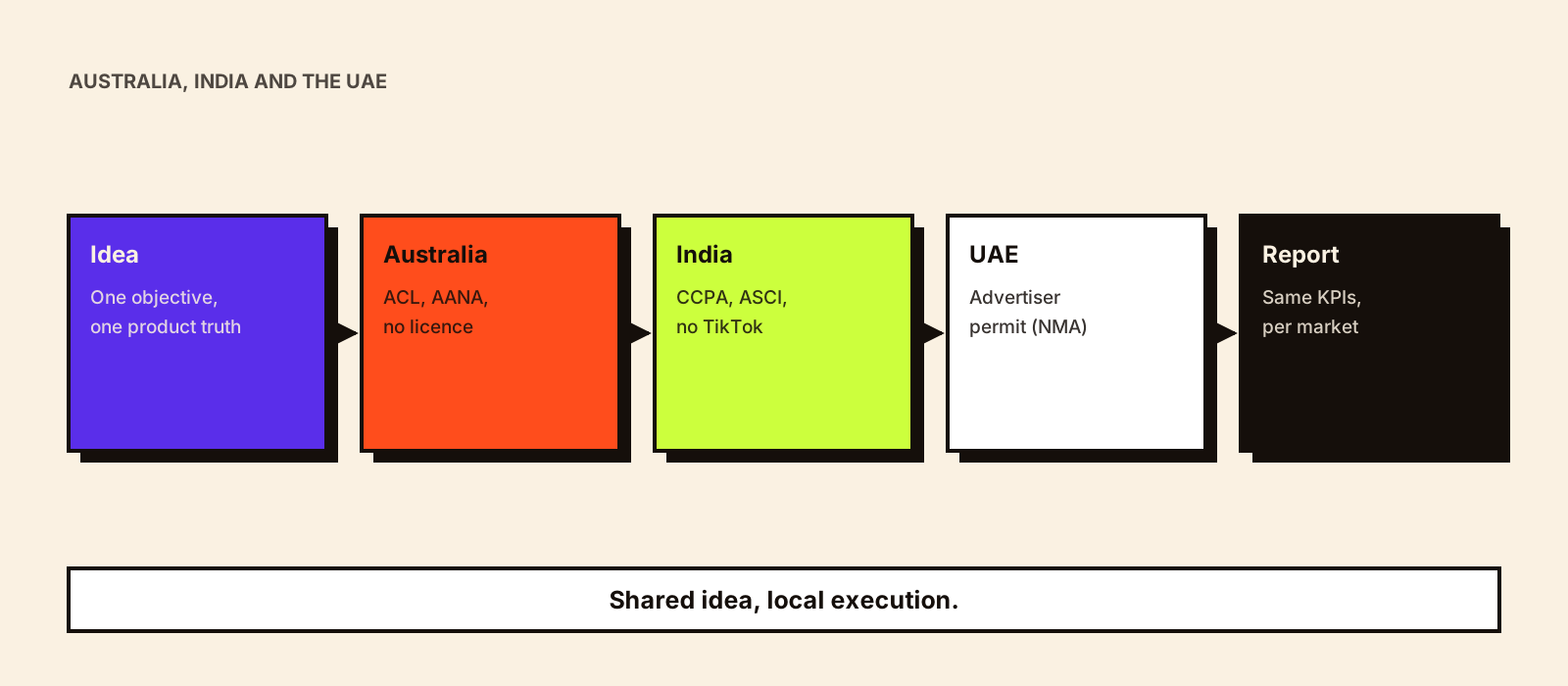
Brands that sell in Australia, India and the UAE often want one creator campaign across all three. The idea can travel, but the rules, platforms, languages and costs don't. This guide compares the three markets side by side and sets out how to run a shared campaign with local execution. Kudozz is based in India and has published detailed guides for India, the UAE and Australia; this page links to each.
Quick answer
The biggest differences are regulation and licensing. In Australia, consumer law and industry codes apply, and creators don't need a licence. In India, consumer protection law, government endorsement guidance and ASCI's self-regulatory guidelines apply, without a creator licence. In the UAE, creators who advertise generally need an advertiser permit from the National Media Authority. Platforms also differ: TikTok isn't available in India, and Australia restricts under-16 accounts on major platforms. Run one strategy with separate creators, briefs, disclosure wording, budgets and reporting for each market.
Side by side
| Australia | India | UAE | |
|---|---|---|---|
| Main rules | Australian Consumer Law (ACCC); AANA codes via Ad Standards | Consumer Protection Act 2019 and CCPA guidelines; ASCI code and influencer guidelines | Media law and National Media Authority rules; emirate-level rules for some sectors |
| Creator licence | None | None | Advertiser permit generally required (NMA) |
| Disclosure | Clearly distinguishable advertising; 'gift' alone has been found insufficient | Clear, prominent disclosure of material connections (ASCI; government endorsement guidance) | Clear identification as advertising; permit rules |
| Sector rules to know | TGA, ABAC, ASIC, Ahpra | Health, finance (SEBI), online money games | Health (e.g. DHA in Dubai), finance (SCA) |
| Age rules | Under-16 account restrictions on major platforms | Platform age rules | Platform age rules |
| Platforms | Instagram, TikTok, YouTube; TikTok Shop not live | Instagram, YouTube; TikTok unavailable | Instagram, TikTok, Snapchat, YouTube |
| Language | English | English, Hindi and regional languages | Arabic and English |
| Currency and indirect tax | AUD; GST 10% | INR; GST | AED; VAT 5% |
Sources: the ACCC's social media promotions guidance, ASCI's influencer guidelines, the Department of Consumer Affairs endorsement guidance, and the National Media Authority's advertiser permit page. Rules change; check the current versions before each campaign.
Australia
Australia regulates influencer advertising mainly through general consumer law and self-regulatory codes, with strict sector rules for therapeutic goods, alcohol, financial products and health services. Since December 2025, major platforms must stop under-16s holding accounts. There's no independent survey of Australian creator rates, so budgets should be built from quotes. Start with influencer marketing in Australia.
India
India combines consumer protection law, government endorsement guidance and ASCI's guidelines, which expect clear disclosure of any material connection, including gifts. Language and regional reach matter more than in the other two markets, and TikTok has been unavailable since 2020, so short video runs through Instagram Reels and YouTube Shorts. Creator tax adds TDS on some benefits. See influencer marketing in India and the compliance detail in influencer marketing compliance.
UAE
In the UAE, creators who advertise generally need an advertiser permit, and reports said the deadline for existing creators was 31 January 2026, with the National Media Authority replacing the former Media Council. Arabic and English content reach different audiences, and much of the population is expatriate. Health and financial promotions have their own rules. See influencer marketing in the UAE.
Running one campaign across three markets
- 1. Shared: the objective, product truth and creative idea
- 2. Local: creators chosen for each market's audience, checked for audience country
- 3. Local: the brief, including claims allowed under each market's rules
- 4. Local: disclosure wording in each market's language and platform labels
- 5. Local: contracts, currency, tax and (in the UAE) permit checks
- 6. Shared: one reporting template, with results reported per market
Avoid using one creator to reach all three markets unless their audience is genuinely spread across them; check audience country data first. Usage rights should also name each territory where content will run, especially for paid ads.
Budget and measurement
- Budget in local currency, with tax shown separately (GST in Australia and India, VAT in the UAE)
- Don't compare creator fees across markets directly; compare cost per result within each market
- Use the same KPI definitions everywhere so results are comparable
- Allow for time zones: the UAE is six or seven hours behind Sydney, India four and a half or five and a half
The step-by-step process for any set of markets, including cross-border contracts and multi-currency payments, is in the international influencer campaign playbook.
Common mistakes
- Copying one brief and disclosure wording into all three markets
- Ignoring the UAE permit requirement
- Planning TikTok content for India
- Running Australian youth campaigns without checking the under-16 rules
- Licensing content for 'worldwide' use when you need three named territories
Conclusion
A cross-market creator campaign works when the idea is shared and everything regulated is local. Use each market's guide, check rules close to launch, and report results market by market. This is general information, not legal advice.