Influencer Marketing for Small Businesses in Australia: A Practical Starter Plan
A starter plan for Australian small businesses trying creators for the first time: setting a goal you can measure, finding local creators, working with a modest AUD budget, gifting vs paying, disclosure obligations, a simple brief and contract, and what to measure in the first 90 days.
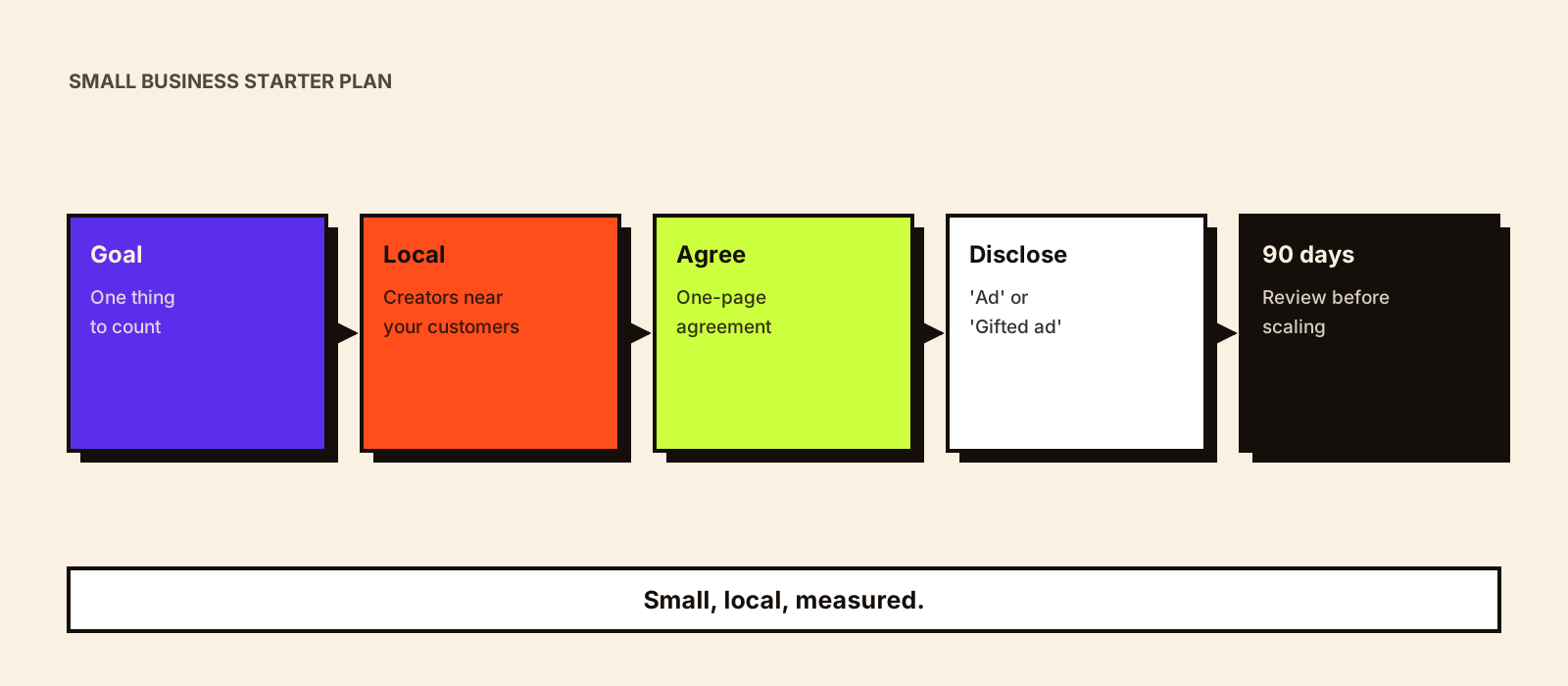
Small businesses don't need celebrity creators. A café, salon, trade business or online shop can often get more from a few local creators whose followers live nearby or care about the niche. But small budgets leave no room for waste, and the same disclosure rules apply to a local creator as to a national one. This starter plan is for owners and small marketing teams trying creators for the first time.
Quick answer
Start with one measurable goal (bookings, store visits or online orders), two to five local or niche creators whose audiences are in your area, a small budget you can afford to test with, and a short written agreement covering deliverables, payment, disclosure and usage. Make sure every post says clearly that it's an ad or gifted ad, give each creator a code or link, and review results after 90 days before spending more.
Step 1: Pick one goal
| Business | Goal | How to count it |
|---|---|---|
| Café or restaurant | Visits and bookings | Creator code at the counter, booking-link source |
| Salon, gym, clinic | New bookings | Booking link per creator; ask new clients how they heard |
| Online shop | Orders | Code and link per creator |
| Trade or service | Enquiries | Tracked form or phone number per creator |
Step 2: Find local creators
- Search your suburb, city or niche on Instagram and TikTok; check who posts about places like yours
- Look at your own followers and customers; some may create content
- Ask creators for audience location screenshots; you want followers near you
- Check that past sponsored posts were clearly disclosed
A fuller checklist is in how to find and vet influencers in Australia.
Step 3: Gift or pay?
| Gifting (product or experience) | Paid | |
|---|---|---|
| Best for | Testing interest, very small creators | Guaranteed deliverables and timing |
| What you can ask for | Nothing guaranteed; it's an invitation | Agreed posts, dates and usage |
| Disclosure | Required if there's any expectation of content | Required |
| Tax note | The ATO treats benefits received for work as income for the creator | Creators registered for GST add GST |
See the ATO's guidance on non-cash income and influencer marketing costs in Australia for budgeting.
Step 4: A one-page brief and agreement
Business and contact:
Creator and ABN (and GST status):
What we're promoting:
Goal and how we'll track it (code / link):
Deliverables and dates:
Key facts (prices, opening hours, what's included):
Disclosure: start the caption/video with 'Ad' (or 'Gifted ad') and use the platform's paid partnership label
Approval: we check facts before posting (not your style)
Payment and terms:
Usage: can we repost on our page? For how long? Ads included?
Cancellation or rescheduling:
Step 5: Disclosure basics
Under the Australian Consumer Law, posts must not mislead people about a commercial relationship, and the AANA code requires advertising to be clearly distinguishable. Ask creators to label posts clearly at the start; vague tags like 'collab' have been flagged by the ACCC. If you sell sunscreen, supplements or alcohol, extra rules apply. Details are in Australian influencer advertising rules.
Step 6: Measure for 90 days
- Count codes, link visits, bookings or enquiries per creator
- Note any rise in walk-ins or calls during the campaign weeks
- Calculate cost per result for each creator
- Ask new customers how they found you
- Rebook creators who brought results; drop or rebrief the rest
For startups
- Use creators to learn, not only to sell: which message, audience and format gets a response
- Pay a few creators in your exact niche rather than one bigger name
- Offer equity or long deferred payments only with legal advice; keep creator deals simple
- Founder-led content and customer creators can come before paid creators
- Get usage rights for paid ads early; startup growth often depends on them
- Avoid claims you can't yet support, such as 'Australia's first' or 'best'
Contracts with creators are covered in influencer contracts in Australia, and the first brief in the influencer brief template for Australian brands.
Common mistakes
- Choosing creators with big followings outside your area
- Gifting without saying what you hope for, then feeling let down
- No code or link, so results can't be counted
- No written agreement
- Forgetting disclosure because 'it's only a free coffee'
Conclusion
For small businesses, creator marketing works best small and local: one goal, a few well-matched creators, clear disclosure, a simple agreement and honest measurement. Learn from the first 90 days, then decide whether to scale. Hospitality businesses will find more detail in influencer marketing for Australian restaurants, cafés and hospitality.