UK Influencer Marketing Rules: A Brand's Guide to ASA and CMA Guidance
What UK brands need to know about influencer advertising rules: when a post is an ad, gifted products, affiliate links and own-brand posts, which labels the ASA and CMA accept, who is responsible, how to brief and review content, paid amplification, a compliance policy outline and common mistakes.
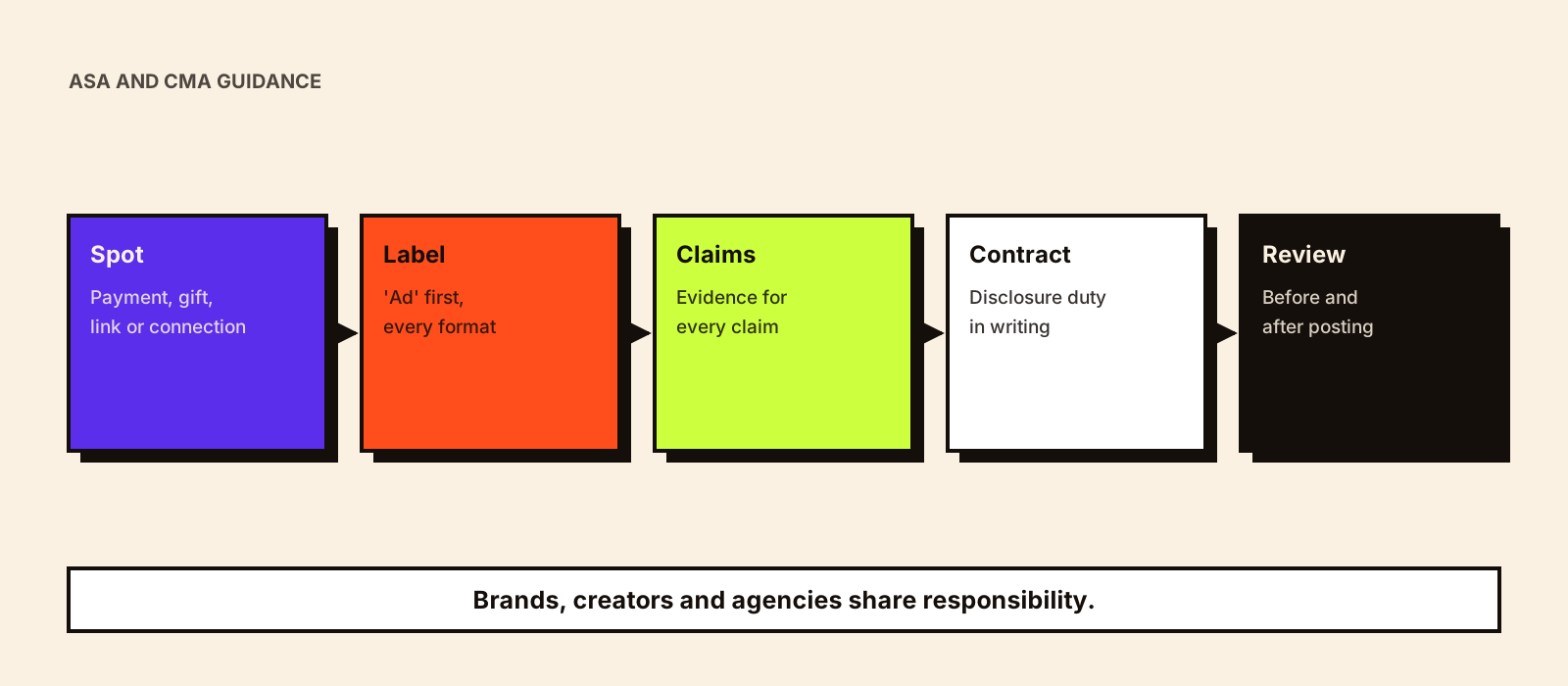
UK influencer rules come from two directions: the ASA, which applies the advertising industry's CAP Code, and consumer law, enforced by the CMA and Trading Standards. Since 6 April 2025, that law is Part 4 of the Digital Markets, Competition and Consumers (DMCC) Act 2024. Both expect the same thing in practice: if there's a commercial relationship, the audience must be able to tell immediately that the content is an ad. This guide is general information for brands and agencies, not legal advice.
Quick answer
Any incentive makes related content advertising: payment, free products (even unsolicited ones with no obligation to post), discounts, trips, commission and affiliate links, and posts about a brand the creator owns or is connected to. Label it with 'Ad' or 'Advert' at the very start, where people look first. Brands, creators and agencies all share responsibility. Put the disclosure duty in contracts and briefs, check posts before and after they go live, and keep disclosing for 12 months after an ongoing relationship ends.
Who regulates what
| ASA and the CAP Code | CMA, Trading Standards and the DMCC Act | |
|---|---|---|
| Type | Self-regulation by the advertising industry | Law |
| When it applies to a creator post | The brand paid (in any form) and had some editorial control, or the post contains affiliate links, or promotes the creator's own products or giveaways | Whenever there's a commercial relationship; no control test |
| Main sanctions | Rulings, naming on non-compliant lists, targeted ads warning followers, referral to platforms and Trading Standards | Enforcement action; since April 2025 the CMA can fine directly, up to 10% of global turnover |
Sources: the ASA and CMA influencers' guide, the CMA's note on who regulates hidden advertising, and a law-firm summary of the CMA's fining powers. The ASA reads 'control' broadly: if the creator wasn't completely free to say anything or nothing, there was probably control.
When is a post an ad?
| Arrangement | Needs an ad label? | Notes |
|---|---|---|
| Paid post | Yes | Any payment, in money or kind |
| Gifted product, no obligation to post | Yes | Free items count as payment even if unsolicited; the CMA's brand guidance says the same |
| Discount, trip, hotel stay, event invite, loan | Yes | All count as incentives |
| Affiliate links or codes earning commission | Yes | Label the affiliate content specifically; 'some links may earn commission' isn't enough |
| Brand ambassador, shareholder, director, employee | Yes | Commercial connection, even for unpaid posts about the brand |
| Creator's own products, events or giveaways | Yes | Must be clear from the content, not just the bio |
| Family's or friends' brand | Yes | Personal connection counts |
| Genuinely unconnected opinion | No | No incentive, no relationship |
Based on the ASA and CMA influencers' guide and the CMA's guidance for brands. Gifts often cause the most confusion: under consumer law, labelling is the brand's responsibility too, even when it asked for nothing in return.
Which labels work
| Use | Avoid on their own |
|---|---|
| Ad, #Ad, Advert, Advertising, Advertisement, Advertisement Feature | Sponsored, Spon, Sp, Gifted, Gift, PR, PR trip, Collab, Affiliate, Aff, Supported by, In partnership with, Thanks to [brand], just tagging the brand |
- Put the label first, where people look: the start of the caption, on the image or video, in the title or thumbnail.
- Don't bury it in hashtags or behind 'more'.
- Label every Story in a sequence, and every format separately (post, Reel, Story).
- For a video, make it clear from the start, not halfway through.
- Platform tools such as Instagram's 'Paid partnership' may be enough only if clear and upfront; if in doubt, add 'Ad' as well.
Who is responsible
Brands, creators and intermediaries (talent and marketing agencies) are all responsible. The ASA holds brands and creators responsible for what their agencies do, and the DMCC Act's unfair commercial practice rules apply across the whole chain, including platforms. In practice, a brand can't rely on 'the creator forgot': the CMA expects brands to require disclosure in contracts, check posts and correct problems promptly, and warns that brands are at risk if they keep working with creators who repeatedly fail to label.
Briefing creators on disclosure
This content is an advertisement because [we are paying you / we gifted the product / you earn commission through the link or code].
- Start the caption with 'Ad' (or 'Advert'), before anything else.
- Add 'Ad' on screen at the start of videos and on every Story frame.
- Also switch on the platform's paid partnership label where available.
- Don't use 'gifted', 'collab' or 'sponsored' as the only label.
- Approved claims: [list]. Don't add others about results, health or the environment.
- Keep labelling posts about [brand] for 12 months after our partnership ends.
General briefing structure is in the influencer campaign brief guide; this wording slots into its mandatory points.
Reviewing content before and after it goes live
- Before posting: label present and first; claims match the approved list and evidence; nothing from a restricted category (see regulated products); giveaway terms included if relevant.
- On posting day: check the live post, because labels can be cut off or hidden by platform layouts.
- Afterwards: check reposts, Stories and any content made into ads; fix unlabelled posts promptly and keep a record of what was done.
Sector restrictions are in regulated products in UK influencer marketing, and approval workflows in the creator content approval process.
Paid amplification and content licensing
When a brand runs creator content as ads (partnership ads, whitelisting or ads from the brand's own account), the brand is the advertiser for that placement and every CAP rule applies to it, including claims and sector restrictions. For less healthy food, paying to place an ad online is restricted even if the original organic post wasn't. Agree usage rights, duration and edits in the contract before launch; ISBA's influencer contract templates are a useful starting point.
A simple compliance policy
- Scope: which teams, agencies and creators it covers.
- Disclosure standard: labels, placement, the 12-month rule.
- Claims: who approves them and where evidence is kept.
- Restricted categories and audience-age checks.
- Contracts: disclosure duty, approval rights, takedown and correction.
- Monitoring: who checks live posts and how often.
- Breaches: how fixes are made, recorded and escalated; when to stop working with a creator.
- Training and review: at least once a year, and when guidance changes.
ISBA's Influencer Marketing Code of Conduct can be appended to contracts as a shared standard. The wider structure of a policy is in influencer marketing governance.
Common disclosure mistakes
- 'Gifted' or 'PR' as the only label.
- The label at the end of the caption or among other hashtags.
- Labelling the first Story but not the rest.
- Relying on the bio or a pinned post.
- A vague affiliate disclaimer that doesn't say which links are ads.
- No disclosure on own-brand posts or creator-run giveaways.
- Stopping disclosure as soon as the contract ends.
Conclusion
UK rules are strict but clear: if there's any incentive or connection, say 'Ad' first. Write it into contracts and briefs, check live posts, and treat creator content run as ads with the same care as any other advertising. Guidance is being updated for the DMCC Act, so check the ASA and CMA pages before major campaigns (last checked 10 October 2026).