Influencer Marketing for Regulated Products in the UK: Food, Alcohol, Gambling, Medicines, Finance and Green Claims
Sector rules UK brands must check before working with creators: less healthy food from January 2026, alcohol and under-25s, gambling and strong appeal to under-18s, prescription-only medicines including weight-loss injections, financial promotions and FG24/1, and environmental claims in fashion and beyond.
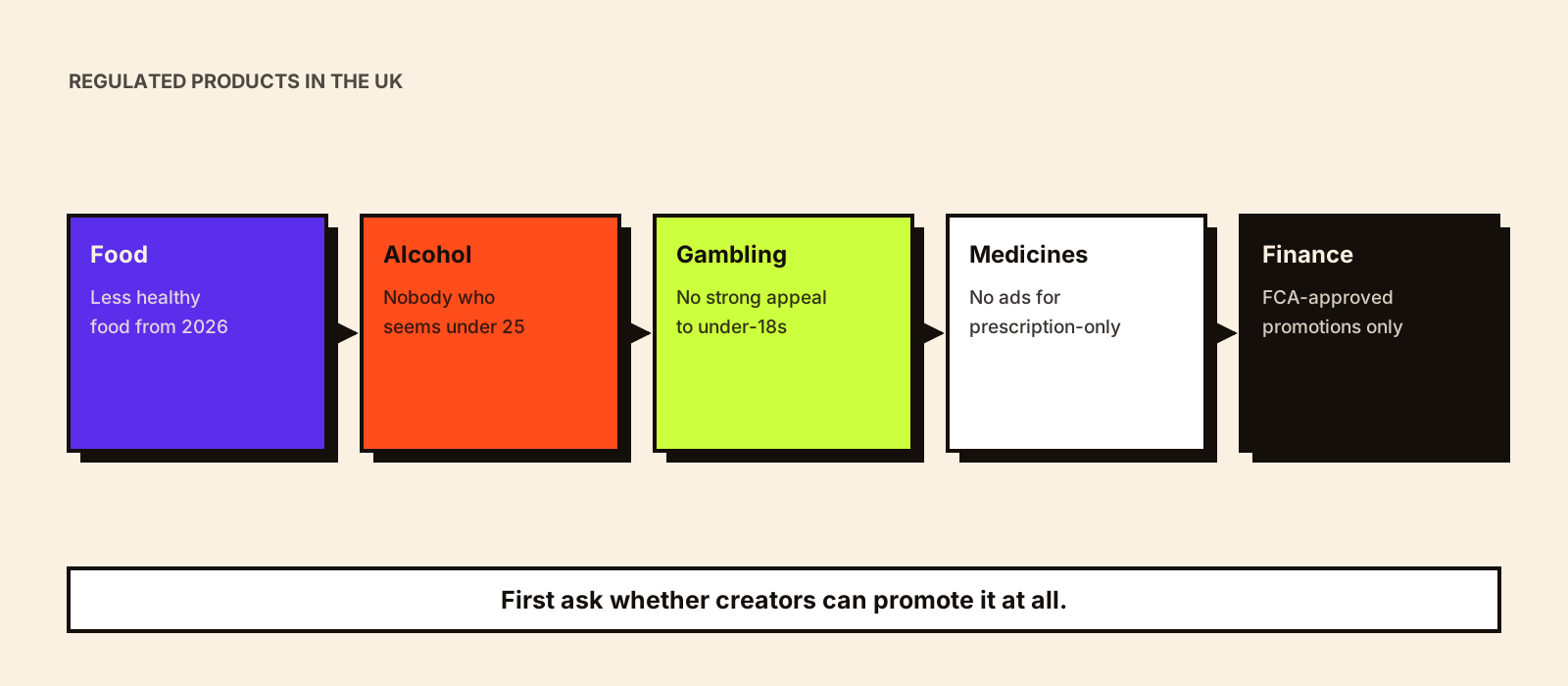
Disclosure is only the first rule. In several UK categories, what a creator can say, who they can be, and whether paid creator content is allowed at all are restricted. These rules change, and some are recent. Check them before briefing creators, not after the post goes live. This guide summarises the main sectors with links to the official guidance; it isn't legal advice.
Quick answer
| Category | Key rule for creator content | Source |
|---|---|---|
| Less healthy food and drink | Paid online ads for identifiable less healthy products are banned from 5 January 2026; paying creators to post them is likely caught | CAP guidance, rule 15.19 |
| Alcohol | Nobody shown drinking or playing a significant role, including influencers, may be or seem under 25 | CAP rule 18.16 |
| Gambling | No creators or content with strong appeal to under-18s (since 1 October 2022) | CAP and BCAP rules |
| Prescription-only medicines | Can't be advertised to the public; this includes influencer and affiliate posts about weight-loss injections and Botox | CAP rule 12.12 |
| Financial products | Promotions must be made or approved by an FCA-authorised firm; unauthorised 'finfluencers' risk a criminal offence | FSMA s21, FCA FG24/1 |
| Environmental claims | Claims must be specific, accurate and evidenced across the supply chain | CMA Green Claims Code, fashion guidance |
Less healthy food and drink
From 5 January 2026, CAP rule 15.19 bans paid-for online advertising of identifiable 'less healthy' products: those that are high in fat, salt or sugar under the nutrient profiling model and in one of the government's listed categories. CAP's guidance says a brand paying an influencer to show a specific less healthy product on the influencer's own channels is likely to be prohibited, and that gifting and affiliate arrangements are likely to count as payment. Content an influencer makes that the brand posts on its own channels is unlikely to be in scope, because the placement wasn't paid for, but boosting it would be. Brand-only content with no identifiable product may fall outside the rule. Keep nutrient-profile evidence for anything you rely on.
Health and nutrition claims for food and supplements have their own rules in CAP Code section 15: only authorised claims can be used, so give creators the exact approved wording.
Alcohol
CAP rule 18.16 says anyone drinking or playing a significant role in an alcohol ad must neither be nor seem to be under 25, and CAP applies this to influencers and celebrities. Proof of age isn't enough if they look younger. Alcohol ads also mustn't appear in media where more than 25% of the audience is under 18, so check a creator's audience age, not just their own. CAP has parallel rules for alcohol alternatives (low and no-alcohol versions), so check those too.
Gambling
Since 1 October 2022, gambling and lottery ads can't include people or content with strong appeal to under-18s, a stricter test than the earlier 'particular appeal'. The ASA said this would significantly affect the use of sportspeople, reality stars and social media influencers popular with young people. Assess each creator's audience and profile before booking, and keep the evidence.
Prescription-only medicines, weight loss and aesthetics
Prescription-only medicines and treatments can't be advertised to the public under CAP rule 12.12. The ASA treats all injectable weight-loss medicines as prescription-only and has ruled against influencer and affiliate posts that promoted them through images of pens, hashtags or referral codes, even without naming a drug. Botox and similar injectables are also prescription-only. A clinic or pharmacy can promote a consultation service, carefully, but creators shouldn't post about the medicine itself.
Financial products
Under section 21 of the Financial Services and Markets Act 2000, a financial promotion made in the course of business must be made or approved by an FCA-authorised person unless an exemption applies. The FCA's FG24/1 guidance (March 2024) reads 'in the course of business' broadly, so paid or affiliate creators are caught, and says unauthorised influencers promoting regulated products without approval may be committing a criminal offence. Each post must be compliant on its own, including required risk warnings. Finance brands should route every creator post through their financial promotions approval process.
Environmental claims (fashion, beauty, home)
The CMA's Green Claims Code and its 2024 guidance for fashion retail say claims must be specific and evidenced: 'made with 60% recycled polyester', not 'eco-friendly' or 'sustainable' without explanation. The guidance includes social media examples and says every business in the supply chain is responsible for its claims. Give creators the exact approved environmental wording and keep the evidence.
Beauty, fitness and other claims
- Before-and-after images and results claims need evidence and mustn't be exaggerated by filters; the CMA treats claimed results a creator hasn't experienced as misleading.
- Fitness and supplement brands: weight-loss claims and health claims are tightly restricted; brief only approved wording.
- Children: ads aimed at children need extra care with content and disclosure, and some categories can't target them at all.
A pre-brief check
1. Is the product in a restricted category? (food, alcohol, gambling, medicines, finance, others)
2. Is paid creator content allowed for it at all?
3. Creator checks: age, appearance, audience age profile
4. Approved claims and evidence on file
5. Required warnings or approvals (e.g. financial promotion sign-off)
6. Placement: organic only, or paid amplification? (food rules differ)
7. Named reviewer for every post
Common mistakes
- Assuming organic creator posts escape the less healthy food rules when the brand paid for them.
- Booking a 24-year-old creator for an alcohol brand.
- Using referral codes for prescription treatments.
- Letting creators describe investments without authorised approval.
- Allowing 'eco' or 'sustainable' without specifics.
Conclusion
In regulated UK categories, the first question isn't which creator but whether, and how, creators can promote the product at all. Check the sector rules, brief approved wording, and review every post. Disclosure basics are in UK influencer advertising rules. Last checked 10 October 2026.