UK Influencer Giveaways and Competitions: What Brands Need to Get Right
How to run influencer giveaways and prize draws in the UK: CAP Code section 8, what the post must say, like-share-tag mechanics, random and independent winner selection, awarding prizes, purchase-to-enter and lotteries, Northern Ireland, disclosure, winner data and a checklist.
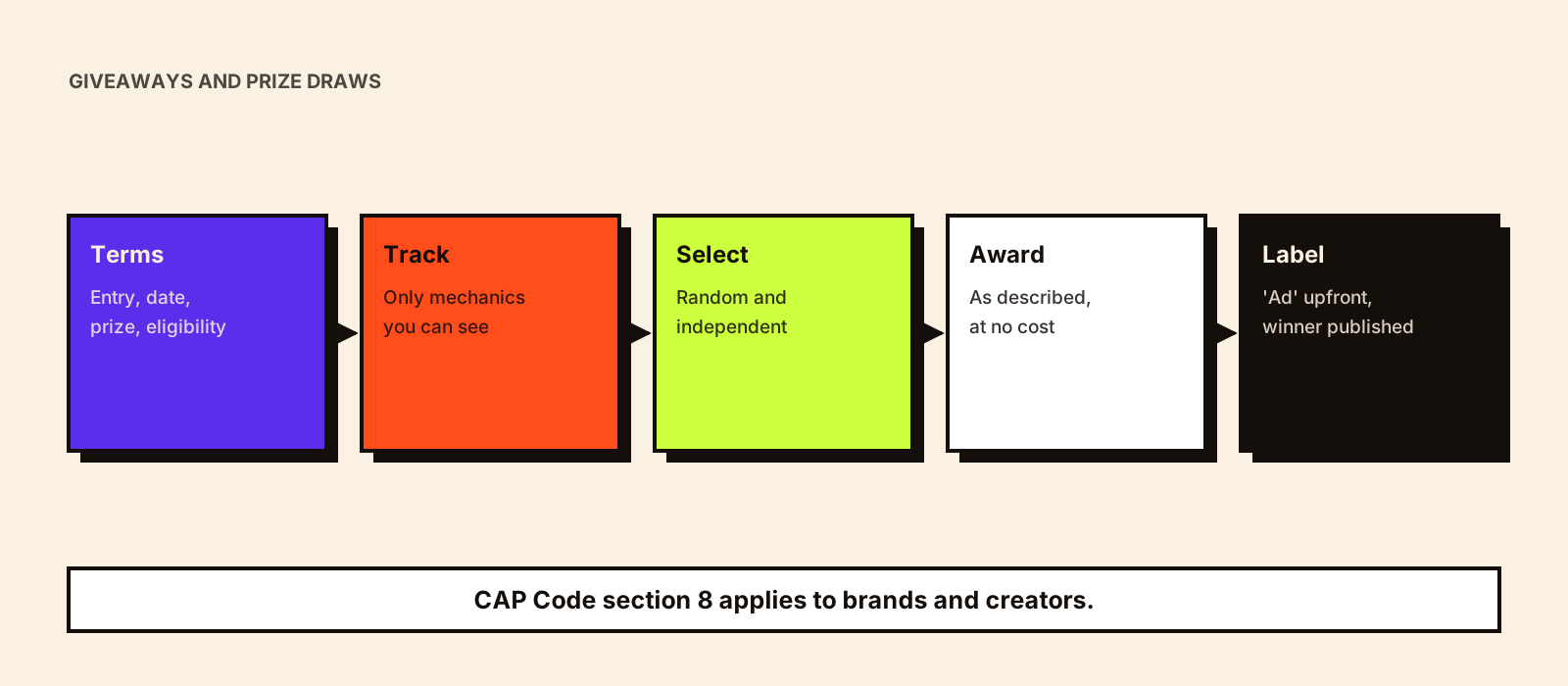
Giveaways are one of the most common influencer formats and one of the most complained about. In the UK, prize promotions are covered by section 8 of the CAP Code, which the ASA applies to brands and influencers alike, and by lottery law. Problems usually come from missing terms, winners who can't be shown to have been picked fairly, and prizes that never arrive. This is general guidance, not legal advice.
Quick answer
State the significant conditions in the post itself (how to enter, closing date, prize, eligibility), link to full terms, only use entry mechanics you can track, pick the winner at random through a verifiable process or an independent person, keep the evidence, award the prize promptly at no cost to the winner, and publish who won. Brands and influencers who run a giveaway together can both be responsible, and the post needs an 'Ad' label.
What the post must say
| Condition | Why it matters |
|---|---|
| How to enter, including every platform | Entry across several platforms is a significant condition |
| Closing date and time | The ASA has upheld complaints where it was missing |
| Prize: what and how many | Prizes must be awarded as described |
| Eligibility: age, location (UK only?) | Excludes people who can't win before they enter |
| Link to full terms | Including how and when winners are notified |
The ASA doesn't usually accept that a social post is too short for these conditions. Source: CAP's advice on prize draws in social media.
Like, share, tag and follow mechanics
- You must be able to see and include every valid entry. If you can't track a mechanic (for example, shares to private Stories), don't use it.
- Bonus entries must genuinely improve the chance of winning.
- Check eligibility yourself rather than asking entrants to send proof.
- Check each platform's promotion policies before launch.
- Plan for volume: large audiences produce large entry numbers, and the ASA expects promoters to cope.
Picking and announcing winners
- Use a verifiably random computer process or an independent person. A staff member scrolling comments isn't independent.
- Keep evidence of how the winner was chosen.
- Make reasonable attempts to contact winners; one public post is unlikely to be enough.
- Award the prize as described, or a reasonable equivalent if it becomes unavailable, and don't charge winners to claim it.
- Make evidence of the award available, such as the winner's surname and county, and say in the terms that you will.
Prize draws, competitions and lotteries
A prize draw that relies on chance can become an illegal lottery if people pay to enter. In Great Britain, buying a product to enter isn't treated as payment as long as the price isn't inflated to fund the promotion. Northern Ireland used to differ, requiring a free entry route, but its law was aligned with Great Britain's from 27 April 2022. Competitions that genuinely test skill follow different rules. Take legal advice before any draw linked to a purchase.
Disclosure and joint promotions
The ASA's influencer guidance treats prize draws and giveaways that creators run or take part in as content that must be labelled as advertising, so start the post with 'Ad'. When a brand and an influencer run a giveaway together, both can be held responsible for every stage, so agree in writing who writes the terms, who runs the draw, who contacts the winner and who sends the prize. Labels are covered in UK influencer advertising rules.
Winner data
Collect only what you need to deliver the prize, through a form with a privacy notice, and delete it afterwards. Don't use entries for marketing unless people have agreed to it separately, and don't ask creators to forward entrant lists. Restrictions on children's data also apply if under-18s can enter. Practical data handling is covered in influencer marketing data privacy, written for India but with the same principles.
Giveaway checklist
□ 'Ad' label upfront
□ How to enter, closing date, prize, eligibility in the post
□ Link to full terms (including winner notification and publication)
□ Every entry mechanic trackable
□ Random, verifiable selection method agreed; evidence kept
□ Roles agreed between brand and creator
□ Purchase-linked? Legal advice taken
□ Prize ready to send; no cost to winner
□ Winner data form with privacy notice; deletion date set
□ Platform promotion policies checked
Common mistakes
- No closing date in the post.
- The creator picking a favourite from the comments.
- Entry by shares that can't be seen.
- Prizes sent months late, or not at all.
- No 'Ad' label because the creator is 'giving something away'.
Conclusion
A UK giveaway is a promotion with rules, not just a post. Put the terms in the post, keep the selection random and documented, deliver what you promised, and label it as an ad. Wider planning is in influencer marketing in the UK.