Influencer Marketing in the UK: A Planning Guide for Brands
A planning guide for brands running creator campaigns in the UK, including those launching from abroad: the size of the market, the rules (ASA, CAP and the CMA), platforms and social commerce, choosing a creator mix, measurement under UK consent rules, a year-round calendar and a checklist from brief to report.
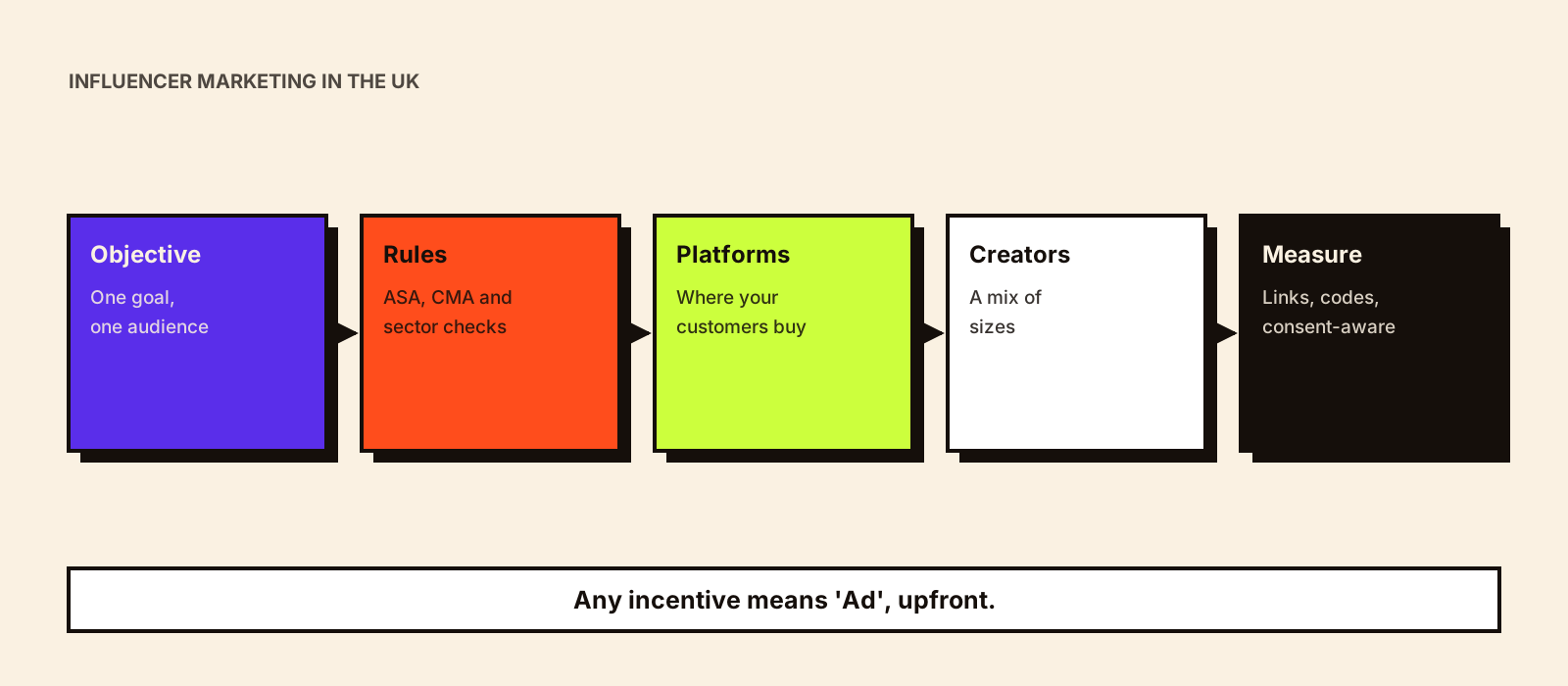
The UK is one of the most regulated and most measured creator markets. Disclosure rules are detailed, regulators publish rulings and name non-compliant influencers, and the trade bodies now measure creator spend as its own channel. That makes it a good market for brands that plan properly and an expensive one for those that don't. This guide is for UK marketing teams and for brands planning a UK launch from abroad.
Quick answer
Start with one objective and one audience, check the ASA and CMA rules for your category before briefing anyone, choose platforms based on where that audience buys (TikTok Shop and, since July 2026, YouTube's Shopping affiliate programme both operate in the UK), build a mix of creator sizes, agree measurement that works under UK cookie consent rules, and plan around the UK retail calendar. Every incentivised post, including gifted products and affiliate links, needs a clear 'Ad' label upfront.
The UK market in numbers
IAB UK's first study of the market, produced with IRM, puts UK creator partnership revenue at £966 million in 2025, up 20.1% from £804 million in 2024, and forecasts £1.217 billion for 2026. The figure counts creator campaigns on creators' own channels, including production and rights, but excludes paid amplification of that content, which survey respondents suggested could be two to three times as large. Treat the 2026 number as a forecast, not a result.
The rules in brief
| Body | What it does | What it means for a campaign |
|---|---|---|
| ASA (applying the CAP Code) | Self-regulatory advertising regulator; publishes rulings and a list of non-compliant influencers | Ads must be obviously identifiable; claims need evidence; sector rules apply |
| CMA and Trading Standards | Enforce consumer law, including the DMCC Act since 6 April 2025 | Hidden advertising and fake reviews are unlawful whether or not the brand controlled the post |
| Sector regulators (FCA, MHRA and others) | Rules for financial promotions, medicines and other regulated products | Some products can't be promoted by creators at all |
The detail, including what counts as payment and which labels work, is in UK influencer advertising rules. Category restrictions (food, alcohol, gambling, medicines, finance, green claims) are covered in regulated products in UK influencer marketing.
Launching in the UK from abroad
- Labels: the ASA advises against 'Sponsored', 'Collab', 'Gifted' and 'PR' as labels, which teams from other markets often use. Use 'Ad' or 'Advert', upfront.
- Claims: a claim that's acceptable at home may need different evidence in the UK, especially for health, beauty, food and environmental claims.
- Contracts and tax: agree fees in pounds, check whether creators are VAT-registered, and decide which country's law governs the contract.
- Language: write briefs in British English and let creators speak as they normally do; don't script an accent or slang.
- Culture: avoid building content around national stereotypes (tea, weather, royals). Regional and community differences matter more than a single 'British' audience; see regional influencer marketing in the UK.
- Time zones and approvals: plan approval windows that suit UK working hours, or posts will miss their slots.
Regional planning is covered in regional influencer marketing in the UK.
Platforms and social commerce
| Platform | Commerce in the UK (checked October 2026) | Note |
|---|---|---|
| TikTok | TikTok Shop operates in the UK; creators can earn commission as affiliates | Affiliate posts are ads and need labels |
| YouTube | Shopping affiliate programme launched in the UK in July 2026, for creators with at least 500 subscribers | Product tags in videos, Shorts and live; check which retailers take part |
| Paid partnership label and partnership ads available | The ASA says the platform label may be enough only if clear and upfront |
Sources: Retail Gazette's reports on TikTok Shop in the UK and YouTube's UK launch. More on selling through creators is in UK e-commerce influencer marketing.
Choosing a creator mix
| Creator size | Typical role | Watch out for |
|---|---|---|
| Nano and micro | Trust in a niche or local community, product seeding, UGC for ads | Time to manage many relationships; disclosure discipline |
| Mid-tier | Reach with credibility; often the best balance for launches | Rates rise quickly with exclusivity and usage |
| Macro and celebrity | Fast awareness, PR value | Cost, age-of-audience rules for restricted categories |
There's no UK-specific rule for the right mix; it depends on objective and budget. Tier trade-offs are explained in micro vs macro influencers. For alcohol and gambling, a creator's audience age matters as much as size.
Measuring under UK consent rules
UK cookie rules (PECR, enforced by the ICO) require consent for most analytics and advertising cookies, and visitors who decline aren't counted, so website analytics undercount creator traffic. Use tracked links and creator codes as a floor, compare against your own orders or CRM, and use holdout regions or brand lift studies when the budget justifies it. The ICO's cookie guidance explains the consent requirements; methods are covered in measuring influencer campaign ROI and influencer marketing incrementality.
A year-round plan
Most UK brands combine an always-on base of a few creators with peaks around retail moments: January sales, Valentine's Day, Mothering Sunday, Easter, summer, back to school, Black Friday and Christmas. Book creators for peaks early, because rates and availability tighten. Dates and timelines are in seasonal influencer marketing in the UK, and the always-on model in always-on influencer marketing.
Checklist: from brief to final report
1. Objective, audience and one main message
2. Category rules checked (food, alcohol, gambling, medicines, finance, green claims, children)
3. Claims and evidence file ready
4. Platforms and creator mix chosen; audience age and location checked
5. Brief includes disclosure wording ('Ad' upfront) and prohibited claims
6. Contracts: fees in GBP, VAT, usage rights, exclusivity, disclosure duty, approval rights
7. Giveaways: CAP section 8 terms, random selection, winner handling
8. Tracking: links, codes, consent-aware analytics, baseline
9. Pre-publication review: label, claims, links
10. Live monitoring: labels present, comments, corrections
11. Report: results against objective, method, lessons; keep records
Related guides: UK influencer giveaways, UK influencer marketing costs and how to choose an influencer marketing agency in the UK.
Common mistakes
- Using labels from other markets, such as 'Sponsored' or 'Gifted', on their own.
- Assuming gifted products don't need disclosure.
- Briefing claims that haven't been substantiated for the UK.
- Planning commerce around features that aren't available in the UK.
- Relying only on website analytics when many visitors decline cookies.
- Booking Christmas creators in November.
Conclusion
The UK rewards brands that treat creator marketing as advertising: clear labels, evidence for claims, sector rules checked early, and measurement that doesn't depend on cookies alone. Plan around the retail calendar, choose platforms by where your customers buy, and start with the rules in UK influencer advertising rules.
Kudozz runs influencer campaigns for brands in the UK. If you are planning one, see how Kudozz runs influencer campaigns in the UK, including how disclosure is built into contracts and the information we need for a proposal.