UK Influencer Marketing Costs: What Shapes a Campaign Budget
What drives influencer marketing costs in the UK: creator fees, usage rights, exclusivity, production, agency fees, paid amplification, VAT and the tax position of gifts, how to compare creator proposals like for like, and a budget template. No invented rate cards.
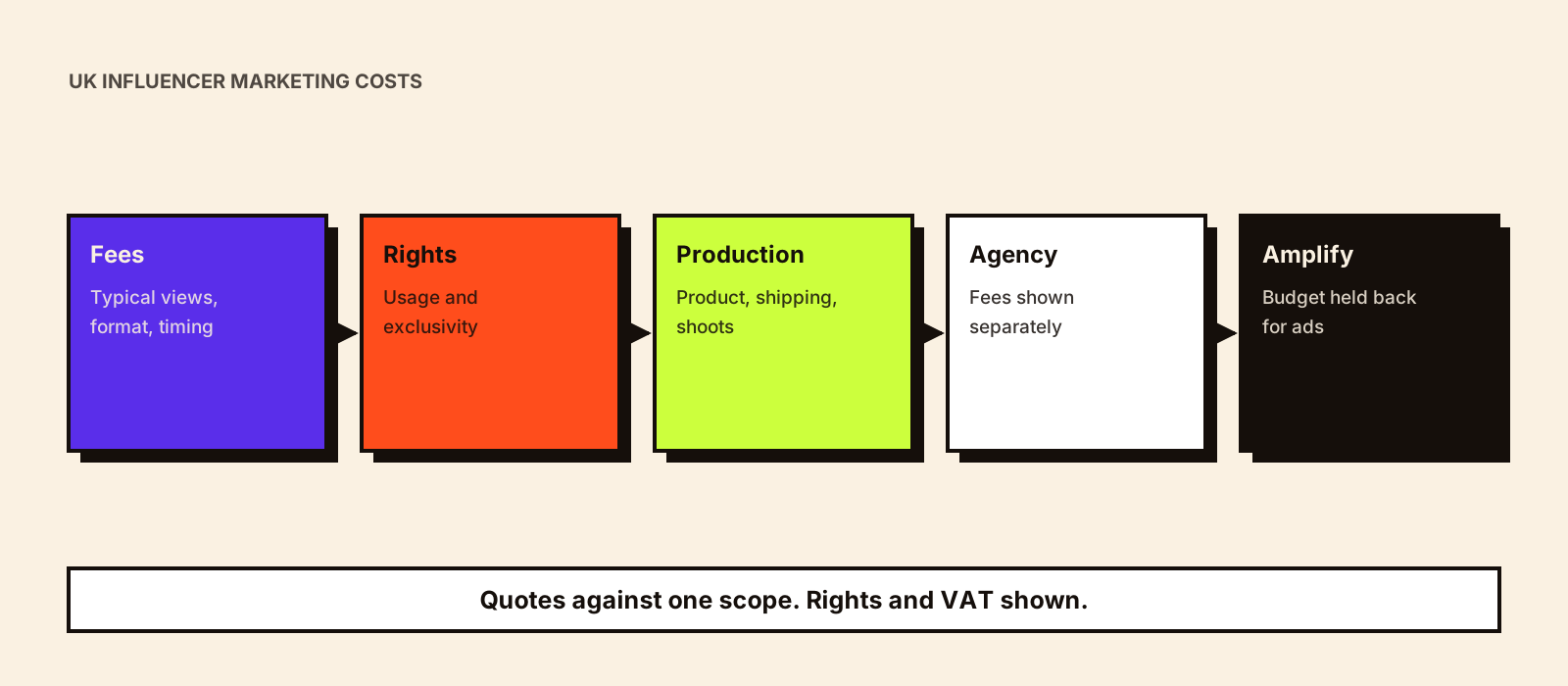
UK brands often ask what an influencer costs. There's no reliable public rate card: fees depend on the creator, the platform, the deliverables, the rights and the timing, and published 'average rates' rarely say how they were collected. What can be planned is the structure of a budget and the factors that move each line. This guide covers those, without inventing numbers.
Quick answer
A UK creator budget has six parts: creator fees, usage rights and exclusivity, production and product, agency or management fees, paid amplification, and VAT. Get quotes against one written scope, compare them line by line, and keep money back for amplifying the content that works. IAB UK's market study suggests paid amplification can be two to three times the spend on creator partnerships themselves, so don't treat creator fees as the whole budget.
What moves creator fees
| Factor | Effect on cost |
|---|---|
| Typical views, not followers | The main driver of a fair price; ask for recent medians |
| Format and number of deliverables | Video costs more than a static post; bundles may be cheaper per item |
| Usage rights | Paid usage and longer periods add cost |
| Exclusivity | Category exclusivity is often priced separately |
| Timing | Peak periods (Black Friday, Christmas) tighten availability |
| Production demands | Scripts, locations, travel and reshoots add cost |
| Management | Managed creators may include an agent's fee |
VAT and tax
- VAT: creators must register for VAT once taxable turnover passes £90,000 over a rolling 12 months, so some quotes will add 20% VAT and others won't. Compare quotes on the same basis.
- Gifts: HMRC counts gifts and services received for promoting products as creators' income, valued at what they would have cost. Expect experienced creators to treat gifted-only deals as payment, not a favour.
- Your own position: check with your accountant how gifted stock, fees and VAT are treated for your business.
Sources: GOV.UK on the VAT registration threshold, and HMRC's guidance on income from online platforms. This is general information, not tax advice.
Comparing creator proposals like for like
| Line | Ask each creator to state |
|---|---|
| Deliverables | Exactly what is included: posts, Stories, video length, links |
| Usage | Organic only, or paid usage: channels and duration |
| Exclusivity | Category and period, priced separately |
| Revisions and raw footage | Number of revision rounds; raw files or not |
| VAT | Whether VAT is added |
| Expected reach | Median views on recent posts of the same format |
Then compare cost per expected thousand views and per usable asset, alongside fit and audience. The full method is in comparing creator quotes like for like.
A budget template
1. Creator fees (by creator, excl. VAT)
2. Usage rights and exclusivity (separate lines)
3. Product, shipping and production
4. Agency or management fees
5. Paid amplification of creator content
6. Tracking, tools and reporting
7. Contingency (replacements, reshoots)
8. VAT where applicable
Total, plus the amount held back for post-launch amplification
Common mistakes
- Budgeting creator fees and forgetting amplification.
- Comparing a VAT-inclusive quote with an exclusive one.
- Buying paid usage you won't run.
- Treating gifted-only deals as free.
- Relying on 'average UK rates' with no stated method.
Conclusion
A good UK budget is built from quotes against one scope, with rights, VAT and amplification visible as separate lines. Hidden costs and scope creep are covered in influencer campaign hidden costs; agency comparisons in how to choose an influencer marketing agency in the UK.