How to Choose an Influencer Marketing Agency in the UK
A buyer's guide for UK brands comparing influencer marketing agencies: the agency types, what to check on compliance, contracts, fees and data, questions to ask before hiring, red flags, and what to consider if the agency is based outside the UK.
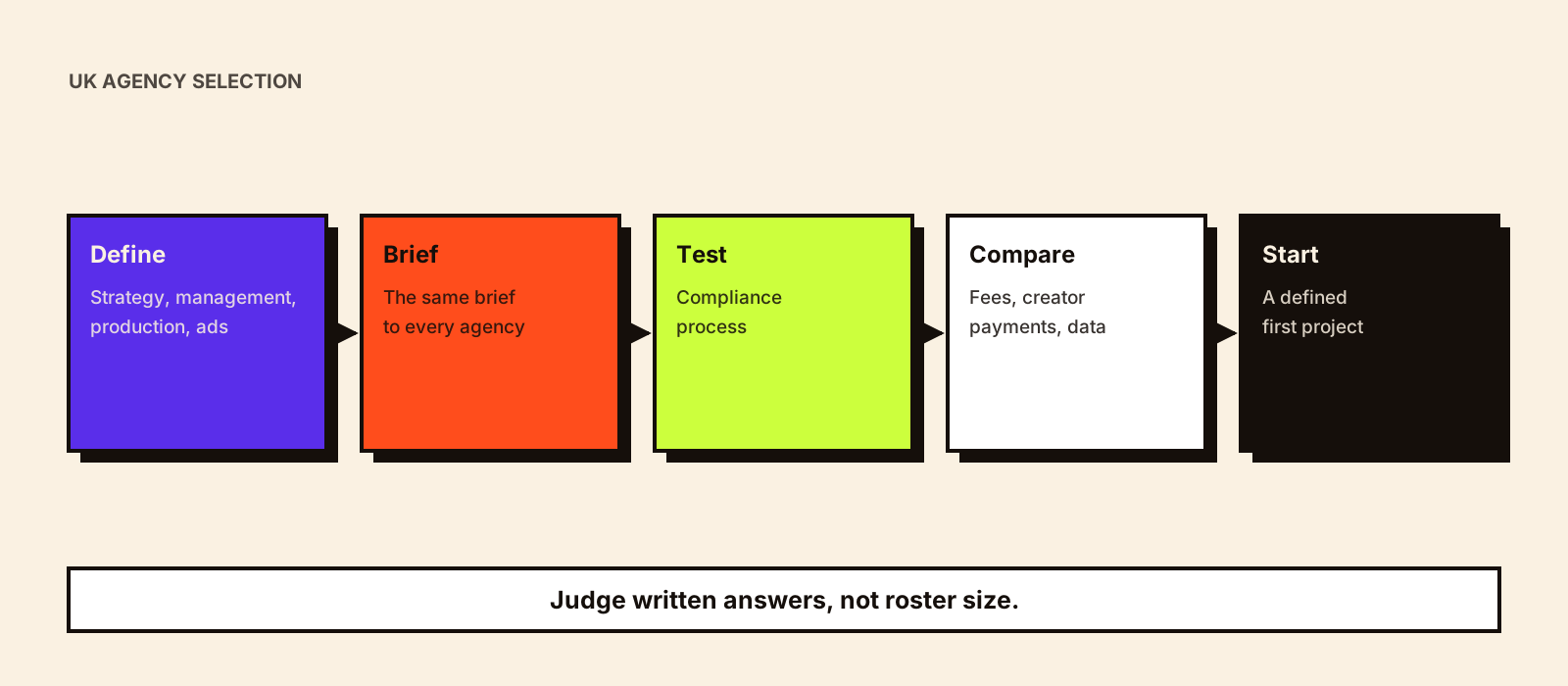
There are hundreds of agencies offering influencer marketing to UK brands, from creator-led boutiques to platforms with a service team and global networks. Most will show attractive case studies. The useful comparison is how each would run your campaign: who does the work, how they handle UK disclosure and claims rules, what they charge and what you own at the end. This guide is written for UK buyers; it doesn't rank or recommend specific agencies.
Quick answer
Decide what you need (strategy, creator management, production, paid amplification or all of these), send the same brief to three or four agencies, and compare their written answers on approach, team, fees, creator payment, compliance process, reporting and contract terms. Ask how they apply ASA and CMA guidance and who checks posts. Prefer transparent fees and clear ownership of content and data over the biggest roster.
Types of agency
| Type | Good for | Check |
|---|---|---|
| Specialist influencer agency | End-to-end campaigns and programmes | Depth in your category and platforms |
| Talent or management agency | Access to its own roster | Whether it recommends creators outside its roster |
| Social or creative agency with influencer services | Campaigns integrated with social and content | Who actually manages creators |
| Platform with managed service | Scale, data, self-serve options | Contract length, data access, service levels |
| Freelancer or consultant | Small or specialist projects | Capacity and cover for absence |
What to check
| Area | What good looks like |
|---|---|
| Compliance | A written process for labels, claims and sector rules; named reviewer; knows the ASA and CMA guidance and the DMCC Act changes |
| Creator selection | Shows how creators are vetted, including audience location and age |
| Fees | Agency fee separate from creator fees; no undisclosed margin on creator costs |
| Creator payment | Clear payment terms and who pays creators, and when |
| Contracts | Usage rights, exclusivity, disclosure duty and approval rights in creator agreements; ISBA's templates or equivalent |
| Data | UK GDPR-compliant handling of creator and audience data; who owns the data at the end |
| Reporting | Results against your objective, method stated, raw data shared |
| Exit | What you keep if you part ways: contracts, content files, creator contacts, reports |
ISBA's Influencer Marketing Code of Conduct sets out expected practice for brands, agencies and creators, including fee transparency; asking whether an agency follows it is a quick test. The rules themselves are in UK influencer advertising rules.
Questions to ask before hiring
- Who will work on our account day to day, and what else are they working on?
- How do you check disclosure and claims before and after posting? Can we see your process?
- How would you handle a creator who repeatedly forgets to label?
- Which of our product claims would you not let creators make, and why?
- Do you take a margin on creator fees? Is the agency fee fixed, a percentage or performance-based?
- How do you choose creators, and do you recommend creators outside your own roster?
- What will you report, how often, and will we get the raw data?
- Who owns the content, the creator contracts and the data at the end?
- What happens if a creator controversy hits mid-campaign?
- Can we speak to two current clients?
A longer list with what good answers sound like is in influencer marketing agency pitch questions.
Red flags
- Guaranteed results, viral reach or sales figures.
- Vague answers on disclosure, or suggestions that 'gifted' posts don't need labels.
- One fee with no split between agency and creator costs.
- Reluctance to share creator audience data or raw results.
- Case studies without dates, objectives or methods.
- Contracts where the agency keeps the creator relationships and content rights.
If the agency is based outside the UK
An agency doesn't need a UK office to run UK campaigns well, but it does need to apply UK rules, work UK hours for approvals and live monitoring, and contract creators properly. Ask which law governs the contract, how creators are paid in pounds and how VAT is handled, how it accesses UK creators, and who checks content against ASA and CMA guidance. Judge it on those answers, as you would a UK agency.
Common mistakes
- Choosing on roster size or follower totals.
- Comparing proposals that answer different briefs.
- Not asking how compliance is handled.
- Signing without clear ownership of content and data.
- Skipping a small first project before a long contract.
Conclusion
Pick the agency whose written answers to your brief are specific, transparent on money, serious about UK compliance and fair on ownership. Start with a defined first project, then extend. For budget planning, see UK influencer marketing costs.