Influencer Marketing for UK E-Commerce and DTC Brands: Connecting Creator Content With Sales
How UK e-commerce and direct-to-consumer brands can connect creator content with online sales: TikTok Shop and YouTube Shopping affiliates, affiliate networks and disclosure, tracking under UK consent rules, evaluating creators on new customers and returns, and review rules.
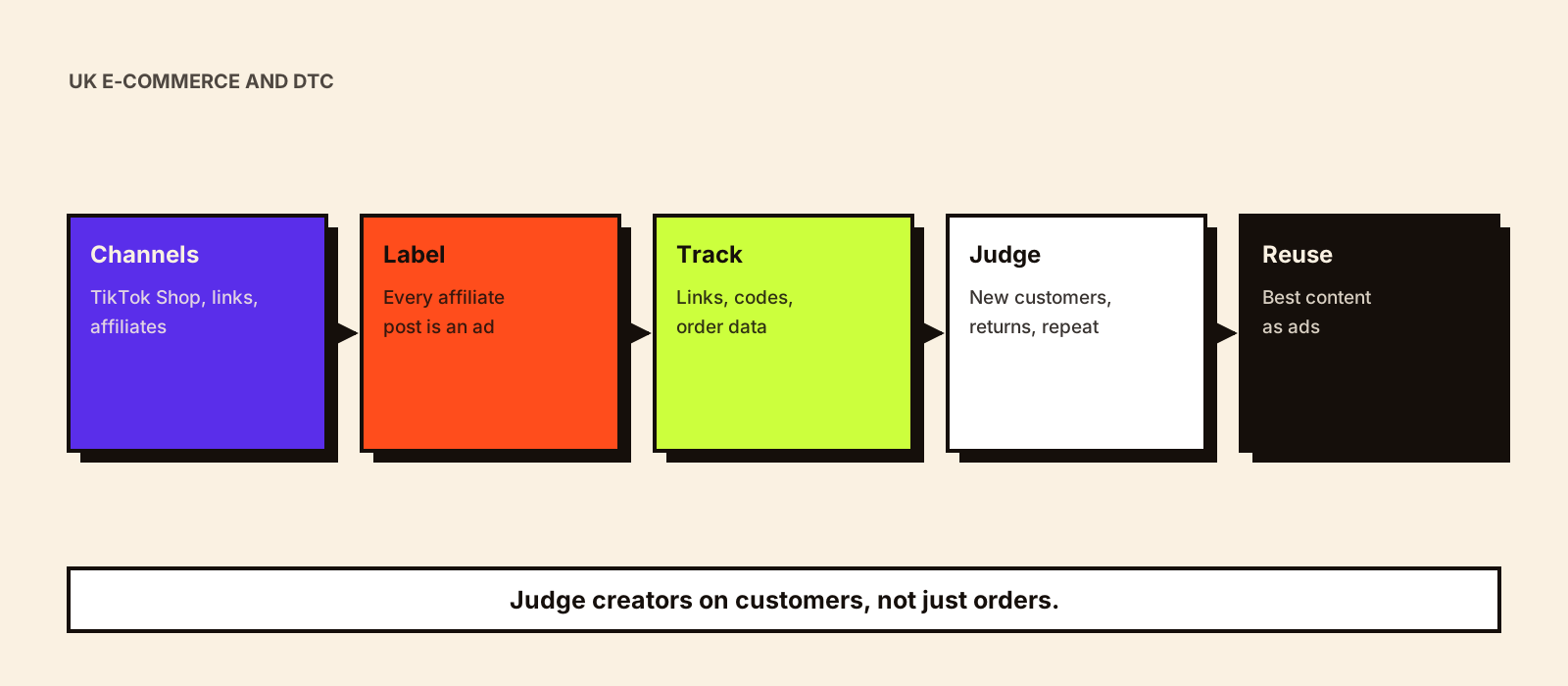
For UK online retailers and DTC brands, creators sit across the whole funnel: discovery on TikTok and Instagram, consideration through reviews and comparisons, and sales through links, codes and in-app shops. The UK has its own mix of platform features, affiliate networks and consumer rules, which shapes what's possible.
Quick answer
Use TikTok Shop or YouTube Shopping affiliates where you sell through them, links and codes everywhere else, and an affiliate network or your own programme for ongoing commission deals. Every affiliate post is an ad and needs a specific 'Ad' label. Track with links and codes as well as analytics, judge creators on new customers, returns and repeat purchase, not just orders, and never trade products for reviews.
Channels and what's available in the UK
| Channel | UK status (checked October 2026) | Use it for |
|---|---|---|
| TikTok Shop | Live in the UK; creators can earn commission as affiliates | In-app sales and live shopping |
| YouTube Shopping affiliate | Launched in the UK in July 2026, run with Awin; creators need at least 500 subscribers | Product tags in videos, Shorts and live; sale completes on the retailer's site |
| Affiliate networks and brand programmes | Widely used in the UK (the ASA guide names Awin, Skimlinks and LTK) | Ongoing commission partnerships |
| Links and codes to your site | Anywhere | Tracking and offers |
Sources: Retail Gazette on TikTok Shop and on YouTube's UK launch, and the ASA and CMA influencers' guide. YouTube's help-page country list hadn't been updated when we checked, so confirm eligibility in YouTube Studio.
Affiliate disclosure
When a creator earns commission from links or codes, that content is advertising and both the brand and the creator are responsible for it. If only some products in a post are affiliate-linked, those parts must be clearly labelled; a general note that 'some links may earn commission' isn't enough, and labels such as 'aff' aren't understood. Details are in UK influencer advertising rules.
Tracking sales
- A unique link and code per creator; codes catch people who don't click.
- Analytics will miss visitors who decline cookies under UK consent rules, so reconcile against orders.
- In-app shop sales are reported by the platform; compare them with your own order data.
- For bigger budgets, test a holdout region or period to estimate what creators added.
Reconciling platform figures with your own records is covered in why creator reports and analytics don't match.
Evaluating creators for a DTC brand
| Measure | Why it matters |
|---|---|
| New-customer share | Codes often go to existing customers |
| Return rate by creator | Under UK distance-selling rules customers can usually cancel within 14 days, so returns hit margins |
| Repeat purchase | Shows whether the creator brought the right customers |
| Contribution after fees, discount and returns | Revenue alone flatters high-discount creators |
| Content reusable in ads | Value beyond the post itself |
Cancellation rights are explained in GOV.UK's guide to online and distance selling. Comparing creators on customer quality is covered in how to measure customer quality from influencer campaigns.
Reviews: what's banned
Under the DMCC Act, fake reviews and reviews that hide an incentive are banned, and businesses can be liable for reviews they commission. Don't give creators or customers products or money in return for reviews on your site or marketplaces, and don't ask only happy customers. Creator content on social channels, clearly labelled as an ad, is the right place for paid opinion. See the CMA's reviews guidance.
Common mistakes
- Assuming a platform's shopping features are the same in the UK as elsewhere; check current availability.
- Vague affiliate disclaimers.
- Judging creators on orders, ignoring returns and discounts.
- Relying on analytics alone under consent rules.
- Offering free product in return for reviews.
Conclusion
UK e-commerce brands get the most from creators when channels match what's actually available, every affiliate post is labelled, tracking doesn't depend on cookies alone, and creators are judged on the customers they bring. Seasonal peaks are covered in UK seasonal influencer campaigns.