How to Detect Influencer Ad Fatigue and Refresh Creator Campaigns
How to tell when creator ads and sponsored posts are wearing out: the signals to watch in paid and organic creator content, how to calculate them, what looks like fatigue but isn't, a refresh playbook, and planning a steady supply of new creative, with notes for smaller Gulf markets.
Creator content that works rarely works forever. When the same video runs as an ad for weeks, or the same creator posts about the same product every few days, audiences stop paying attention and results slide. The difficulty is telling real fatigue apart from everything else that makes numbers drop. This guide is for performance and social teams running creator ads (whitelisted, Spark or partnership ads) and for brand teams running repeat sponsored posts.
Quick answer
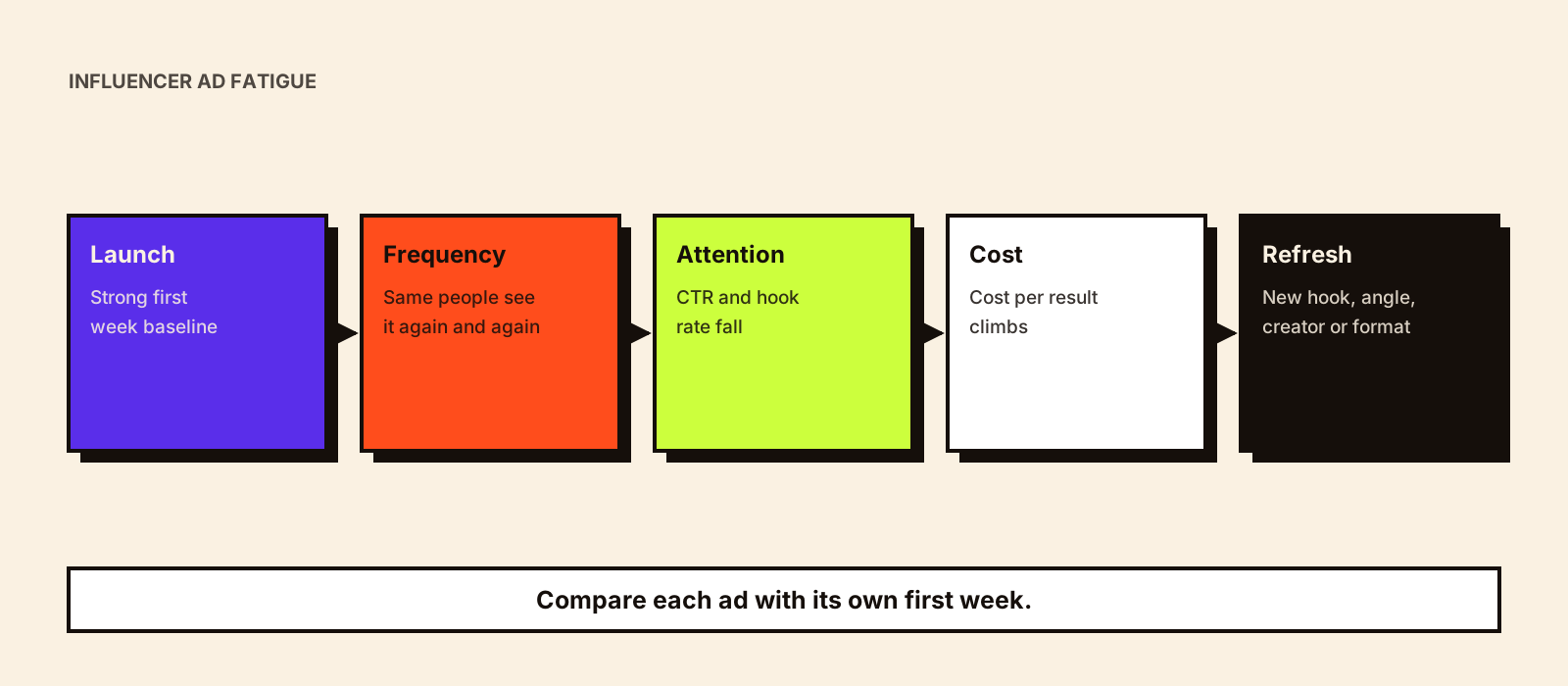
Influencer ad fatigue shows up as rising frequency together with falling click-through or hook rate and a rising cost per result, compared with the same ad's first week. Before replacing creative, rule out seasonality, auction costs, tracking problems and audience changes. If it is fatigue, refresh in order of cost: a new hook or opening on the same footage, a new angle from the same creator, then a new creator or format. Plan a steady supply of variants and secure the rights to edit and run them before you need them.
Two kinds of fatigue
| Paid creator ads | Organic sponsored posts | |
|---|---|---|
| What wears out | One ad shown repeatedly to the same people | An audience's patience with repeated sponsorships or the same message |
| Main signals | Frequency up, click-through and hook rate down, cost per result up | Lower engagement on sponsored posts than the creator's usual, negative or bored comments |
| Typical cause | Small audience, high spend, no new variants | Too many posts for one brand, or the creator posting for competitors too |
| Fix | New hooks, angles, creators and formats | Spacing, new formats, different creators, a break |
Meta describes creative fatigue as what happens when an audience has seen the same creative too many times, and shows fatigue recommendations in Ads Manager. Other platforms don't label it the same way, so track the signals yourself.
The signals and how to calculate them
| Signal | Calculation | What fatigue looks like |
|---|---|---|
| Frequency | Impressions ÷ reach | Climbing steadily while results fall |
| Click-through rate (CTR) | Link clicks ÷ impressions | Down against the ad's first-week average |
| Hook rate | 3-second video views ÷ impressions | Fewer people stop to watch the opening |
| Hold rate | Views to a set point (for example 50%) ÷ 3-second views | People still stop, but leave earlier |
| Cost per result | Spend ÷ conversions (or leads, installs) | Up against the ad's own baseline, not just the account |
| Organic engagement | Engagements ÷ reach on sponsored posts | Below the creator's own recent sponsored and organic average |
| Comment tone | Share of comments about the ad itself, repetition or the creator 'selling out' | More complaints about seeing it again |
Compare each ad against its own first week rather than the account average, and look at the trend over several days, not a single bad day.
What looks like fatigue but isn't
| Cause | How to tell | What to do |
|---|---|---|
| Seasonality | All ads drop at once, around holidays, Ramadan or month-end | Compare with the same period last year; don't replace good creative |
| Auction costs | CPM (cost per thousand impressions) rises across the account | Look at CTR and conversion rate, which costs don't change |
| Tracking break | Clicks hold steady but conversions vanish | Check pixels, links and landing pages first |
| Audience change | Targeting or budget changes moved delivery to new people | Compare like-for-like audiences |
| Offer ended | Results drop when a discount expires | The creative isn't the problem |
| Learning phase | New or edited ads are unstable for a few days | Wait before judging |
If results are weak from the start rather than declining, the problem is the creative or the creator, not fatigue; see influencer campaign underperformance.
A refresh playbook
| Step | Change | Cost and speed |
|---|---|---|
| 1. New opening | Re-cut the first two to three seconds with a different hook from existing footage | Cheapest and fastest |
| 2. New angle | Same creator, different benefit, objection or use case | A short reshoot or extra footage |
| 3. New format | Talking head to demonstration, or single video to carousel | Moderate |
| 4. New creator | A different face and voice for the same message | Fee, briefing and approval time |
| 5. New message | A new offer or reason to buy | Needs strategy and, sometimes, permits |
Keep the winning ad running at a lower budget while the refresh tests, and retire it when a new variant beats it on cost per result.
Plan the supply of new creative
- Ask creators for extra hooks and alternative openings in the original shoot
- Book a second round of content in the contract, priced up front
- Agree usage rights that allow editing, re-cutting and paid use for the full planned period
- Agree the length of whitelisting or ad-account access, and when it ends
- Keep a library of raw footage, tagged by hook, angle and creator
Testing and scaling creator ads is covered in UGC for paid social, and the clauses for edits and paid use in influencer usage rights.
Organic fatigue: sponsored posts
- Space sponsored posts for your brand; agree a maximum frequency in long-term contracts
- Vary formats across a partnership: tutorial, review, behind the scenes, live
- Check how many other brands the creator is promoting in the same period
- Rotate creators in an always-on program so the same faces don't carry every message
- Read comments: audiences say when they're tired of a partnership
Notes for smaller Gulf markets
In smaller markets such as Bahrain, Kuwait, Qatar or a single emirate, a targeted audience is small, so frequency rises faster for the same spend and creative wears out sooner. Two practical responses: plan more variants per market, and use language versions (Arabic and English, or community languages in the UAE) as genuinely different creative rather than translations. Seasonal peaks such as Ramadan concentrate spend into a few weeks, so prepare refreshes before the season starts. Separating market results is covered in GCC influencer campaign reporting.
Hypothetical example
Hypothetical, for illustration only. A skincare brand runs a creator video as a paid ad to women aged 25–44 in the UAE. In week one, frequency is 1.6, CTR 1.2% and cost per purchase AED 95. By week four, frequency is 4.1, CTR 0.6% and cost per purchase AED 170, while CPMs across the account are flat and other ads are stable. That pattern points to fatigue. The team re-cuts the opening from unused footage (step 1), and launches a second creator with a different angle (step 4), keeping the original at a lower budget until a new variant beats it.
Common mistakes
- Replacing good creative during a seasonal dip
- Judging fatigue on one day's numbers
- No extra footage or hooks from the original shoot
- Usage rights that don't allow edits or extended paid use
- Booking the same creator for back-to-back sponsored posts
Conclusion
Fatigue is predictable: frequency rises, attention falls and costs climb. Watch each ad against its own baseline, rule out the other causes, and refresh from the cheapest change upwards. The brands that handle it best plan the next variants and the rights to use them before the first ad goes live.