Influencer Disclosure Rules by Platform and Country: What Brands Should Check
Platform labels and country rules are different obligations. A side-by-side guide to disclosure tools on Instagram, YouTube, TikTok, Pinterest and Reddit, and to the rules and regulators in India, the UAE, Saudi Arabia, the UK, Australia and Singapore.
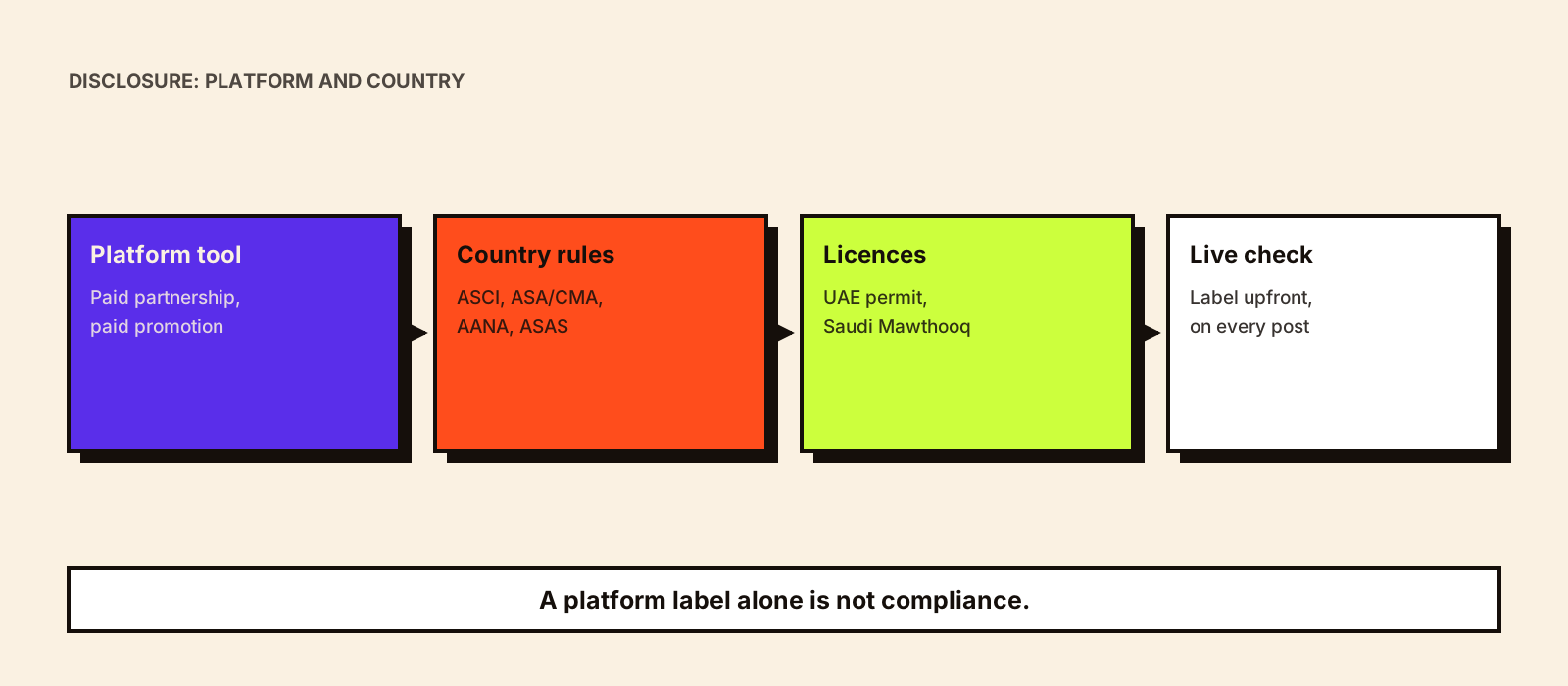
A creator ticks the paid partnership box, the post shows a label, and everyone assumes the campaign is compliant. Sometimes it is. But the platform label is the platform's rule; the advertising law of the country where the audience is has its own requirements, and in some markets the creator also needs a licence before posting at all.
Quick answer
Treat disclosure as two layers. First, the platform's own tool: Instagram's paid partnership label, YouTube's paid promotion setting, TikTok's content disclosure setting and Pinterest's paid partnership tag. Second, the rules of each market where the audience is: ASCI's guidelines in India, the advertiser permit in the UAE, the Mawthooq licence in Saudi Arabia, the ASA and CMA in the UK, the AANA code and consumer law in Australia, and ASAS guidelines in Singapore. Most require a clear, upfront label in words the audience understands, whatever the platform shows. Write both layers into the brief and contract, and check every post before and after it goes live.
Layer 1: platform disclosure tools
| Platform | Tool | What it does | Source |
|---|---|---|---|
| Paid partnership label | Adds 'Paid partnership with [brand]' under the creator's name; the brand is tagged | Instagram Help Centre | |
| YouTube | Paid promotion setting | Creator selects that the video includes paid promotion; a disclosure label appears at the start | YouTube Help |
| TikTok | Content disclosure setting | Required when content promotes a brand, product or service; labels the post 'Paid partnership' or 'Promotional content'; undisclosed marketing can be excluded from the For You feed | TikTok Ads Help |
| Paid partnership tag | Creator tags the brand; the brand's name is added to the label if the brand approves | Pinterest Help | |
| Brand Affiliate tag (reported) | Reported as Reddit's tag for posts with a commercial connection; subreddit rules also apply | Check Reddit's Help Center | |
| No verified creator label | Write the disclosure in the post text; promoted posts carry LinkedIn's own ad label | Check LinkedIn's current policies |
Sources: Instagram's paid partnership label, YouTube's paid promotion policy, TikTok's content disclosure setting and Pinterest's paid partnership tag. YouTube's page is explicit that creators and their partners remain responsible for complying with the law; the setting alone doesn't satisfy it.
Why the platform label isn't enough
- Regulators judge whether the audience clearly understood it was an ad, not whether a setting was ticked.
- Labels can be small, hidden by the interface or missing on reposts and screenshots.
- Some markets expect particular words, or a disclosure at the start of a video or caption.
- Licensing rules, such as permits in the UAE and Saudi Arabia, sit outside the platform entirely.
- Running creator content as ads changes the format but not the obligation to be clear it's advertising.
Layer 2: the rules by country
| Market | Main rules and who enforces them | What brands should check |
|---|---|---|
| India | ASCI influencer guidelines; consumer protection endorsement guidelines from the Department of Consumer Affairs | An accepted label such as 'Ad', 'Sponsored', 'Collaboration' or 'Free gift', placed upfront; claims substantiated |
| UAE | National Media Authority; advertiser permit under Federal Decree-Law No. 55 of 2023, enforced from 31 January 2026 | The creator's advertiser permit (or visitor permit for non-residents), plus clear ad disclosure |
| Saudi Arabia | General Authority for Media Regulation (GAMR); E-Commerce Law | The creator's Mawthooq licence; content clearly identifiable as advertising |
| Qatar, Kuwait, Oman | Separate national rules | Check each country; don't assume UAE or Saudi rules apply |
| United Kingdom | ASA (CAP Code) and CMA; direct CMA fines under the DMCC Act since 6 April 2025 | Clear 'Ad' label upfront for any commercial relationship, including gifts and affiliate links |
| Australia | AANA Code of Ethics clause 2.7 (Ad Standards); Australian Consumer Law (ACCC) | Advertising clearly distinguishable; vague labels such as 'gift' alone have been found unclear |
| Singapore | ASAS Guidelines on Interactive Marketing Communication and Social Media; sector rules from MAS and MOH | Commercial relationships disclosed early and readably; finance and healthcare restrictions |
Sources: ASCI's influencer guidelines, the Department of Consumer Affairs endorsement guidelines, the National Media Authority's advertiser permit page, GAMR, the ASA/CMA influencers' guide, the CMA's note on who regulates hidden advertising, the AANA Code of Ethics, the ACCC's influencer guidance and the ASAS guidelines. These summaries were checked in October 2026; rules change, so confirm before each campaign and take legal advice for significant spend.
Detailed market guides: influencer marketing compliance in India, the UAE advertiser permit, Saudi influencer advertising rules, UK influencer advertising rules and Australian influencer advertising rules.
Which rules apply to a cross-border post?
As a working rule, plan for the rules of each market whose audience you're targeting, plus any licensing rules where the creator is based or posting from. A UK brand paying a Dubai-based creator to reach UAE and UK audiences should expect the creator to hold a UAE permit and the post to meet UK labelling standards. Where rules differ, meet the stricter standard in one post rather than trying to split audiences.
What to put in the brief and contract
- The exact label wording and where it appears (first line of caption, on screen in the first seconds, spoken).
- Which platform tool to switch on, and that it stays on for reposts and ads.
- Licence or permit numbers where required, checked before booking.
- Claims the creator may and may not make, with evidence held by the brand.
- A right to request corrections, and what happens if disclosure is missing.
- Who checks each post after it goes live, and when.
What to do when a creator misses a disclosure is covered in when influencers miss requirements, and the wider contract in influencer marketing contracts.
Common mistakes
- Treating the platform label as full compliance.
- Disclosure only at the end of a caption or video, or hidden among hashtags.
- Assuming gifted or affiliate content doesn't need a label.
- Booking Gulf creators without checking permits or licences.
- Applying one country's rules to every market in a campaign.
Conclusion
Use the platform's disclosure tool, and also meet the rules of every market the post targets, including creator licensing in the Gulf. Put the exact wording, placement and licence checks in the brief and contract, and check live posts. This page is general guidance, not legal advice.