Influencer Trend Analysis: How Brands Can Identify Emerging Creator Opportunities
How to analyse emerging creator opportunities (rising creators, new sub-niches, formats, platforms and regional shifts) with a signal-validation method that separates durable shifts from noise, without making unsupported predictions.
Trend tracking asks 'what format or sound is rising this week, and can we use it in a brief?' Trend analysis asks a slower question: 'which creators, sub-niches, formats or regions are becoming important in our category over the next year, and should we build a position there early?' The first is campaign tactics. The second is where brands find creators before they're expensive and audiences before competitors arrive.
Quick answer
Influencer trend analysis identifies emerging creator opportunities by tracking signals over months: creators whose views and topic influence are growing, sub-niches attracting more creators and audience questions, formats spreading across creator tiers, platform shifts and regional-language growth. Validate each signal for persistence, spread, audience pull and commercial fit before acting, then test with small commitments. It doesn't predict the future; it reduces the chance of arriving late or betting on noise.
For short-term trends to use in briefs (sounds, memes, formats this month), see influencer trend tracking.
Five kinds of emerging opportunity
| Opportunity | Early signals | What a brand gains by being early |
|---|---|---|
| Rising creators | Median views growing over several months; more references from peers; first brand deals | Partnership before fees rise; long-term relationship |
| Emerging sub-niches | More creators covering a topic; growing audience questions; new search terms | Category authority; message ownership |
| Spreading formats | Format moves from a few originators to many creators across tiers | Creative advantage while fresh |
| Platform shifts | Category creators investing more in a platform or feature | Presence before competition intensifies |
| Regional growth | More regional-language creators and audiences in a category | Local trust; lower creator competition |
The creator trend detection framework
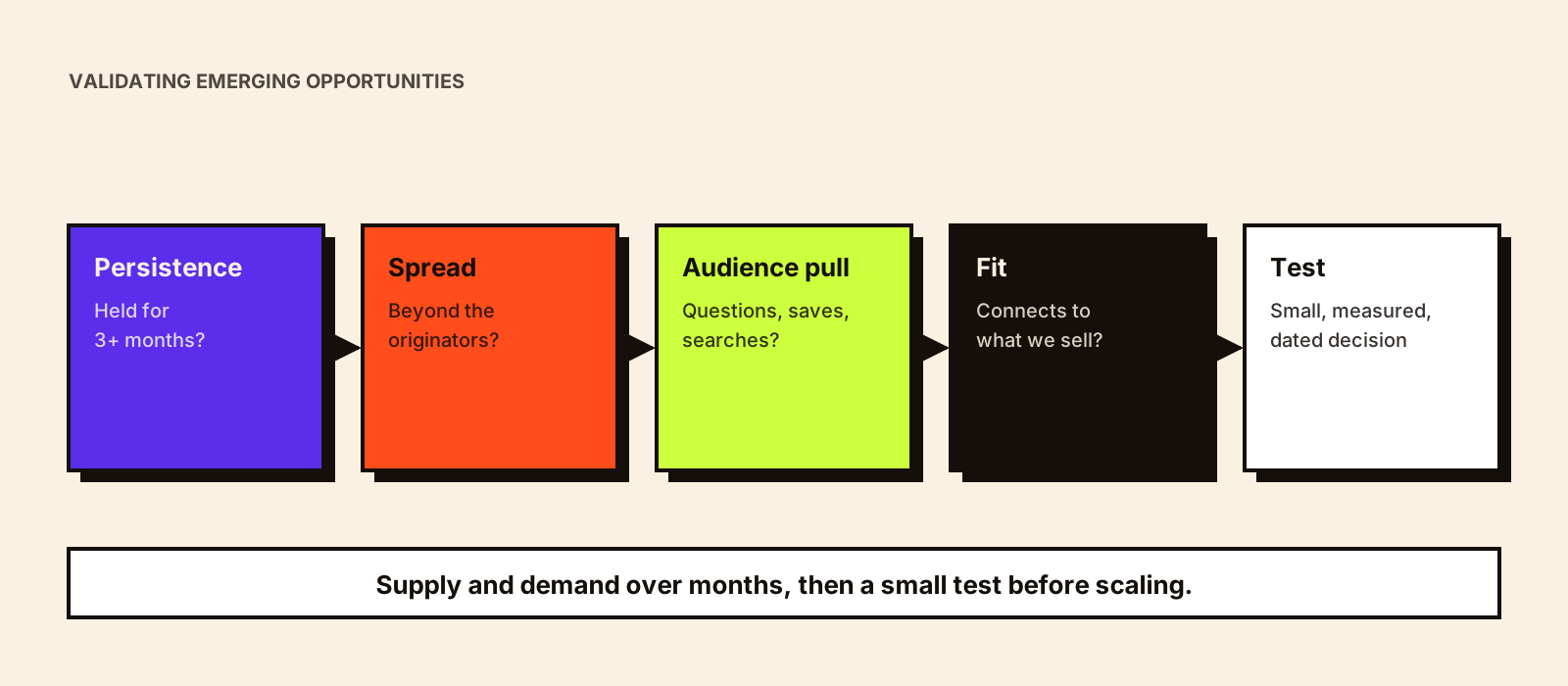
PERSISTENCE ....... Has the signal held or grown for 3+ months, not just one spike?
SPREAD ............ Is it moving beyond its originators to other creators, tiers or regions?
AUDIENCE PULL ..... Are audiences asking for more (comments, searches, saves), not just creators supplying it?
COMMERCIAL FIT .... Does it connect to what we sell and to customers who buy?
COMPETITION ....... Are brands already crowding in? (lower is better for early movers)

ACT when persistence, spread and audience pull are all ≥ 3 and commercial fit ≥ 4.
The thresholds are a starting point. The principle is that a trend worth acting on shows both supply (creators making it) and demand (audiences wanting it) over time.
Spotting rising creators
- Track median views over the last 10–15 posts each month for a watchlist, not follower count.
- Note who's being tagged, quoted or collaborated with by established creators.
- Watch for first sponsored posts and how audiences react to them.
- Check that growth comes from content performance, not a single viral post or a giveaway.
- Run authenticity checks; rapid growth can also be bought.
Rising creators are often the best long-term partners: early relationships, fair fees and content that grows with the creator. The trade-off is less history to judge them by, so start with smaller collaborations. Influencer fraud detection tools covers checks for suspicious growth.
Signal sources
| Source | What it shows | Caution |
|---|---|---|
| Creator watchlist metrics | Rising creators and formats | Small samples; check consistency |
| Search interest (Google Trends, YouTube search suggestions) | Audience demand for topics | Relative, not absolute; regional data can be thin |
| Social listening | Conversation growth; new terms | Coverage gaps by platform and language |
| Comment sections | Unmet questions and requests | Vocal minority |
| Competitor creator logs | Where brands are moving | Lagging signal; brands follow creators |
| Your own tests | What works for your brand | Requires deliberate test slots |
Separating trends from noise
- One viral post is noise until the creator repeats it.
- A format used only by creators who copy each other is supply without demand.
- A spike around a festival, exam season or sporting event is seasonal, not structural.
- Platform-driven spikes (a new feature being promoted) may fade when promotion stops.
- Coverage in marketing media is not evidence that your audience cares.
Turning analysis into action
OPPORTUNITY: [rising creators in X / sub-niche Y / format Z / region R]
EVIDENCE: [signals, scores, dates]
TEST: [2–5 creators, small budget, clear brief]
MEASURE: [primary metric vs our baseline for similar creators]
DECISION DATE: [after 30-day capture]
IF IT WORKS: [scale: more creators, ambassador, always-on]
IF NOT: [what we learned; revisit in 6 months?]
Reserving a small share of each campaign for tests like these is how creator intelligence keeps improving. Influencer ranking explains how to keep test slots in the final creator mix.
Indian patterns worth watching
Without predicting specific trends, a few kinds of shift are worth monitoring in most Indian categories: growth of regional-language creators in categories that started English-first, professional and expert creators (doctors, chartered accountants, lawyers, teachers) building audiences, creators in tier 2 and tier 3 cities gaining national audiences, and long-form YouTube content in categories where trust matters. Whether any of these is an opportunity for your brand depends on your evidence, not on general commentary.
Build a watchlist that catches early signals
- 40–80 creators across tiers and languages in and around your category, including some outside it who often start formats.
- A monthly snapshot of each: median views on recent posts, topic share, notable collaborations, first sponsored posts.
- Tags for language, region and sub-topic, so shifts show up by segment.
- A notes column for qualitative changes: new format, new tone, new audience in comments.
Social listening for creator discovery is a good source of new names for the watchlist.
Hypothetical example: validating a signal
| Month | Signal | Score change |
|---|---|---|
| 1 | A few Telugu creators post 'budget kitchen setup for first job' videos | Persistence 1, spread 1 |
| 2 | More creators and higher views; comments ask for product links | Persistence 2, spread 2, audience pull 3 |
| 3 | Format spreads to Kannada and Tamil creators; search interest for related terms rises | Persistence 3, spread 4, audience pull 4 |
| 4 | Two kitchenware brands appear in the format | Competition 2; commercial fit 4 → act |
Invented, but typical of how a real opportunity looks: slow at first, then spreading across creators, languages and audience demand before brands crowd in. A brand acting in month 3 or 4, with a small test, is early without guessing.
Who owns it
Trend analysis works best with one owner and a monthly half-hour review, feeding a quarterly planning discussion. It sits naturally with whoever maintains the influencer market map, since both look at the same creator landscape over different time frames.
Common mistakes
- Acting on a single data point.
- Confusing creator supply with audience demand.
- Following competitors into a trend they've already crowded.
- Betting a whole campaign on an untested opportunity.
- Presenting trend analysis as prediction.
To test an emerging opportunity properly, influencer marketing testing has a test plan template.
Conclusion
Influencer trend analysis looks months ahead at rising creators, sub-niches, formats, platforms and regions. Validate signals for persistence, spread, audience pull and commercial fit, separate them from seasonal and platform noise, and test small before scaling. Combined with an influencer market map, it shows where your creator programme should be heading next.