Competitor Influencer Research: How Brands Can Analyze Other Brands' Creator Strategies
A Competitor Creator Analysis framework covering creator types, platforms, formats, messaging, frequency, content themes, audience positioning and gaps, with a comparison sheet, a gap analysis method and what not to conclude.
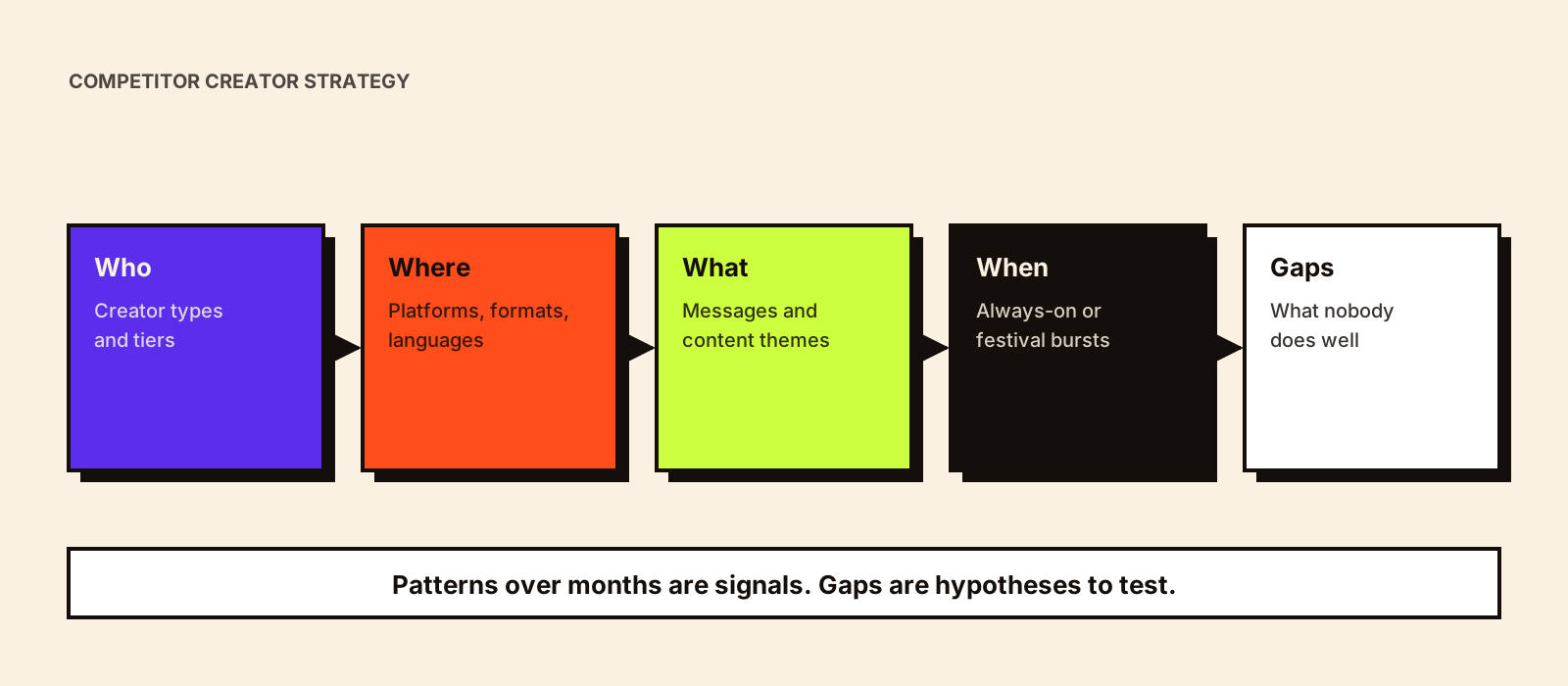
Knowing that a competitor worked with 40 creators last quarter tells you little. Knowing that 30 of them were Hindi micro creators posting Reels about one product benefit, that they never used YouTube, and that nobody in the category is speaking to Tamil Nadu tells you where to compete. Competitor influencer research is about the second kind of knowledge.
Quick answer
Analyse a competitor's creator strategy across eight dimensions: creator types and tiers, platforms, formats, messaging, frequency and timing, content themes, audience positioning (languages, regions, life stages) and commercial model (paid, affiliate, seeding, ambassadors). Build a comparison sheet for three to five competitors, look for patterns that repeat over months rather than single campaigns, then run a gap analysis to find audiences, creators, formats or messages nobody is serving well. Treat conclusions as hypotheses to test, since you can't see competitors' results.
Start with a list of who competitors work with; influencer competitor analysis explains how to find them.
The Competitor Creator Analysis framework
| Dimension | Questions | Evidence |
|---|---|---|
| Creator types | Which tiers and niches? Experts, entertainers, everyday users? | Creator log by tier and niche |
| Platforms | Instagram, YouTube, others? Where's the weight? | Count of posts by platform |
| Formats | Reels, Stories, long-form, lives, collab posts, UGC ads? | Format counts; ad library |
| Messaging | Which benefit, claim or story do creators repeat? | Content review; captions; spoken lines |
| Frequency and timing | Always-on or bursts? Around which festivals and sales? | Post dates over 6–12 months |
| Content themes | Tutorials, reviews, routines, challenges, unboxings? | Theme tags per post |
| Audience positioning | Which languages, regions, city tiers, life stages? | Creator language and audience signals |
| Commercial model | Paid posts, codes, affiliate links, gifting, ambassadors? | Labels, codes, repeat collaborations |
Build a comparison sheet
Period analysed: [ ] to [ ]   Posts reviewed: [ ]

Creators (count) · repeat creators (count)
Tier mix: nano / micro / mid / macro (%)
Languages: Hindi / English / regional (%)
Platforms: Instagram / YouTube / other (%)
Formats: Reels / Stories / long-form / UGC ads (%)
Top 3 messages:
Top 3 content themes:
Timing pattern: always-on / bursts around [ ]
Commercial model: paid / codes / affiliate / gifting / ambassadors
Visible in ads (partnership ads or creator content in ads)? yes/no
One-line summary of their creator strategy:
Percentages here are shares of what you observed, not of their whole programme. Note that limit in the sheet.
Reading messaging and themes
Watch 20–30 competitor creator posts and note the single main claim or benefit in each. Patterns appear quickly: one brand may push 'natural ingredients' through every creator, another 'value for money', another 'results in 7 days'. Then read comments for how audiences respond: questions, scepticism, comparisons with other brands. Sceptical comments about a competitor's main claim can point to a message your brand can own more credibly.
Gap analysis
| Gap type | Example finding | Possible move |
|---|---|---|
| Audience gap | No brand uses Kannada or Malayalam creators | Regional creator test in Karnataka and Kerala |
| Creator-type gap | Everyone uses lifestyle creators; no experts | Partner with qualified professionals for credibility |
| Format gap | All Reels; nobody does long-form reviews | YouTube integrations for considered buyers |
| Message gap | Everyone claims results; nobody explains how to use the product | Education-led briefs |
| Timing gap | Everyone bursts at Diwali | Always-on presence, or a different seasonal moment |
| Tier gap | Heavy macro spend, little micro | Micro and nano creators in specific cities |
A gap is a hypothesis, not proof of opportunity. Nobody may be doing something because it doesn't work, or because nobody has tried. Test small before committing. Regional gaps are common in Indian categories; regional influencer marketing in India covers how to approach them.
What you can and can't conclude
| You can infer | You can't know |
|---|---|
| Which creators, formats and messages they use | Their results, costs or ROI |
| Which creators they rebook (a signal of satisfaction) | Why a creator wasn't rebooked |
| Where they concentrate effort | Their total budget |
| How audiences publicly respond | Private sales impact |
Repeated behaviour over months is the strongest signal you have. A competitor that rebooks the same creator type every month is probably seeing results there; a format tried once and dropped probably didn't work for them, though it might for you.
Hypothetical example
Hypothetical: a new D2C coffee brand analyses three competitors over six months. All three use English-language lifestyle creators in Mumbai, Delhi and Bengaluru, mostly Reels about aesthetic morning routines. Comments frequently ask about taste compared with South Indian filter coffee. Nobody works with Tamil or Kannada food creators. The brand tests five regional food creators on a 'filter coffee drinkers try instant' brief. Whether that works is still unknown; the analysis made it a sensible test rather than a guess.
Put your own programme on the same sheet
Add a column for your brand. Seeing your tier mix, languages, formats and messages beside competitors' often reveals that you're doing the same thing as everyone else, or that your strongest segment is one nobody else is contesting. Both are useful to know.
Creator content in competitors' ads
Check whether competitors run creator content as paid ads, for example partnership ads showing both brand and creator. Creator content used heavily in ads suggests the brand is treating creators as a source of performance creative, not only as reach. That has implications for your rights negotiations and budgets; influencer marketing for performance marketing and UGC whitelisting and creator licensing cover how it works.
A quarterly competitor review
1. What changed in each competitor's creator activity this quarter? (15 min)
2. New creators, formats, messages or markets? (15 min)
3. Gaps we identified last quarter: did we test them, and what happened? (15 min)
4. One or two new tests for next quarter (15 min)
OUTPUT: updated comparison sheet; test briefs
India-specific angles
- Compare by language and state, not just nationally; many categories are crowded in Hindi and English and open in regional languages.
- Watch festival timing by region: competitors may burst at Diwali but ignore Onam, Pongal or Durga Puja.
- Compare marketplace-led brands with D2C-led ones; their creator strategies often differ (codes and links vs awareness).
Common mistakes
- Copying the market leader's creator strategy, which puts you in their shadow.
- Judging strategy from one campaign.
- Assuming competitors' visible activity reflects their results.
- Ignoring audience comments, which often reveal the best gaps.
- Not repeating the analysis; strategies change.
Conclusion
Competitor influencer research looks past creator lists to strategy: types, platforms, formats, messages, timing, themes, audience positioning and commercial model. Build a comparison sheet over months, find gaps, test them small and keep the analysis current. For a category-wide view that includes non-competitors, see influencer market mapping; to fold the findings into your own plan, see influencer marketing strategy.