Influencer Competitor Analysis: How Brands Can Discover Creators Working With Competitors
How to find which creators your competitors work with: paid-partnership labels, Meta's branded content search, YouTube disclosures, hashtags, codes and listening, how to log what you find, and when (and when not) to approach those creators.
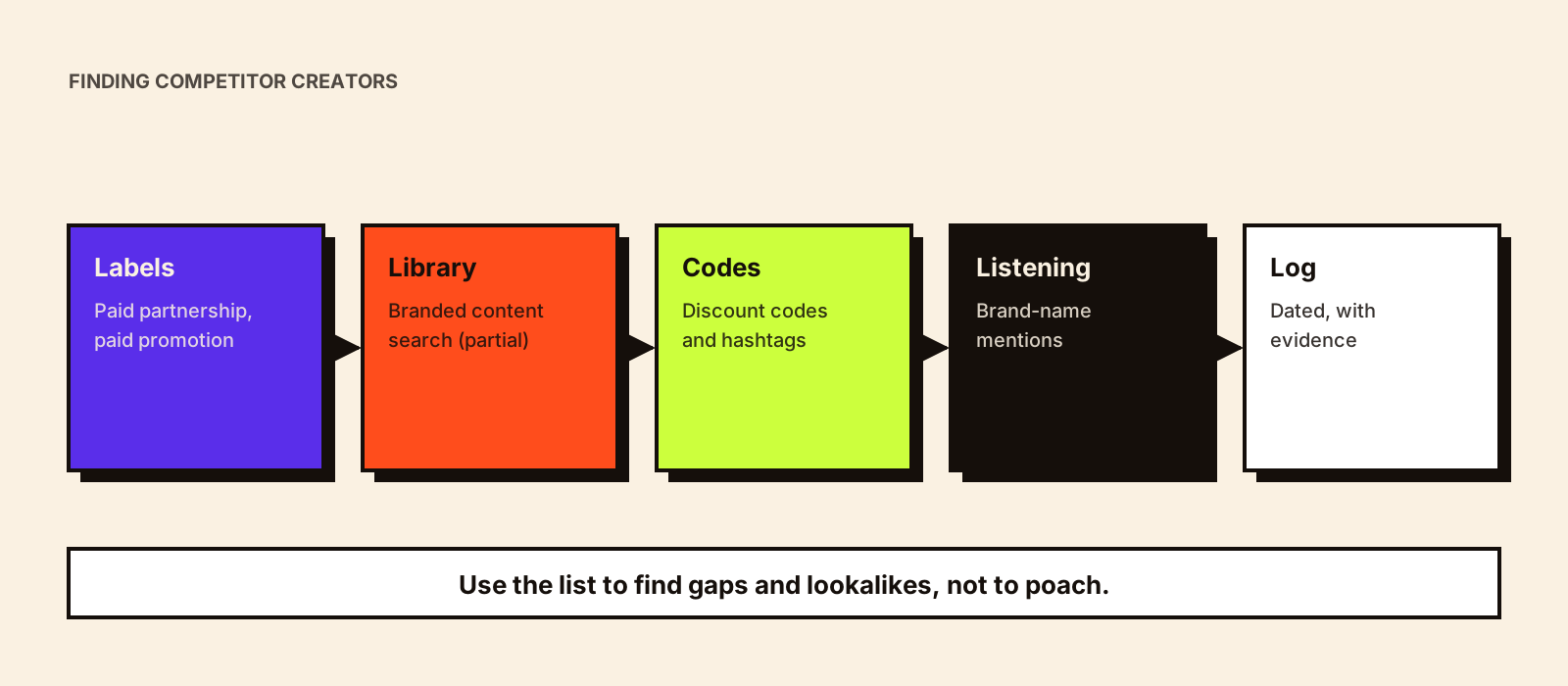
Your competitors' creator partnerships are mostly public. Paid posts carry partnership labels, discount codes appear in captions, campaign hashtags repeat across creators and brands repost their best collaborations. With a few hours a month, a brand can build a reliable list of who its competitors work with. What it does with that list matters more.
Quick answer
To find creators working with competitors, check the 'Paid partnership' labels on competitors' tagged posts, search Meta's Ad Library branded content tool where it's available, look for YouTube videos marked 'Includes paid promotion', track competitor campaign hashtags and discount codes, and use listening tools for brand-name mentions. Log each creator with date, format and evidence. Use the list to understand the category and find gaps, check exclusivity before approaching any creator, and don't assume a competitor's creator is right for you.
This guide is about finding the creators. Analysing what competitors' creator strategy tells you is covered in competitor influencer research.
Where competitor collaborations show up
| Source | What it shows | Limits |
|---|---|---|
| Instagram 'Paid partnership with' label | Branded content where creators used the label | Only when the label is applied; check the brand's tagged posts and Reels |
| Meta Ad Library branded content search | Branded content posts searchable by brand or creator | Coverage and date ranges are limited and some campaigns don't appear; treat as partial |
| YouTube 'Includes paid promotion' | Videos declared as paid promotion | Only when declared; search 'brand + review' and check descriptions |
| Competitor's own reposts and collab posts | Collaborations the brand chose to showcase | Shows their best, not all |
| Campaign hashtags | Creators in a coordinated campaign | Not every creator uses them |
| Discount and affiliate codes | Creators with codes (often CREATORNAME10) | Codes in Stories expire; check captions and descriptions |
| Listening and brand-name search | Tagged and untagged mentions over time | Includes organic mentions; check the label |
Instagram's paid partnership label and YouTube's paid promotion setting are how creators disclose brand relationships, which is also why they make competitor research possible. Meta added a branded content search to its Ad Library in 2023, with limits on coverage.
A monthly research routine
FOR EACH OF 3–5 COMPETITORS:
1. Review tagged posts and Reels from the last 30 days; note paid-partnership labels
2. Search the branded content tool (where available) by brand name
3. Search YouTube: '[brand] review', '[brand] haul', '[brand] honest'; check paid promotion disclosure
4. Search campaign hashtags and common code formats
5. Check listening results for brand-name mentions
6. Log new creators; update repeat creators

EVERY QUARTER: summarise patterns for competitor influencer research
What to log
Competitor · Creator handle and URL · Platform · Tier · Language and region · Date · Format (Reel/Story/video/live) · Paid label? · Code or link? · Content theme · Repeat collaboration? (count) · Evidence link · Notes
Repeat collaborations are the most important field. A creator a competitor books once may have been a test; a creator booked every month is probably working for them, and may be under exclusivity.
Should you approach a competitor's creators?
| Situation | Approach? | Why |
|---|---|---|
| One-off collaboration months ago | Possibly | Check for exclusivity; ask openly |
| Ongoing ambassador or repeated monthly content | Usually not | Likely exclusivity; credibility suffers if they switch |
| Creator reviews many brands in the category | Yes, with care | Reviewers often cover competitors; check how they disclose |
| Creator criticised the competitor after a collaboration | Carefully | They may be open, but their audience saw the earlier post |
| Creator posts for competitors in a different category | Yes | No conflict |
Audiences notice when a creator promotes two rival products in quick succession, and it damages trust in both endorsements. Even without a contractual exclusivity, give a clear gap and ask the creator directly about any restrictions.
Better uses of the list
- Find lookalikes: creators similar to your competitors' best partners who aren't committed to anyone.
- Find gaps: languages, regions, tiers or formats competitors aren't using.
- Understand costs: which tiers competitors invest in repeatedly.
- Avoid crowded creators: those carrying many category sponsorships may be less persuasive.
- Feed market mapping: see influencer market mapping.
Market-level use of this data is covered in influencer market mapping.
Ethics and limits
- Use only public information. Don't ask creators to share competitors' briefs, fees or contracts.
- Don't assume undisclosed posts are paid; many mentions are organic.
- Labels are applied inconsistently, so your list will be incomplete.
- Don't contact a competitor's creator with disparaging comments about the competitor.
Reading the list
| Pattern in your log | What it may mean |
|---|---|
| Same creators booked monthly | Ongoing partnership; likely exclusivity |
| Many new creators each month, few repeats | Testing or seeding at volume |
| Heavy concentration in one language or region | A priority market (and possibly a gap elsewhere) |
| Creators also appear in competitor ads | Content is good enough to run as paid; rights negotiated |
| Sudden drop in activity | Budget shift, strategy change or seasonal pause |
These are inferences, not facts. Competitor influencer research explains how to turn patterns like these into a strategy comparison.
Find lookalikes instead of poaching
- Take the competitor creators who appear most often and note what they share: niche, tier, language, format, style.
- Use lookalike search in discovery tools, or describe the profile in content search.
- Search the same niche in languages and regions competitors haven't covered.
- Check each lookalike for conflicts before shortlisting.
AI for influencer discovery explains lookalike and content search; influencer search tools covers manual methods.
Exclusivity in your own contracts
The same research works in reverse: competitors can see your creators. If a creator matters to your positioning, agree a category exclusivity period in the contract and pay for it. Influencer marketing contract covers exclusivity clauses.
Common mistakes
- Copying a competitor's creator list instead of learning from it.
- Poaching a competitor's ambassador and losing credibility for both.
- Treating one competitor post as their whole strategy.
- Logging creators without dates, so stale relationships look current.
When a creator declines because of a competitor partnership, influencer collaboration rejection covers how to respond.
Conclusion
Competitor creator partnerships are discoverable through disclosure labels, branded content search, codes, hashtags and listening. Log them with dates and evidence, check exclusivity before approaching anyone, and use the list mainly to find gaps and lookalikes rather than to copy. The strategic analysis comes next, in competitor influencer research.