Influencer Exclusivity: What Brands Should Consider Before Restricting Creator Partnerships
When asking a creator not to work with competitors is worth paying for, how to define the category, duration, platforms and markets, how to judge the cost, narrower alternatives, and how restraint-of-trade law in India affects how long a restriction should run.
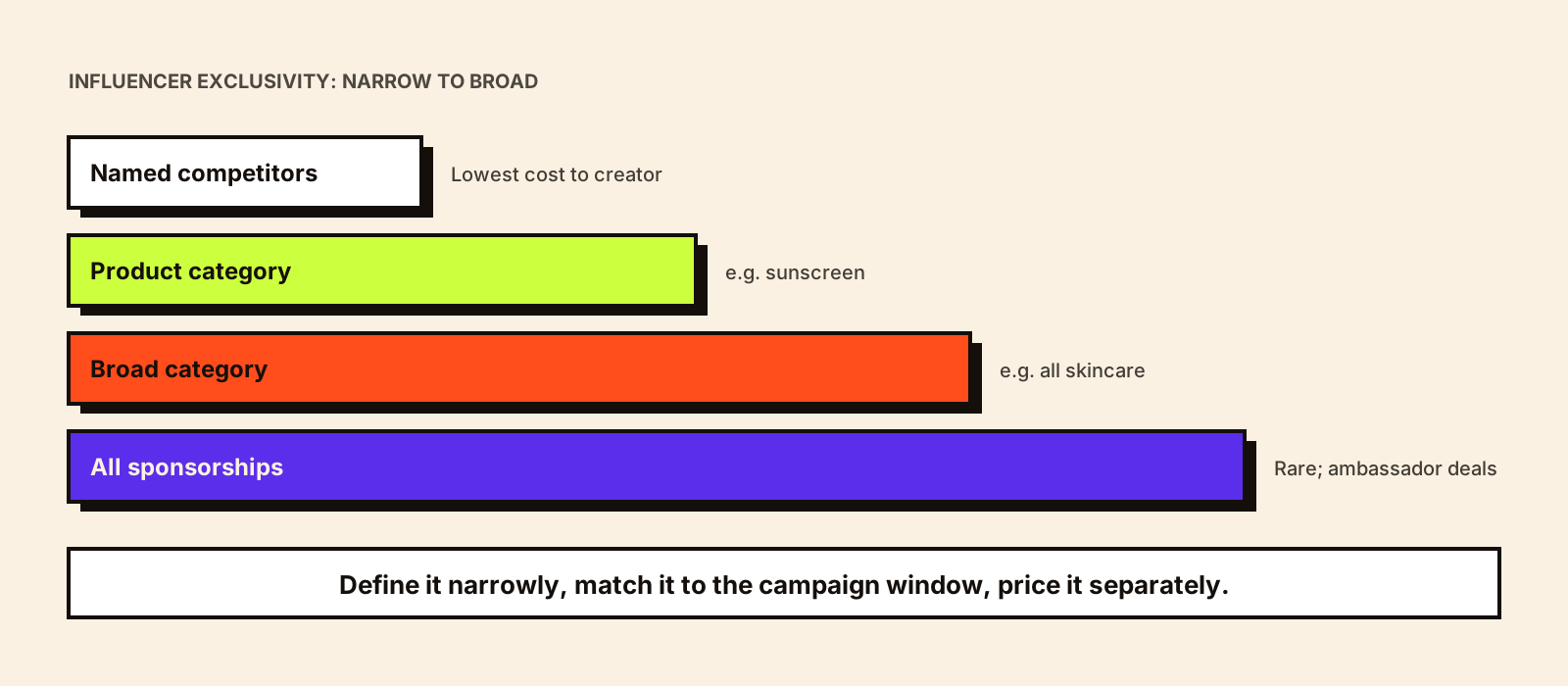
A brand books a creator for a sunscreen launch. Two weeks later the same creator posts for a rival sunscreen, and the brand's partnership ads are still running through the creator's handle. Nobody broke the agreement; it simply never mentioned competitors. Exclusivity exists to prevent that, but asked for carelessly it can cost more than it protects and narrow your creator options for no reason.
Quick answer
Influencer exclusivity is an agreed restriction on a creator working with competing brands for a period. Ask for it when competitor content would genuinely undermine your campaign: a launch window, paid ads running through the creator's identity, or an ambassador relationship. Define it narrowly (named competitors or a specific product category, not the creator's whole niche), match the duration to the period you actually need protected, state the platforms and markets, and treat it as a separately priced term, because it costs the creator income. Narrower alternatives, such as a gap before and after your post, often do the job for less.
Types of exclusivity
| Type | What the creator can't do | Impact on the creator | Typical use |
|---|---|---|---|
| Named competitors | Work with brands on a written list | Lowest | Most campaigns that need protection |
| Product category | Promote products in a defined category (for example sunscreen) | Moderate | Launches, single-product campaigns |
| Broad category | Promote anything in a wider category (for example all skincare) | High for creators in that niche | Ambassadors, long programmes |
| Full exclusivity | Take any other sponsorship | Very high | Rare; usually ambassador or talent deals |
| Platform-limited | Any of the above, only on the platforms where your campaign runs | Lower than the same restriction on all platforms | Platform-specific campaigns |
| Market-limited | Any of the above, only for audiences in defined markets | Varies | Regional or cross-border campaigns |
Exclusivity is different from an exclusive licence to content. An exclusive licence stops the creator licensing the same content to someone else; exclusivity restricts who else the creator works with. Influencer usage rights covers licences.
Define the category before anything else
Most exclusivity disputes are about what the category meant. 'Beauty' could mean skincare, makeup, haircare and fragrance; 'competitors' could mean three brands or three hundred. Write it so a third party could apply it:
- Named brands, or a product category described by what the product does (for example 'sunscreens and SPF moisturisers'), not by a vague niche
- Whether retailer and marketplace promotions of competitor products count
- Whether organic, unpaid mentions count, or only paid and gifted content
- How the creator's own products, if any, are treated
- Existing agreements the creator already has, disclosed and carved out before signing
- Who decides if a new brand is a competitor, and how quickly
Duration, platforms and markets
| Scope | Questions to settle | Watch for |
|---|---|---|
| Duration | Does it cover the posting window, the whole campaign, or the period your ads run through the creator's handle? | Paid ads running longer than the exclusivity window |
| Platforms | All platforms, or only those where your content and ads appear? | Restricting platforms you aren't using |
| Markets | All audiences, or specific states, languages or countries? | Cross-border creators whose main income is in other markets |
| Content types | Only sponsored posts, or also events, live sessions, affiliate links and gifting? | Restricting income streams that don't affect your campaign |
Duration is where paid usage and exclusivity meet. If your partnership ads will run through the creator's handle for three months, the creator promoting a competitor in that period can confuse the audience and weaken your ads; if you only reuse the content from your own account, a shorter window around the post may be enough. Ad authorization terms are covered in influencer whitelisting and ad authorization.
When exclusivity is worth paying for
| Usually worth it | Usually not |
|---|---|
| A launch where a rival is likely to launch at the same time | A single post in a crowded category where many creators are interchangeable |
| Ads running through the creator's identity for a period | Content reused only from your own account |
| An ambassador or long-term programme where the creator becomes associated with you | A test with creators you haven't worked with before |
| A creator whose credibility in a narrow category is the reason you booked them | A broad-lifestyle creator who mentions many brands |
Judging the cost
Exclusivity costs the creator the deals they would have taken in that category during the period, so its price depends on how broad the restriction is, how long it lasts, how much of the creator's income comes from your category, how in-demand they are, and which platforms and markets it covers. There's no reliable universal percentage. A beauty creator asked to avoid all skincare for six months is giving up far more than a tech creator asked to avoid one named phone brand for a month.
- Ask for exclusivity as its own line item, separate from the content fee and usage rights
- Ask what the creator would normally earn in that category in that period, and whether they've turned work down for exclusivity before
- Weigh it against the risk you're insuring: the value of the campaign or ad spend that competitor content could undermine
- Price a narrower option alongside it (named competitors, shorter window, one platform) and compare
- Check that you aren't paying for exclusivity on platforms or in markets you don't use
How exclusivity fits with other cost lines in a campaign is covered in influencer campaign costs in India, and negotiating it in order with the other terms in influencer negotiation strategy.
Narrower alternatives
- A competitor gap: no competing sponsored content for a set number of days before and after your post
- Named competitors only, rather than a category
- Exclusivity limited to the platform where your content and ads run
- A notification clause: the creator tells you before accepting a competing deal during the campaign
- Exclusivity only while your partnership ads are live, ending when they stop
Indian legal context
General information, not legal advice. Section 27 of the Indian Contract Act, 1872 makes agreements in restraint of trade void, subject to a narrow exception. Indian courts have generally been more willing to uphold restrictions that operate while an agreement is in force than restrictions that continue after it ends; in Percept D'Mark v Zaheer Khan (2006), a case about a cricketer's exclusive management agreement, the Supreme Court treated a restriction reaching beyond the agreement's term as unenforceable. How this applies to a particular creator clause depends on drafting and facts, so take legal advice. A practical step many brands take is to make the agreement's term cover the period they need protected, rather than adding a restriction that only starts once the agreement has ended.
What to write down
Exclusivity
• Restricted: paid or gifted promotion of [named brands / products described as …]
• Not restricted: [organic mentions / retailer content / the creator's own products / existing agreements listed in Schedule …]
• Platforms: [Instagram and YouTube / all]
• Markets: [audiences in India / specific states / all]
• Period: from [signing / first post] to [date], within the term of this agreement
• Fee: ₹[amount], separate from content and usage fees
• Disputes about whether a brand is a competitor: [process and timeline]
This structure only shows which points to decide; it isn't a clause to copy. The wider agreement is covered in influencer marketing contracts. Creators negotiating the same terms can read creator exclusivity.
Common mistakes
- Asking for category exclusivity by default on every deal
- Defining the category so loosely that neither side knows what's restricted
- Exclusivity that ends before your ads through the creator's handle stop running
- Not asking about the creator's existing deals before signing
- Bundling exclusivity into the fee so you can't see what it costs
- Restrictions that continue after the agreement ends instead of a term that covers the period you need
Conclusion
Exclusivity is insurance against competitor content undermining a specific campaign. Buy it when that risk is real, define it narrowly enough that it can be applied, match it to the period you actually need, pay for it as its own line, and keep it inside the agreement's term. Anything broader costs more and narrows the creators willing to work with you.