Instagram Stories Influencer Marketing: How Brands Can Drive Engagement and Sales
Stories work differently from Reels, built for urgency and direct response rather than reach into new audiences. A practical guide to running Story-based creator campaigns, including a 3-Story sequence brands can adapt.
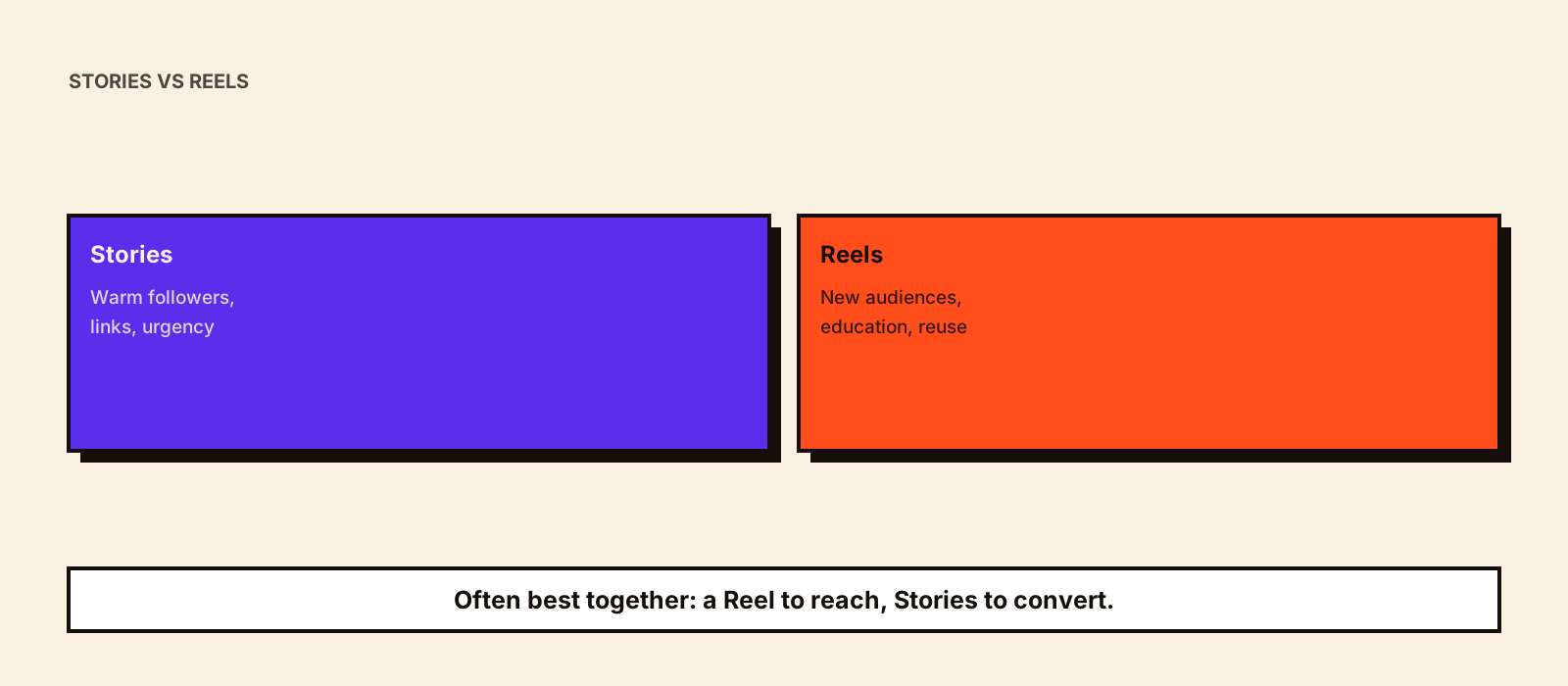
A Reel is built to be discovered by people who've never heard of a creator. A Story is built for the people who already follow them, which makes it a fundamentally different tool, better suited to urgency, direct response, and a more personal, conversational tone than a polished, discovery-oriented format.
Quick answer
Instagram Story influencer marketing means using a creator's Stories, ephemeral, sequential, and shown mainly to existing followers, to drive engagement and direct response through polls, questions, product links, and time-limited offers. Stories work best for urgency-driven moments, launches, limited-time offers, direct product links, while Reels work better for reaching new audiences. Most effective Instagram campaigns combine both rather than choosing one.
Why Stories are different from Reels
| Stories | Reels | |
|---|---|---|
| Primary audience | Mostly existing followers | Followers plus significant non-follower discovery |
| Lifespan | 24 hours, unless saved to Highlights | Permanent on the profile and Reels tab |
| Tone | Casual, immediate, conversational | More produced, hook-driven |
| Best for | Urgency, direct response, interactive formats | Awareness, discovery, education |
| Interactive tools | Polls, questions, product links, and other native stickers | Comments and shares, less native interactivity |
What Story campaigns are good for
- Product launches: a real-time, behind-the-scenes feel that suits a launch moment
- Limited-time offers: the format's own impermanence reinforces urgency
- Interactive engagement: polls and questions gather genuine audience input while promoting a product
- Product demonstrations: a quick, native-feeling walkthrough
- Testimonials and reviews: a casual, believable format for a genuine reaction
- Affiliate campaigns: pairing a product link with a discount code in a short sequence
Product links and swipe-to-shop functionality
Instagram's Story link sticker no longer requires a large follower count, most eligible accounts, personal, creator, and business, can add a link sticker regardless of follower size, though very new accounts may see a short delay before the feature activates, and accounts with policy violations can lose access. Confirm current eligibility and any regional variation directly in the creator's account, since platform rules and rollouts can change.
DM-based campaigns and Story replies
A Story that asks viewers to reply or DM for a code, a link, or more information adds a small amount of friction but often produces a warmer, more qualified lead than a direct link click, since the viewer has taken an active step. This works well for higher-consideration products or a creator whose audience engages heavily through DMs already.
Story highlights as an extended shelf life
Saving a strong Story sequence to a creator's Highlights extends its effective lifespan well past 24 hours, giving new profile visitors a chance to see it. This is worth negotiating explicitly if the content is strong enough to warrant it, since it isn't automatic.
The 3-Story Influencer Sequence
| Story | Purpose | Content |
|---|---|---|
| Story 1 | Problem / Hook | A relatable problem or a scroll-stopping opening line |
| Story 2 | Product / Solution | The product introduced as the response to that problem |
| Story 3 | Proof + CTA | A genuine reaction, result, or demonstration, plus a clear, specific next step |
This sequence works because each Story has one job. Cramming the hook, product, and CTA into a single Story usually means none of them land clearly.
12 Instagram Story ideas for influencer collaborations
These ideas use Stories for what they do best: interaction, urgency and a casual, in-the-moment feel. Sticker names and availability change, so check what's live in the creator's app before you brief.
| Idea | How it works | Best for | What to measure |
|---|---|---|---|
| Poll, then reveal | The creator polls followers on a choice (shade, flavour, colour), then shows the winner in use | Engagement and product feedback | Poll votes, link taps on the reveal |
| Myth quiz | A quiz sticker on a common category myth, answered in the next frame | Education | Quiz responses, replies |
| Question box | Followers ask about the product; the creator answers over the next day | Consideration | Questions received, link taps |
| Countdown to a drop | A countdown sticker before a launch or sale, with a reminder | Launches | Taps on launch day, orders by code |
| Link plus deadline | A link sticker and code with a clear end date | Sales | Link taps, code orders |
| A day with the product | Several casual frames showing it at different times of day | Showing everyday fit | Completion rate, replies |
| Real-time unboxing | An unpolished unboxing as it happens | New arrivals, first impressions | Replies, link taps |
| Week-long check-ins | Day 1, day 4 and day 7 updates, saved to a Highlight | Honest progress | Highlight views, replies |
| Reply for the link | Followers reply with a keyword and get a link or code by DM | High-consideration products | DMs, conversions from DMs |
| Add Yours prompt | A prompt inviting followers to share how they use the product | Customer content | Responses (reuse needs each person's permission) |
| Brand account takeover | The creator runs the brand's Stories for a day | Brand account growth | Brand follows, Story views |
| Behind the scenes | Stories from an event, shoot or factory visit | Events and launches | Views, replies |
Every collaboration Story needs the paid partnership label or clear disclosure on each frame that features the product, not only the first. Disclosure rules are set out in the creator disclosure guide.
Measuring Story performance
- Story views and completion rate: whether viewers watched through the full sequence
- Replies and DMs: a strong signal of genuine interest for reply-based campaigns
- Link clicks: for product-link or swipe-based Stories
- Conversions: tracked through unique links or codes where the objective is sales
When to use Stories vs. Reels, or both
Use Stories when the goal is urgency, direct response, or engaging an already-warm audience. Use Reels when the goal is reaching people who don't yet follow the creator. Many effective campaigns run both in sequence, a Reel to earn attention from a new audience, followed by Stories to convert the resulting interest and existing followers with a time-bound offer.
| Decision factor | Lean towards Stories | Lean towards Reels |
|---|---|---|
| Objective | Clicks, sign-ups, sales during an offer window | Reach into new audiences, product education |
| Audience | The creator's existing, engaged followers | People who don't follow the creator yet |
| Product | Known products, repeat purchases, limited-time offers | New products that need showing in use |
| Path to purchase | Link sticker straight to the product page | No clickable caption link; relies on bio, Stories or a code |
| Content reuse | Short-lived; less useful as ad creative later | Stays on the profile; easier to run as a partnership ad |
| What to measure | Link taps, replies, sticker responses, orders | Views, reach, watch time, saves, shares |
| Budget | Often priced as an add-on to a Reel | Usually the main deliverable in the fee |
A common pattern is one Reel to reach new people, then two or three Stories over the following days with a link and a deadline. Agree in the brief which metrics the creator will share for each format, captured on the same day, and use Instagram's paid partnership label on both. Reels-specific planning is in Instagram Reels influencer marketing.
A Story doesn't need to go viral to work. It just needs the follower already paying attention to actually do something before it disappears.— Kudozz Social Team
Related reading: our full Instagram Reels guide. How Kudozz handles this: Social Media Campaigns.