Newsletter Influencer Marketing: How Brands Sponsor Creator Newsletters
How brands work with newsletter creators on Substack, beehiiv and independent lists: when a newsletter beats a social post, sponsorship formats, how to choose a newsletter, how to measure results when open rates are unreliable, and disclosure.
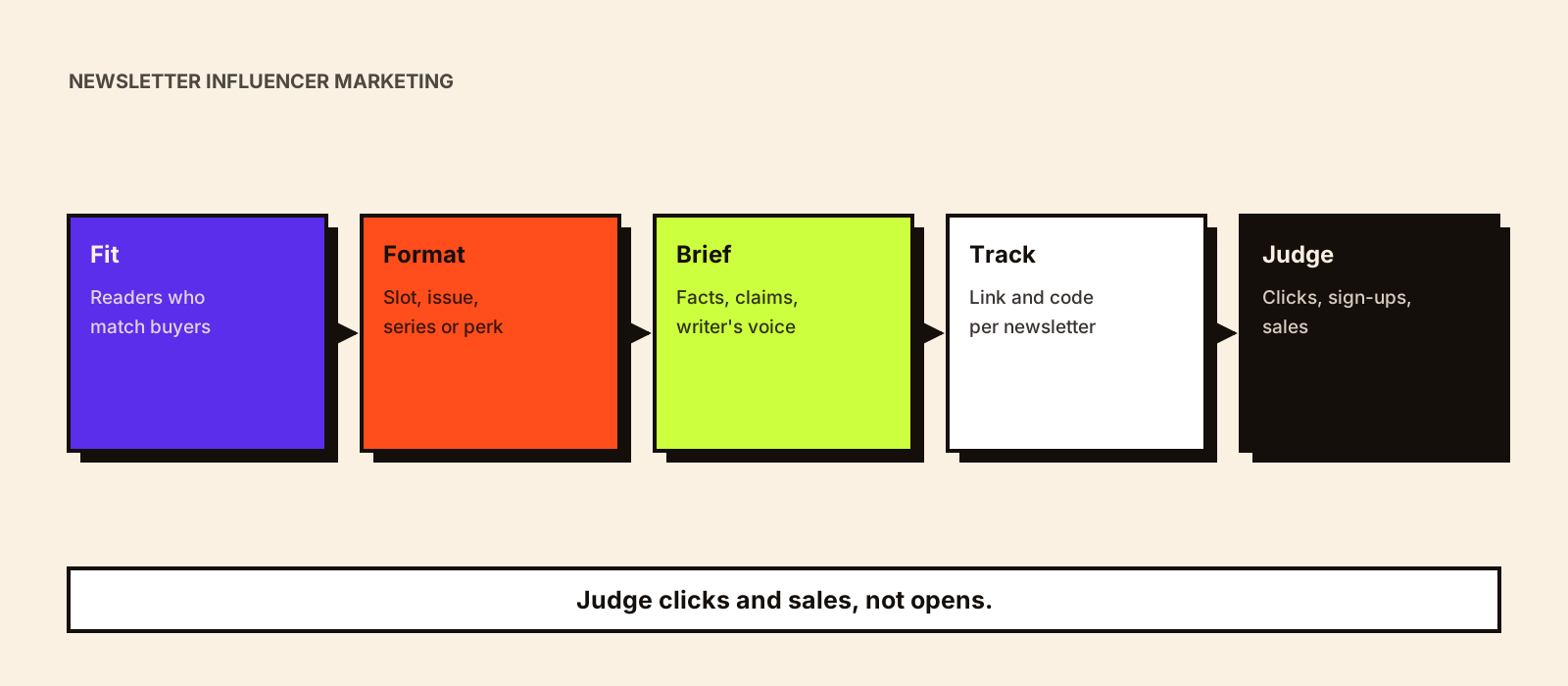
Newsletters have become a creator channel brands can buy into. Substack launched a native sponsorship program in June 2026 and added new formats in October, beehiiv runs an ad network for its publishers, and many independent writers sell sponsorships directly. A newsletter reaches people who chose to hear from the writer, often in more depth than a social post allows. This guide covers when that's worth paying for and how to do it well.
Quick answer
Sponsor a newsletter when your product needs explaining, when the writer's readers match your buyer closely, or when you want an endorsement in a writer's own words rather than a short video. Choose by reader fit and evidence of engagement, not subscriber count. Agree the format, wording approval and disclosure in writing, track with tagged links and codes, and judge results on clicks, sign-ups and sales, because open rates are unreliable.
When a newsletter beats a social post
| Newsletters suit | Social posts suit |
|---|---|
| Products that need explaining: software, finance, health, B2B, education | Products people understand from a few seconds of video |
| Niche audiences that read a writer for expertise | Broad reach and visual discovery |
| Longer endorsements in the writer's voice | Demonstrations and trends |
| Click-through to a page or offer | Views, shares and comments |
| Repeat sponsorship over several issues | Single bursts around a launch |
Many creators run both. A writer's newsletter can carry the detailed recommendation while their social accounts drive awareness, so ask for both when you brief.
Sponsorship formats
| Format | What it is | Good for |
|---|---|---|
| Sponsored slot | A short ad or mention within an issue, often written by the creator | Testing several newsletters |
| Dedicated issue | A whole issue on the sponsor's topic | Launches and complex products |
| Series sponsorship | Presenting several issues or a recurring section | Building familiarity |
| Reader offer or perk | A discount, trial or gift for subscribers | Measurable sales |
| Sponsored paid access | The brand pays so readers get paywalled content or a trial of the paid tier | Goodwill with engaged readers |
| Reader events | In-person or online events for the community | Depth over reach |
Platform programs are changing quickly. Substack's program pairs writers with brands, with writers keeping editorial independence, and its Creator Kits (media kits for eligible publications) are the entry point (Net Influencer, June 2026). In October 2026 Substack added formats that let a brand make a paid post free for all readers, give free subscribers a month of paid access, or commission themed content, and said it would offer Kantar brand-lift studies for campaigns with enough scale (Net Influencer, October 2026). beehiiv's ad network is open to publishers on paid plans and pays on CPM or CPC, according to its publisher page. Check current terms before you plan around any of them.
Business Insider reported in October 2026 how Rothy's works with Substack writers: sponsoring reader events, commissioning essays for an anniversary and building longer relationships with writers who already mentioned the brand. The results quoted there are the brand's own, so treat them as one company's experience, not a benchmark.
Choosing a newsletter
- Reader fit: who subscribes, what they do for work or interest, and where they live
- Engagement evidence: click rates on past sponsored links, replies and comments, paid subscriber share, not just list size
- Past sponsors: how sponsorships were written and how often they appear
- Voice: would the writer genuinely recommend your product?
- Audience source: lists grown through giveaways or bought signups are weaker than organic ones
- Terms: price basis (per issue, per thousand subscribers or per click), deadlines and approval rights
Ask for recent screenshots from the newsletter platform's dashboard rather than numbers typed into a media kit. How creators price newsletter sponsorships is covered from their side in creator newsletter monetization.
Briefing and disclosure
Give the writer the product truth, approved claims, the link and any offer, then let them write in their own voice; readers notice copy that doesn't sound like the writer. Agree whether you review the copy, by when, and how many changes you can request. The sponsorship must be clearly labelled where it appears, and claims must be ones you can prove. Advertising rules don't stop at social media: in most markets, undisclosed paid promotion can be misleading wherever it appears. ASCI's guidance sets the expectations for India, and our influencer marketing compliance guide covers other markets.
Measuring newsletter sponsorships
Treat opens with care. Apple's Mail Privacy Protection stops senders from seeing whether a message was opened, which makes open rates unreliable across lists with many Apple Mail users. Clicks and what happens after them are firmer ground.
- A unique tagged link for each newsletter and issue
- A dedicated code or landing page, for sales and sign-ups that don't come through the link
- Cost per click, sign-up and order, compared within the channel first
- A 'how did you hear about us' question at checkout or sign-up
- Brand search and direct traffic around the send date for larger sponsorships
Where you need to know what the sponsorship added beyond what would have happened anyway, see influencer marketing incrementality; the wider framework is in measuring influencer campaign ROI.
Common mistakes
- Buying on subscriber count alone
- Judging success on open rates
- Rewriting the creator's copy into an ad
- One issue and done, when familiarity builds over several
- No tracking beyond a single link
Conclusion
Newsletter sponsorships work when the reader fits, the writer means what they say and the results are measured on actions, not opens. Start with a few well-matched newsletters, track each one separately and keep the ones that deliver. For audio, the equivalent decisions are in our guide to podcast sponsorships.