Scaling a Creator Business: How to Grow Beyond a One-Person Operation
How creator businesses scale: the five growth stages from solo creator to creator-led company, what changes at each stage, a scalability test for your business model, the four ways to scale, when building an agency or services arm makes sense, and the signs you're scaling too fast.
A creator business built on one person's time has a ceiling. There are only so many videos you can script, film and appear in, and only so many brand deals you can deliver well. Scaling means growing income or impact faster than your hours, without breaking the thing your audience values: you.
This is the pillar guide for Kudozz's scaling and resilience section. It connects the business model, operations and team guides into one growth path.
Quick answer
Creator businesses usually grow through five stages: solo creator, organised creator, professional creator business, small team and creator-led company. To scale, reduce the share of work that needs your personal time, through systems and delegation, and add revenue that isn't tied to your hours, such as products, memberships, licensing or services delivered by a team. Scale one lever at a time, keep fixed costs within your conservative income, and protect the creative core that made the audience trust you.
The five growth stages
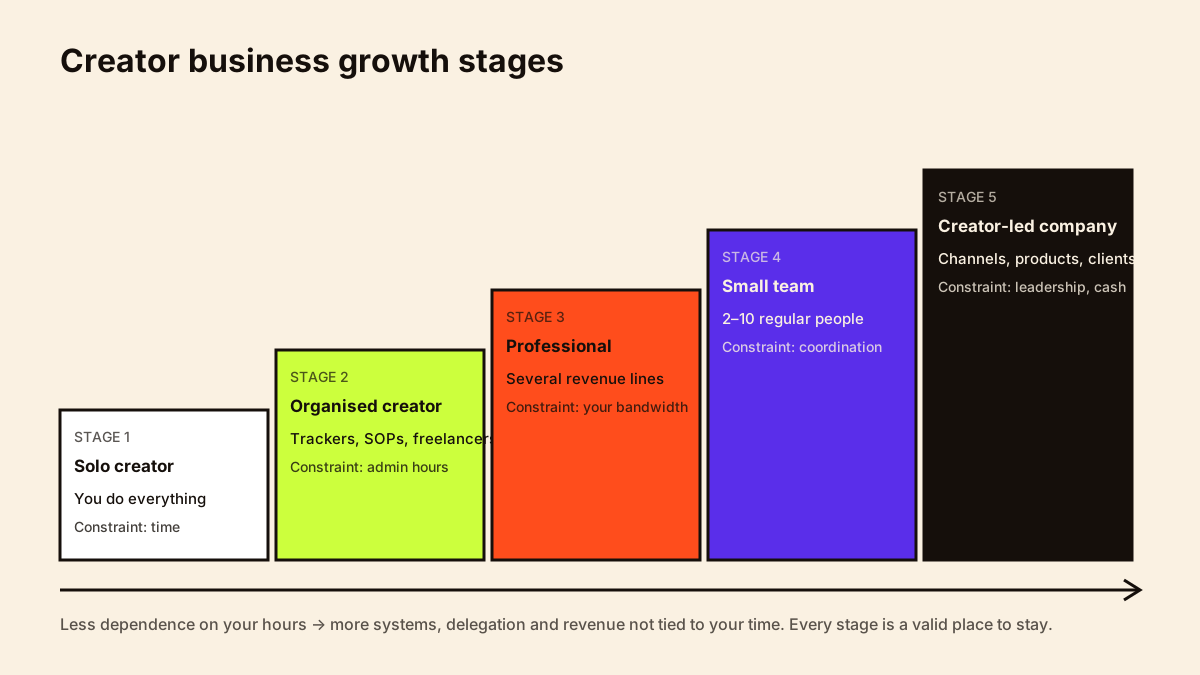
| Stage | What it looks like | Main constraint | Focus |
|---|---|---|---|
| 1. Solo creator | You do everything; income is irregular | Time and consistency | Content quality, audience, first brand deals |
| 2. Organised creator | Trackers, SOPs, a weekly rhythm; maybe freelancers | Admin and editing hours | Operations, pricing, first delegation |
| 3. Professional creator business | Steady income, several revenue lines, regular freelancers | Your decision-making bandwidth | Revenue mix, finance controls, a manager or producer |
| 4. Small team | Two to ten regular people | Coordination and management | Roles, team management, documented processes |
| 5. Creator-led company | Multiple channels, products, clients or talent | Leadership and cash flow | Department owners, dashboards, continuity |
Stages aren't a ladder you must climb. Many creators earn well and happily at stage three. The point of the model is to recognise which constraint is holding you back now. Operations at each stage is covered in creator operations; team building in creator team building.
Is your business scalable? A five-question test
| Question | Less scalable | More scalable |
|---|---|---|
| How much income needs you on camera or in the room? | Almost all | A shrinking share |
| Can someone else deliver part of the work to your standard? | No documented process | SOPs and a trained team |
| Does revenue grow without equal growth in your hours? | Only brand deals and one-to-one services | Products, memberships, licensing, team-delivered services |
| Do systems work when you're away for a week? | Things stop | Content and delivery continue |
| Does growth increase fixed costs faster than income? | Yes | Costs follow revenue |
A business built entirely on your face and your hours can still be excellent, but it scales mainly by raising prices and choosing better deals, not by volume. See how to raise creator rates.
Four ways to scale
| Lever | How it works | Watch for |
|---|---|---|
| Leverage your time | Systems, delegation and automation free you for high-value work | Quality control as more people touch the work |
| Increase value per piece | Higher rates, packages, retainers, licensing | Audience trust if sponsored content increases |
| Add revenue not tied to your hours | Digital products, memberships, courses, affiliate and commerce | Launch effort; audience fatigue |
| Build a team-delivered business | Services, a production studio, an agency or additional channels | Management load; becoming a different business |
Choosing the right model is covered in creator business model, and adding income streams in creator revenue diversification.
Should you build an agency or stay solo?
Some creators scale by turning their skills into a team-delivered business: a production studio making content for brands, a social media agency, or a talent business representing other creators. This is a different company from being a creator. It can work well, but be honest about the trade-offs.
| Stay a solo-led creator business | Build an agency or studio | |
|---|---|---|
| What you sell | Your content, audience and expertise | Your team's services |
| Your role | Creator and decision-maker | Manager, seller and leader |
| Income ceiling | Linked to your personal brand and rates | Linked to team size, clients and margins |
| Risks | Burnout, platform and income concentration | Payroll, client churn, cash flow, management load |
| Good fit if | You love making content | You enjoy building teams and selling services |
If you're weighing whether to sign with an agency rather than build one, that's a different question, covered in creator manager vs agency. Selling services yourself is covered in creator services.
If you decide to build an agency or studio, start with how to start a creator management agency in India or the creator studio business model.
A scaling plan in five steps
- 1. Identify your stage and its main constraint.
- 2. Fix operations first: trackers, SOPs, weekly rhythm (see the creator operations checklist).
- 3. Delegate the biggest time sink that isn't your creative core.
- 4. Add one lever at a time: rates, a product, a membership or a team-delivered service.
- 5. Review quarterly: income per hour of your time, fixed costs vs conservative income, quality and wellbeing.
Checklist: creator operations checklist.
Worked example
A Kolkata-based food creator earning mainly from brand deals was at stage two: organised, but every rupee depended on her cooking on camera. She scaled in three moves over eighteen months: an editor and a VA freed two days a week; she used them to launch a paid recipe membership; later she added a small production service shooting food content for local restaurants, run by her editor with her as creative director. Her brand deal volume stayed roughly the same; her income stopped depending on it. The figures and timeline are illustrative, but the order matters: operations, then delegation, then new levers.
Signs you're scaling too fast
- Fixed costs depend on your best months, not your average ones.
- Content quality or consistency is slipping.
- You're managing more than creating, without having chosen that.
- Brands or clients are noticing missed dates or errors.
- You can't take a week off without things stopping.
Common mistakes
- Hiring before systems exist, so the team inherits chaos.
- Adding several revenue streams at once.
- Copying the team structure of a much larger creator.
- Building an agency when you actually want to make content.
- Scaling output while the audience wanted depth.
Conclusion
Scaling a creator business is about reducing dependence on your hours while protecting what makes you worth following. Know your stage, fix operations first, delegate the biggest non-creative time sink, add one lever at a time and keep costs within your conservative income. And build resilience as you grow; creator business risk management covers what can go wrong.